
Plinko Casino Australia: Where to Play and What to Know
- Online Plinko Casinos in Australia – Landscape and Growth
- Plinko Slots: What Makes Them Different from Traditional Pokies
- Game Variations: From Slots to Table Games in Australian Online Casinos
- Playing Plinko for Real Money – Legal and Practical Considerations
- Choosing an Australian Online Casino for Plinko
- Free‑Play and Demo Options for Plinko Games
- Plinko and Cryptocurrencies – What the Regulations Say
- Plinko Casino Reviews: What Players Report
- Plinko Casino in 2026 – Key Features and Expectations
- Lucky Guru and Other Plinko‑Related Strategies
Online Plinko Casinos in Australia – Landscape and Growth
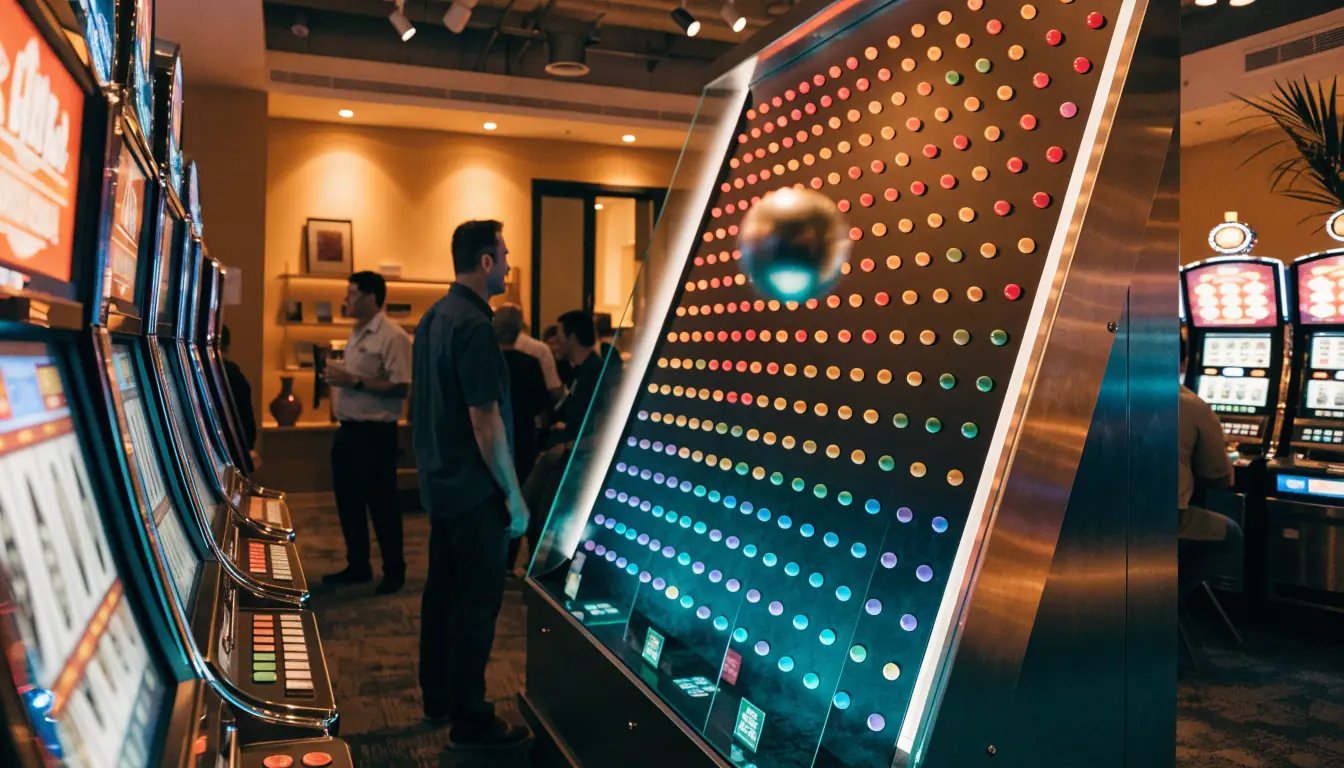
Plinko arrived in online gambling quietly. No heritage in pubs, no decades of cabinet history like pokies — just a pricing-game format lifted from television, dropped into a casino lobby and left to find its audience. In Australia it found one faster than most markets, and the reason is not complicated: the game requires nothing from the player except a decision about where to drop the ball and how much risk to carry. That simplicity travels well.
The backdrop matters here. Australians placed bets worth almost AUD$150 billion through electronic gaming machines in FY 2020–2021, with a total player loss of AUD$12 billion and a per-capita loss of AUD$608. That is the land-based baseline. Against it, the online sector is the smaller channel — but it is the one that is visibly expanding. The online casino sector has experienced a boost in popularity due to the integration of technological innovations globally, and the number of online casino sites, including Australian operators, is increasing, according to one industry review. I treat that last figure carefully: growth is real, but the specific claim comes from a single source, and the review itself notes the object keeps shifting — new sites, new game studios, new deposit rails — so any count is out of date before it is published.
Choosing a Plinko casino in Australia comes down to trustworthy licensing, realistic bonus terms and dependable payouts, so it helps to see how each option stacks up before you sign up.
License: Curacao Gaming Control Board OGL/2023/174/0082 (Dama N.V.) · Bonus: up to A$5,000 + 300 free spins across 4 deposits Licensed under the Curacao Gaming Control Board via Dama N.V., this operator backs its offering with a sizeable welcome package spread across four deposits, including a solid batch of free spins.
License: Curacao – Antillephone N.V. (Versus Odds B.V.) · Bonus: up to EUR 2,000 across 5 deposits + 200 free spins · Min. deposit: EUR 20 Holding a Curacao licence through Antillephone N.V., it offers a substantial multi-deposit bonus with free spins, and its low minimum deposit keeps entry accessible.
License: Curacao eGaming (Dama N.V.) · Bonus: up to A$10,000 + 180 free spins, 40x wagering Operating under a Curacao eGaming licence via Dama N.V., this casino pairs a large bonus figure with free spins, though a 40x wagering requirement means the terms should be read carefully.
Bonus: up to A$7,500 + 550 free spins across 10 deposits, 50x wagering · Payout speed: crypto under 1 hour, PayID 1-3 business days · Min. deposit: A$20 (A$30 to qualify for the bonus) This operator stands out for its generous bonus spread over ten deposits plus a large free spins allotment, and it offers notably fast crypto payouts alongside standard PayID processing within a few business days.
License: Curacao Gaming Authority (Jumpman Gaming Ltd) · Bonus: up to A$6,600 + up to 250 free spins across 4 deposits Licensed by the Curacao Gaming Authority through Jumpman Gaming Ltd, it provides a strong four-deposit welcome bonus with a healthy number of free spins.
License: Curacao eGaming (Roby Games Ltd) · Bonus: 100% up to A$750 + 200 free spins Under a Curacao eGaming licence via Roby Games Ltd, this casino offers a modest but clear match bonus paired with a solid free spins package.
Bonus: 240% up to A$4,100 + 300 free spins Notable for a high-percentage bonus match combined with a generous free spins offer, making its promotional package one of the more eye-catching on offer.
License: international iGaming licence – jurisdiction not named in the source · Bonus: 100% up to A$1,000 + 100 free spins, 35x wagering · Payout speed: PayID 1-24 hours · Min. deposit: A$30 (PayID from A$10) While its licensing jurisdiction isn’t specified, this operator offers a straightforward welcome bonus with free spins and is notable for very fast PayID withdrawal times and a low minimum deposit.
License: Curacao eGaming (Hollycorn N.V., since 2017) · Bonus: 225% up to A$1,540 + 600 free spins across 4 deposits, 20x wagering · Min. deposit: A$20-30 (depends on the offer) Licensed by Curacao eGaming through the long-standing Hollycorn N.V. (operating since 2017), it offers a high-percentage bonus across four deposits with a large free spins bundle and comparatively low wagering requirements.
License: Curacao Gaming Control Board · Bonus: up to A$5,000 + 400 free spins Licensed under the Curacao Gaming Control Board, this casino offers a competitive welcome package combining a solid bonus amount with a generous number of free spins.
Where the growth is actually coming from
When I look at how a plinko online casino catalogue has changed over the past few years, three currents show up repeatedly, and none of them are marketing inventions:
1. Technology adoption across the whole sector. Streaming quality, mobile performance and payment processing have all improved at the platform level, and plinko benefits from this more than most games. It is a light, fast-loading format — a grid, a physics animation, a payout table. It runs on older phones without complaint. On a platform where the flagship live-dealer table buffers, the plinko board still loads in seconds. This is a genuine case of the "technological innovations" driving uptake.
2. The shift in what counts as a casino game. Lobbies that once organised themselves around online pokies, blackjack and roulette now carry a middle category — crash games, mines, plinko — that didn’t exist in this form a decade ago. Plinko sits comfortably in that category. It is not a pokie and does not pretend to be one; the next section of this article deals with that distinction properly, so I will only note here that its arrival has widened what an online casino in Australia actually offers.
3. Supply following demand. Game studios build what players click on. Plinko variants multiply — different grid depths, different risk settings, different visual treatments — because the base format holds attention. "Golden plinko" style presentations, with heavier visual polish and layered sound, are a direct response to that: same drop mechanics, dressed for a lobby thumbnail war.
The two kinds of plinko platform
An online casino with plinko in its library offers the game in one of two technical forms, and the difference is worth understanding before depositing anywhere.
RNG-based versions. The ball’s path is determined by a Random Number Generator. The animation you watch — the pegs, the bounces, the final slot — is a rendering of an outcome that has already been decided. Online casino software uses RNGs to ensure random outcomes, and those RNGs are regularly audited by independent testing agencies. This is the same mechanism behind online pokies and virtual table games. It is the standard form of plinko: instant rounds, no other participants, the player alone with the board.
Live-dealer versions. A plinko live casino product is streamed in real time with a professional host, in the same studio format as live roulette or game shows. The host runs rounds on a schedule, players bet into them, and the result plays out on camera. This format exists because live-dealer games provide an immersive experience that RNG versions cannot replicate: a human being, a physical or simulated board, other players’ bets visible in the interface. It is slower and more social. Whether it is “better” depends entirely on what the player is there for — speed or atmosphere. The mechanics of the outcome do not change.
Most offshore platforms serving Australian players carry the RNG version; live-dealer plinko is a newer arrival and appears on a smaller set of sites. That is a practical observation, not a rule — catalogues shift monthly.
The Australian situation, stated plainly
Here the landscape has a legal shape that has to be described honestly, because most of the material written about "online casinos for Australian players" quietly avoids it.
Legal risk
Offering plinko games to Australian players is prohibited by the Interactive Gambling Act 2001; operators doing so may face enforcement actions.
There are no domestically licensed real-money online casino operators available to Australian players. The Interactive Gambling Act 2001 (IGA) prohibits offering online casino-style games — slots, poker, blackjack, roulette — to Australian residents, and it is not possible to obtain a licence to operate an online casino domestically. Regulation of online gambling sits with the Australian Communications and Media Authority (ACMA).
At the same time, it is not illegal for individual Australians to play at offshore-licensed online casinos. The law targets operators, not players. Every plinko casino game online that an Australian can reach for real money runs on an offshore licence — Curacao, Malta, the United Kingdom and other jurisdictions issue them — and none of them carries Australian authorisation, because no such authorisation exists to carry.
This produces an odd market structure. On one side: a domestic gambling economy built on poker machines, with roughly 95,800 of them in New South Wales alone. On the other: a federal prohibition on offering online casino games, paired with no penalty for the individuals who play them offshore. The result is that plinko’s Australian audience exists almost entirely on platforms licensed elsewhere. Anyone writing about the "Australian online plinko market" as though it were a licensed domestic industry is describing something that isn’t there. I have seen plenty of that copy. It reads smoothly and means nothing.
What this means for 2026
Pull the threads together and the picture for plinko in Australia in 2026 looks like this: a growing game format, carried on offshore platforms, in RNG and live-dealer forms, reaching players the law does not punish. The sector’s growth is driven by technology and catalogue expansion at the platform level, not by any change in Australian regulation — and that is the single most important fact about the landscape. Nothing in the current framework suggests a domestic online casino licence arriving soon. Later sections of this article deal with what that means in practice — for real-money play, for choosing where to play, and for what players themselves report.
One structural note before moving on. Growth in this space has a pattern I have seen from the inside: the format spreads faster than the institutions around it. Game studios ship plinko variants in weeks; regulatory clarity, complaint procedures and consumer protections take years. The gap between those two speeds is where the player actually lives. A dull sentence, but it is the honest summary of the whole landscape.
Plinko Slots: What Makes Them Different from Traditional Pokies
Slot games are a dominant category on most Australian online casino sites, and locally they go by the name online pokies. Plinko sits inside that category, but it doesn’t behave like the pokies most Australians grew up watching in pubs and clubs. The difference isn’t cosmetic. It’s structural — in how the outcome is produced, what the player actually decides, and where the money goes. I’ve spent enough time around both formats to know that the marketing copy rarely spells out any of this, so here is the version that does.
The machine a pokie actually is
A traditional poker machine — the kind NSW alone holds roughly 95,800 of — is a closed box with a defined mathematical edge. The player presses a button, reels spin, and a Random Number Generator decides the result before the reels even finish moving. Everything after that is presentation. The reels, the sounds, the near-misses: all of it is theatre layered over a number that was already settled.
Online pokies work the same way. The software uses RNGs to ensure random outcomes, and reputable platforms have that software regularly audited by independent testing agencies. The audit doesn’t guarantee a player wins. It guarantees the dice aren’t loaded — that the RNG behaves the way it claims.
Legal nuance
The law targets operators, not players, so Australian residents can legally play on offshore platforms, but the operators themselves are breaking the law.
That’s the pokie contract: pure chance, packaged as an interactive experience, with the interaction being mostly decorative.
What a plinko slot machine actually does
A plinko slot machine borrows the shell of the pokie format — a game window, a stake, a spin button or its equivalent — but the visual mechanic is different. Instead of reels, you get a board of pegs. A ball is dropped from the top, bounces through the pegs, and lands in a slot at the bottom. Each slot carries a multiplier. Where the ball ends up determines the payout.
The important part: on genuine plinko slots, the bounce sequence is still governed by the same RNG infrastructure. The pegs look like physics; the outcome is still a random draw. Some titles do simulate actual physics; most resolve the drop through the RNG and animate the result afterwards. From the operator’s side, there is no meaningful difference — the house edge is set in the maths, not in the animation.
What the pegs do change is the shape of the outcome distribution. A pokie has a paytable of symbol combinations. Plinko has a spatial paytable — edge slots pay the most, centre slots pay the least, and the ball lands in the centre far more often. The player can see the whole distribution on screen at once. That’s unusually transparent for a gambling product, and it’s a genuine reason the format has caught on.
The one lever the player actually holds
Here’s where plinko differs from a pokie in a way that matters. A pokie offers the player one decision: how much to stake. Plinko typically adds a second: risk level and, in many versions, the number of rows on the board. Higher risk widens the spread — the edge multipliers get bigger and the centre multipliers get worse. More rows steepen the curve the same way.
I want to be precise about what this lever is and isn’t. It is not skill. The ball’s path is not controllable, and no amount of watching drops will tell you where the next one lands. What the lever controls is variance — how bumpy the ride is for the same long-run expected result. A low-risk setting produces many small movements; a high-risk setting produces long dry stretches punctuated by occasional large hits. Both are the same product underneath.
A player who understands that is choosing a style of session. A player who doesn’t is choosing blindly, which is exactly how most bonus copy prefers it. " adjustable volatility" is the honest way to describe the feature; "control your wins" is not, and anyone who writes the latter is selling something.
Where the pokies comparison gets local
Australians have a specific relationship with poker machines, and it’s worth being blunt about the numbers behind it. In FY 2020-2021, Australians placed bets worth almost AUD$150 billion through electronic gaming machines, with total player loss of AUD$12 billion. Per-capita loss ran to AUD$608. Australia holds 3% of the world’s pub and club poker machines with 0.3% of the world’s population. This is not a market that treats pokies as a novelty.
Plinko slots arrive into that context as a foreign object. They carry no pub history, no club loyalty scheme, no physical venue at all. They exist only online, in the offshore-licensed space — because, as covered elsewhere in this article, there are no domestically licensed real-money online casino operators available to Australian players. The comparison with traditional pokies is therefore not just mechanical. It’s a comparison between a heavily regulated physical product and an online format that sits outside the domestic licensing system entirely.
The plinko slot game also imported its vocabulary from elsewhere. "Risk level," "rows," "auto-drop" — none of this maps onto pokie language, and the reviews and forum threads that have grown up around these games read more like discussions of a physics toy than of a gambling product. That framing is worth noticing. A game that looks like a toy, is discussed like a toy, and pays out like a casino product is doing something the old pokie cabinet never attempted: making the wager feel incidental.
Gods of Plinko and the mythology of themed titles
Search interest around plinko slots clusters heavily on branded and themed titles — players look for specific names like Gods of Plinko, Plinko Rush, or references to slot review sites and demo aggregators. The instinct is understandable: with pokies, the title is the product, and players learned long ago to hunt for machines whose behaviour they preferred.
But themed plinko titles deserve a harder look than themed pokies get. The theme — mythology, rush, temple, whatever the wrapper is — sits entirely on the surface. Underneath, the questions that determine the player’s experience are the same three for every plinko variant: what is the return-to-player figure, what does the multiplier distribution look like at each risk setting, and is the RNG audited. Those are the attributes a plinko slots review should lead with. In practice, most reviews lead with graphics and a screenshot, which tells a reader nothing they can act on.
I’ll note plainly what this article can and cannot do here: no verified list of specific plinko titles with confirmed RTP figures is available for the Australian market, so this section names none and ranks none. Any page offering a "top plinko slot" ranking for Australia without sourced figures is filling the gap with invention. The gap itself is the information.

Demo mode, and why it’s more useful for plinko than for pokies
Many slot games can be played in demo mode with virtual funds, and plinko is one of the formats where this matters most. The reason is the variance lever described above. With a pokie, a demo tells you what the symbols look like and little else — the RTP isn’t observable in a session of any realistic length. With plinko, a demo lets a player feel the difference between risk settings directly: how often the centre slots swallow the ball, how rarely the edges hit. That’s a genuine, learnable distinction, even if the long-run maths stays invisible.
The demo also demystifies the format for people arriving from the pokies side. The first reaction of most pokie players to plinko is that it "looks rigged" because the ball visibly swerves. It doesn’t swerve on command — but a hundred demo drops will demonstrate the centre-heavy distribution faster than any explanation. The ball lands in the middle because that’s where most paths lead. Nothing more sinister.
The honest summary of the difference
A traditional pokie is a single decision wrapped in decoration. A plinko slot is the same RNG core wearing a different decoration, with one extra lever that changes the shape of results without changing their fairness or their long-run cost. Neither format gives the player an edge; the audited RNG guarantees randomness, not generosity. What plinko offers is visibility — a payout structure the player can read off the board — and a format whose novelty still outweighs its history, at least in Australia, where the pokie has a century of accumulated consequence behind it and plinko has a bouncing ball.
Main insight
Plinko growth in Australia is driven by technology and offshore platforms, not by changes in domestic regulation.
Which one a player prefers is a matter of taste. Which one costs less is a matter neither the pegs nor the reels will ever disclose on screen.
Game Variations: From Slots to Table Games in Australian Online Casinos
Plinko sits inside a much larger catalogue. Anyone who opens an offshore casino lobby from Australia sees the same structure everywhere: slots first, then card games, then table games, with plinko filed under instant or arcade-style titles. Understanding where it sits in that lineup explains a lot about how these sites are built.
Online pokies: the anchor category
Slot games are the dominant category on most Australian online casino sites — locally they are called online pokies, and the industry uses the same word. From the operator’s side, the reason is simple: pokies are cheap to license in bulk, easy to bundle into packages from studios like Pragmatic Play, Microgaming and NetEnt, and they carry the bulk of revenue. That is why a lobby will often hold hundreds of pokies and a handful of everything else. Plinko, by contrast, is one release among a small instant-games shelf — which is exactly why sites that lead with it are marketing to a niche, not to the general catalogue.
Card games in their many variations
Card games such as poker, baccarat and blackjack are available online in many variations. What surprises people who come from a land-based background is not the presence of these games but the spread: the same base game appears under a dozen rule sets and side bets, each with its own payout logic. Blackjack variations can change when the dealer stands, what doubles are allowed, what happens on ties. Baccarat variations tinker with commissions and side wagers. The differences look cosmetic; they shift the house edge. That is the point of shipping so many versions — one of them will suit a player’s tolerance, and each variant keeps a session feeling new without the operator adding a genuinely different game.
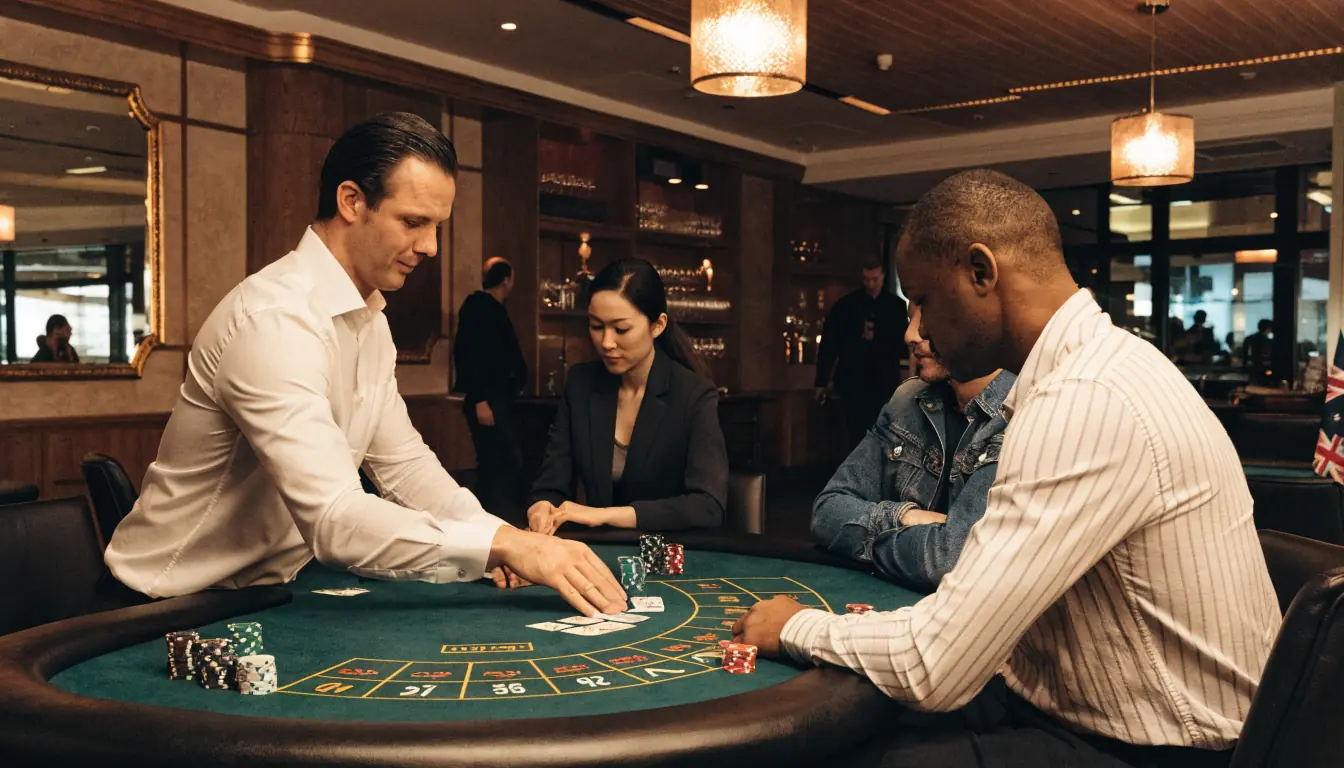
Table games beyond the cards
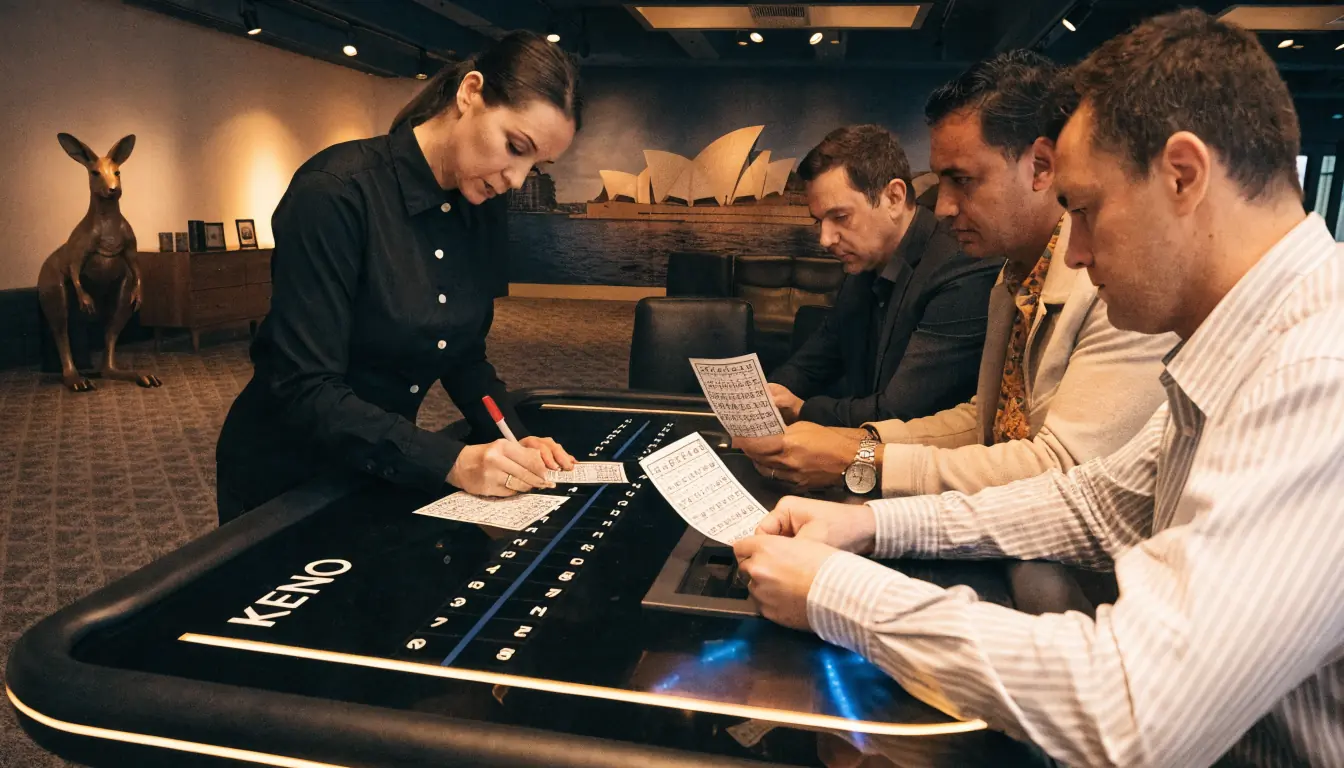
Table casino games available online include roulette, craps, Pai Gow and Sic Bo. Roulette is the universal one; craps, Pai Gow and Sic Bo are the depth of the shelf — present on most full-scale sites, rarely promoted, and played by a small, loyal base. They run on RNG-based software in their standard form, with outcomes produced by a Random Number Generator and, on reputable platforms, audited by independent testing agencies.
RNG versions and live-dealer versions
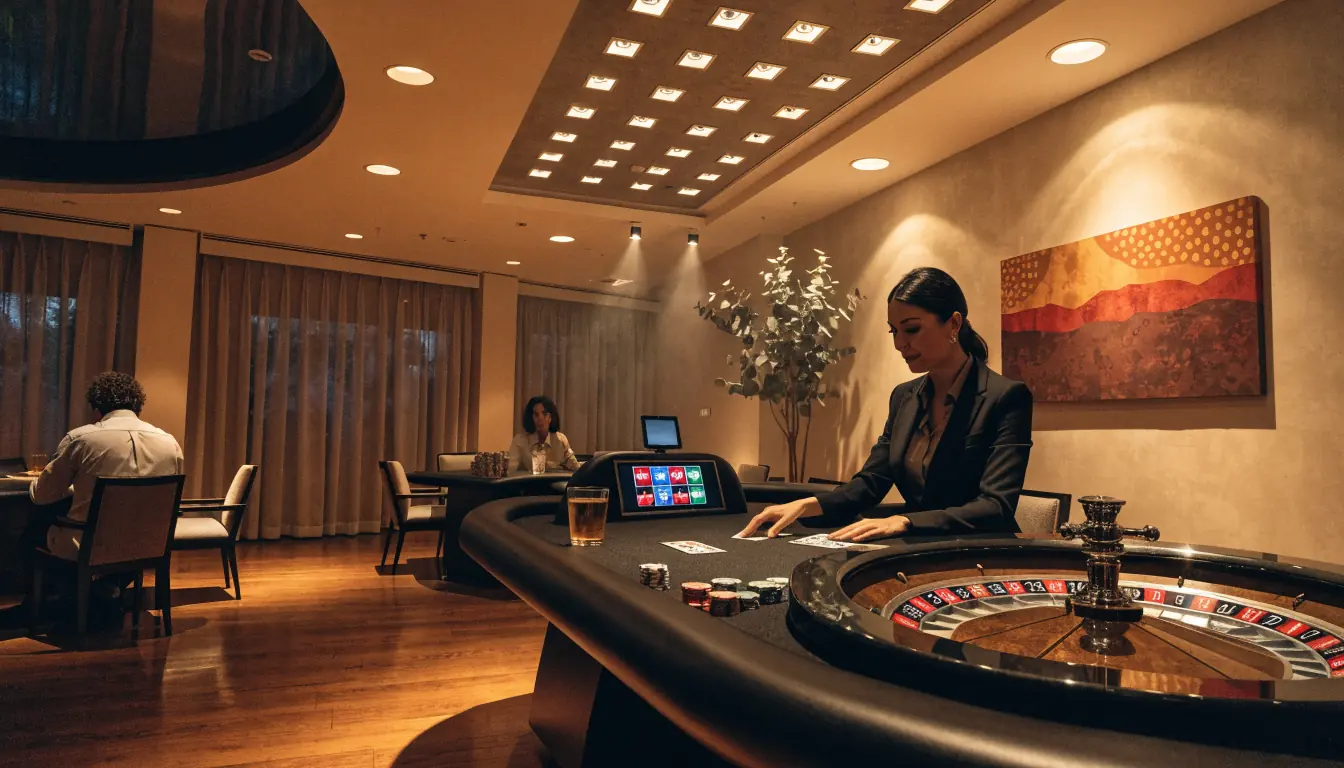
Both categories split into two delivery formats, and the distinction matters more than the game itself. RNG-based versions are software simulations — fast, always available, cheap to run. Live-dealer versions are streamed in real time with professional dealers, and the cost of that studio shows in table minimums and slower pace. Poker, blackjack, baccarat and roulette all exist in both formats. Plinko does not: it has no dealer, no wheel, nothing to stream. It is an RNG-only product by construction, closer in spirit to a pokie than to a table game, whatever menu it appears under.
Where plinko fits
The plinko casino game — the ball-drop format with a multiplier grid — belongs to none of the traditional shelves cleanly. Sites that label it a "slot" are stretching the word; sites that file it under "instant games" or "arcade" are being honest. The ball game works the way a coin toss does: one decision, one drop, one outcome. No strategy layer between the wager and the result.
That is the honest map of an Australian-facing lobby: pokies dominating, card games and table games filling the middle in endless variations, and plinko sitting off to the side as a compact, fast, RNG-driven oddity. A small shelf, honestly labelled.
A software‑based version where the ball’s path is generated by a Random Number Generator and audited by independent testers.
A streamed, real‑time version with a human host; slower and more social but still RNG‑driven behind the scenes.
Land‑based or online slot machines that use RNG for reel outcomes; they lack the risk‑level lever found in plinko.
Playing Plinko for Real Money – Legal and Practical Considerations
Before anyone wires a single dollar into a plinko game, it is worth understanding how the legal machinery around online casinos in Australia actually works — not the marketing version, but the version that determines what an operator can and cannot lawfully offer.
The law that governs everything
The Interactive Gambling Act 2001 (IGA) is the primary Commonwealth law governing online gambling in Australia. It was introduced to protect the public, with an explicit focus on harm minimisation, and it takes a hard line on one category in particular: online casino-style games. Slots, poker, blackjack, roulette — all of them are prohibited under the IGA when offered over the internet to Australian residents. Plinko, whatever its carnival origins, falls squarely inside that category the moment real money changes hands.
One point of confusion worth addressing directly, because sources themselves disagree: some references cite an Interactive Gambling Act 1997 as the law prohibiting online casino games to Australian residents, while the majority point to the Interactive Gambling Act 2001. I flag the discrepancy rather than quietly pick a side — but in practice, everything that matters here runs through the 2001 Act and its enforcement by the Australian Communications and Media Authority (ACMA).
Here is the structural fact that shapes the entire market: it is illegal to offer online casino gambling in Australia, and no domestic licence for an online casino exists. There is no application form, no licence tier, no registry of approved online casino operators. That is not a gap in the system. It is the system.
What this means for the player
The law targets operators, not players. It is not illegal for individual Australians to play at offshore-licensed online casinos — the prohibition sits on the supply side, on whoever provides the games. From the player’s chair, that produces an unusual arrangement: the person placing the bets breaks no law, while the person taking the bets most certainly does if they are serving the Australian market.
I have seen this arrangement misread in both directions. Some assume that because playing is not an offence, everything around it must be safe and sanctioned. It is neither. Others assume the opposite — that an individual Australian commits a crime by opening a plinko game with real money. Also wrong. The honest description is uncomfortable for everyone: legal for the player, unlawful for the operator, and entirely without the domestic protections a licensed market would provide.
Practical requirements before real-money play
Whatever the legal status of the operator, the baseline requirements themselves are not in dispute:
- Age. The minimum age to play at online casino operators in Australia is 18 years. That threshold is non-negotiable, and a platform that does not enforce it is telling you everything you need to know about its other checks.
- Residency. Players must be Australian residents to participate in online casino games as they are offered to this market.
- Identity verification. Government-issued ID before any withdrawal is the standard requirement — and it is the point at which casual players discover the platform was never casual about them.
That last item deserves emphasis, because it is where the "just try it" experience collides with reality. Deposits can feel frictionless. Withdrawals are where the paperwork lives, and where an offshore operator’s actual attitude toward its customers reveals itself.
Real money in, and getting it back out
A plinko game played for real money is a wagering product in every regulatory sense. The ball drops, the multiplier lands where the RNG decides, and the money moves accordingly. That is the fun part. The less discussed part is the withdrawal path.
Because there are no domestically licensed real-money online casino operators available to Australian players, every withdrawal runs through an offshore structure. Payments by Visa, Mastercard, PayPal, or Skrill are all, on paper, established methods in online gambling generally — but in this specific market, the practical reliability of a withdrawal depends on the individual operator, not on any Australian backstop. There is no local regulator to escalate to, no domestic dispute scheme with teeth over casino play. What a player has is the operator’s own complaint procedure, and whatever offshore licence that operator holds.
Withdrawal risk
Withdrawals from offshore plinko operators can be delayed or denied, offering Australian players limited recourse.
Anyone who has worked in this industry knows the phrase for that arrangement. Buyer beware.
Where responsibility actually sits
The harm-minimisation intent behind the IGA is not decorative language, and the Australian framework around it is serious: self-exclusion is an established term and an established procedure, and services such as Gambling Help Online, Lifeline, and BetStop exist precisely because the gap between "legal for the player" and "unprotected player" is real. A domestic framework of spending limits, breaks, and self-exclusion options is what a licensed market enforces on operators. In an offshore context, the only person reliably applying those measures is the player.
The honest summary
Playing plinko for real money from Australia is not a crime for the individual. It is also not a protected activity. The 18-year age floor and the residency requirement are firm; everything beyond them rests on the goodwill and competence of an operator who is, by definition, operating outside Australian law to serve you. That is the full picture. No bonus offer changes it, and no "no deposit" promotion — a phrase I treat with the suspicion it has earned — should be read as evidence otherwise.
Money that leaves your account for a plinko game in this market leaves without a safety net. Worth knowing before the ball drops.
Choosing an Australian Online Casino for Plinko
Here is the awkward part first: there is no such thing as a licensed Australian online casino. Domestic licensing for real-money online casino games does not exist — the Interactive Gambling Act 2001 prohibits it, and no regulator here will issue such a licence. So the standard checklist advice you see everywhere ("make sure the operator is licensed in Australia") is not just unhelpful in this market; it describes a document nobody can hold. Any site claiming an "Australian casino licence" is either confused or lying, and that alone tells you something.
What an Australian player actually faces is a choice between offshore-licensed operators — platforms holding credentials from bodies such as the United Kingdom Gambling Commission or the Malta Gaming Authority. That licence does not make the site legal to offer casino games to Australians; it does mean the platform answers to some regulator somewhere, which matters when things go wrong. A casino accountable to no one is the one to walk past.
What to check once licensing is off the table
Independent RNG auditing. Online casino software uses Random Number Generators (RNGs) that are regularly audited by independent testing agencies. Plinko is an RNG-based game at its core — the ball’s path is generated, not physically dropped — so this is the single most relevant technical check. A site that publishes audit information openly is doing the one thing it can do to prove its plinko outcomes are not tilted. A site that says nothing about it has made a choice too.
Real verification requirements. Operators that ask for government-issued identification before withdrawals are, counterintuitively, the safer ones. Frictionless cash-outs and frictionless everything is the signature of the end of the funnel, not of a well-run platform.
Named game providers. Studios such as Pragmatic Play, Microgaming, NetEnt and Evolution Gaming put their names on their products. A plinko game with an identifiable provider behind it can be checked; an anonymous in-house clone cannot.

Responsible gambling tooling. Deposit limits, breaks, self-exclusion. Their presence signals that someone built the platform to operate long-term rather than to burn through a customer base.
On crypto plinko sites
Bitcoin plinko casinos get heavy advertising, and the pitch — anonymity, instant play — is precisely what removes the protections above. No KYC means no one to appeal to when a withdrawal stalls. Whether digital currencies can lawfully be used for this in Australia is a separate question, covered further along in this article.
The honest summary: the checklist here is shorter than the marketing suggests, because in this market most of the usual items have nothing behind them. A foreign regulator that actually answers, audited RNG software, a named provider, real verification. Four things. That’s the list.
Free‑Play and Demo Options for Plinko Games
Many slot games, plinko titles included, can be played in demo mode with virtual funds. That is the standard arrangement on casino sites, and it is worth understanding what the mode actually is before treating it as practice.
A demo version runs on the same RNG-based software as the real-money version. The drop mechanics, the multipliers, the risk settings — all of it behaves the same way. What changes is the money: there is none. Virtual credits go up, virtual credits go down, and the session ends without consequence. This makes demos useful for one thing — learning how a specific plinko layout responds to different risk levels and board configurations. It tells you nothing about how a bankroll survives a losing streak, because there is no bankroll to lose.
“Free spins” is the term to treat carefully. Genuine free-play demos cost nothing by design. A free-spins offer, by contrast, is a bonus, and bonuses carry wagering requirements, game restrictions and time limits such as expiry dates. One is a sandbox; the other is a promotion with terms attached. The wording rarely makes that distinction for you.
Demo mode also has a practical legal side in Australia: since no domestically licensed real-money online casino exists, free play is the only version of plinko that carries no ambiguity at all.
Practice the mechanics, yes. Just remember what the practice leaves out.
Plinko and Cryptocurrencies – What the Regulations Say
Some offshore platforms promote themselves as crypto casinos offering plinko, accepting Bitcoin or Ethereum in place of cards or e-wallets. The payment method changes nothing about the legal position. Plinko is an online casino style game, and online casino games — slots, poker, blackjack, roulette included — are prohibited under the Interactive Gambling Act 2001. The ban sits with the operator, not the player; that much stays the same whether the deposit was a bank transfer or a crypto transfer.
From the industry side, I’ve watched crypto branding used as a workaround pitch: the claim that a digital currency somehow places a site outside Commonwealth law. It doesn’t. The Interactive Gambling Act 2001 prohibits federally the provision of online casino, poker and in-play betting to Australian residents, and no payment technology alters that. There is also no domestic licence an operator could hold to run plinko for real money — crypto or otherwise.
A "plinko casino script" sold online as a ready-made site package inherits the same problem: the software isn’t the issue, offering the game to Australians is.
Crypto warning
Using cryptocurrencies does not bypass the Interactive Gambling Act; operators accepting crypto for plinko remain subject to the same prohibitions.
Same law, different wallet.
Plinko Casino Reviews: What Players Report
Reviews of plinko casinos follow a pattern I’ve seen repeat across every game category: the loudest complaints and the loudest praise are rarely about the game itself. Plinko, mechanically, is a ball dropping through pegs toward a multiplier — there is very little to review once you’ve seen it. So players write about everything around it instead.
Three themes dominate the feedback.
Withdrawal friction. The most common negative reports centre on withdrawals — slow verification, requests for government-issued ID at the payout stage rather than at sign-up, and payouts that arrive without explanation of the timeline. This is worth reading against the objective backdrop covered earlier: because there are no domestically licensed real-money online casino operators available to Australian players, offshore platforms operate outside ACMA’s reach, and a complaint thread is often the only recourse a player has. That is the context reviewers rarely spell out.
Bonus conditions. Players frequently report surprise at wagering requirements, game restrictions and time limits such as expiry dates attached to bonuses. This is not a hidden mechanic — the conditions exist in the terms — but reviews show how often they are read only after the fact. A "free" offer described in a review as free rarely turns out to be unconditional.
Celebrity-branded plinko apps. Searches for plinko games tied to well-known internet personalities return a steady stream of warnings from players who downloaded copycat apps. The branded versions players ask about are, in many reported cases, not affiliated with the person shown in the advertising at all. Treat any celebrity-endorsed plinko app as unverified by default.
One caution about the positive reviews: they are the easiest content on these platforms to manufacture. Volume of praise is not evidence of anything.
The honest summary: plinko game reviews tell you more about an operator’s payment behaviour than about the game. Weigh them accordingly.

Plinko Casino in 2026 – Key Features and Expectations
Predicting the next twelve months of online plinko in Australia is a short exercise, because the one variable that governs everything else is not moving. The Interactive Gambling Act 2001 remains the primary Commonwealth law governing online gambling, and its purpose — public protection with a focus on harm minimisation — has not changed. Under that framework, online casino-style games, plinko included, cannot be offered to Australian residents by any licensed domestic operator, because no such licence exists to obtain. There is no indication of reform on the table for 2026.
What that means in practice: the plinko games Australians encounter will continue to sit on offshore-licensed platforms. The year 2026 will not produce a "regulated Australian plinko casino" in the marketing sense of the word, and any site claiming otherwise is describing something the law does not offer.
What can reasonably be expected instead is continuity in the features already discussed: RNG-based plinko titles audited by independent testing agencies, demo modes running on virtual funds, and the persistent grey area for individual players, since the law targets operators rather than the people who play. The ACMA will keep its enforcement role — blocking and enforcement actions sit within its remit — and tools such as BetStop, the national self-exclusion register, will remain the domestically available protections regardless of where a game is hosted.
That is the honest projection. Same law, same games, same gap between the two.
Lucky Guru and Other Plinko‑Related Strategies
Searches like "casino guru plinko" or "lucky plinko casino" tend to lead to strategy guides promising systems that beat the game. Having worked with these products, I can say plainly: plinko outcomes are produced by RNG software audited by independent testing agencies. There is no pattern to read and no bet sequence that shifts the odds. A "strategy" that claims otherwise is marketing, not mathematics.
What these guides actually sell is volatility management — adjusting risk settings and bet size, which changes how a session feels, not its expected result. That distinction rarely makes it into the sales copy.
Some of these terms also circulate around UK-facing platforms, but the Australian context is the one that matters here: no domestic licence exists for online casino play, and the law targets operators, not players aged 18 and over who choose offshore sites. Responsible‑gambling tools such as self‑exclusion remain the only strategies with a verified effect.