
Crash Casino Game in Australia: Legal Rules Explained

- Legal Landscape for Online Gambling in Australia
- Cash Casino Games and Real-Money Restrictions
- What Is a Crash Casino Game?
- Crash Slots: A Variant of the Crash Game
- Other Crash Game Formats
- Free and Demo Versions of Crash Games
- Crypto‑Based Crash Casinos
- Strategies, Rules and Staking in Crash Games
- Bitcoin and Balloon Variants of Crash
- Provably‑Fair Play and Certification
Legal Landscape for Online Gambling in Australia
Anyone trying to work out where a crash casino game stands in Australia runs into the same wall first: there is no single gambling law and no single gambling authority. Regulation is split between the Commonwealth and the states and territories, and the split is not tidy. Each state and territory runs its own separate gambling regulator, while the federal layer polices a specific — and narrow — slice of the market.
Two levels, two jobs
The state and territory regulators handle most of what Australians physically see: the land-based casinos, the pokies venues, the retail wagering shops. A physical casino in Australia answers to its state regulator and to state law enforcement agencies, not to any federal body. That is a completely separate chain of command from anything online.
The federal piece is the Interactive Gambling Act 2001 (IGA), enforced by the Australian Communications and Media Authority (ACMA). I have seen the IGA described in older materials as the Interactive Gambling Act 1997, and the discrepancy is worth naming rather than smoothing over: sources disagree on the year, but the operative Commonwealth statute governing online gambling is cited by ACMA itself as the 2001 Act. Whatever the citation, the function is the same — it is the law that decides what may legally be offered to Australian residents over the internet, and it was written around public protection and harm minimisation, not around growing a market.
If you’re chasing crash-style casino games in 2026, it helps to know which platforms are licensed, what welcome offers look like, and how fast you can get paid before you commit.
License: Curacao Gaming Control Board OGL/2023/174/0082 (Dama N.V.) · Bonus: up to A$5,000 + 300 free spins across 4 deposits Licensed under the Curacao Gaming Control Board via Dama N.V., this operator backs its offering with a sizeable welcome package spread across four deposits, including a generous free spins allowance.
License: Curacao – Antillephone N.V. (Versus Odds B.V.) · Bonus: up to EUR 2,000 across 5 deposits + 200 free spins · Min. deposit: EUR 20 Operating under a Curacao – Antillephone N.V. licence, this casino spreads its bonus across five deposits with a modest minimum deposit requirement, making it accessible for newcomers testing the waters.
License: Curacao eGaming (Dama N.V.) · Bonus: up to A$10,000 + 180 free spins, 40x wagering Licensed through Curacao eGaming under Dama N.V., this operator offers a substantial deposit bonus paired with free spins, though the 40x wagering requirement is worth noting before opting in.
Bonus: up to A$7,500 + 550 free spins across 10 deposits, 50x wagering · Payout speed: crypto under 1 hour, PayID 1-3 business days · Min. deposit: A$20 (A$30 to qualify for the bonus) A standout for payout speed, with crypto withdrawals processed in under an hour and PayID transfers within a few business days; its multi-deposit bonus structure spans ten deposits with a clear wagering target.
License: Curacao Gaming Authority (Jumpman Gaming Ltd) · Bonus: up to A$6,600 + up to 250 free spins across 4 deposits Licensed by the Curacao Gaming Authority through Jumpman Gaming Ltd, this operator offers a solid welcome bonus with free spins distributed over four deposits.
License: Curacao eGaming (Roby Games Ltd) · Bonus: 100% up to A$750 + 200 free spins Holding a Curacao eGaming licence under Roby Games Ltd, this casino keeps things straightforward with a percentage-match bonus and a fixed free spins allocation.
Bonus: 240% up to A$4,100 + 300 free spins Notable for a high percentage match on its welcome bonus, combined with a generous free spins package for new players.
License: international iGaming licence – jurisdiction not named in the source · Bonus: 100% up to A$1,000 + 100 free spins, 35x wagering · Payout speed: PayID 1-24 hours · Min. deposit: A$30 (PayID from A$10) Fast PayID withdrawals within a day make this operator convenient for Australian players, with a straightforward welcome bonus and low minimum deposit requirements for payouts.
License: Curacao eGaming (Hollycorn N.V., since 2017) · Bonus: 225% up to A$1,540 + 600 free spins across 4 deposits, 20x wagering · Min. deposit: A$20-30 (depends on the offer) Licensed by Curacao eGaming through the long-established Hollycorn N.V. (operating since 2017), this casino offers a high-percentage bonus across four deposits with comparatively low wagering requirements.
License: Curacao Gaming Control Board · Bonus: up to A$5,000 + 400 free spins Licensed under the Curacao Gaming Control Board, this operator pairs a sizeable deposit bonus with a strong free spins component for new sign-ups.
Within that split sits a quirk that surprises people: the Northern Territory Racing Commission (NTRC). It is not a national regulator on paper, but it functions as Australia’s de-facto online gambling regulator, because most of the national online bookmakers hold Northern Territory licences — a jurisdiction chosen for its lower tax settings. So an online bookmaker operating across the whole country is, in many cases, licensed by one territory’s racing commission rather than by the states where its customers actually live.
Then there is Victoria. The Victorian Gambling and Casino Control Commission (VGCCC) monitors all wagering service providers — including those based in other states — for compliance with the National Consumer Protection Framework. A state regulator reaching across borders to check consumer-protection rules on operators licensed elsewhere is a good illustration of how layered, and how deliberately uncentralised, this system is.
What this means for crash games specifically
A crash game is, in regulatory terms, an online casino-style product. It is not wagering on a race or a match; it is a random number game with a rising multiplier and a cash-out button. Under the IGA, online casino-style games are prohibited from being provided to Australian residents, and no domestic licence exists that would let an operator offer them legally. There is no Australian licence to apply for, no local regime to opt into, and no regulator that will certify a crash game for the local market — because the category itself is closed.
I spell this out early because the rest of this article deals with crash games as a format, and it is worth being precise about the setting. It is not illegal for an individual Australian to play at an offshore-licensed online casino; the law targets operators, not players. But the legal supply side is empty. Anything a player encounters under the heading of a crash casino game online comes from offshore operators, licensed somewhere else, outside the reach of the state regulators that govern everything else in Australian gambling.
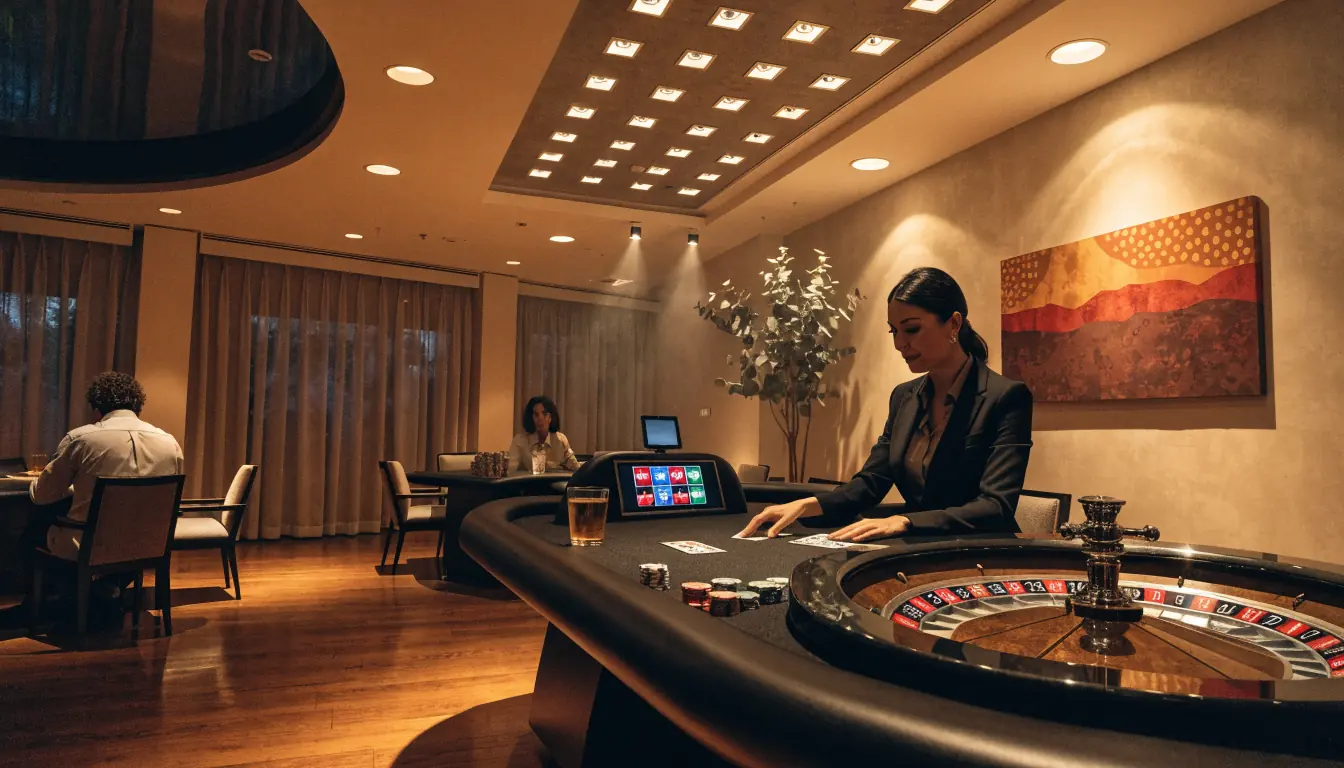
That reach matters. Bodies like the VGCCC and Liquor & Gaming NSW have real authority over domestic operators, but they have limited power over offshore online casinos. A state regulator can act against a venue on Crown land; it cannot meaningfully act against a server overseas serving crash games to an Australian IP address.
Enforcement sits with ACMA
The enforcement gap is filled, partially, by ACMA. Its toolkit against prohibited interactive gambling services is wider than most people assume: it can request that internet service providers block offending sites, it can instigate civil proceedings, it can notify border protection agencies about the directors and principals of offending offshore operators, and it can liaise with foreign regulators. It can also send letters to software developers and third parties it believes are ancillary to a contravention of the IGA — which pushes responsibility up the supply chain, not just at the front-facing casino brand. ACMA has demonstrated it will serve warning notices and refer matters to the Australian Federal Police where illegal gambling products are offered in Australia.
Website blocking began in November 2019. The scale of the blocking programme is reported inconsistently: one set of figures, current to publication in 2024, has ACMA blocking 975 illegal gambling and affiliate websites since November 2019; a more recent count, as of August 2025, puts the figure at 1,296 sites blocked, with more than 220 services reported to have voluntarily exited the Australian market. Both figures describe the same enforcement programme; the difference is the snapshot date and, presumably, the counting method. What is not disputed is the direction: the list grows, and offshore operators weigh the Australian market against the cost of being on it.
The ACMA blocks illegal offshore gambling sites, but the block does not protect Australian players from losing money on unlicensed crash casinos.
How this differs from the cash-casino environment
The contrast with land-based gambling is the part most explanations skip. A physical casino in Australia operates inside a licensing system: a state regulator, law enforcement oversight, venue-level obligations, identity checks, gambling-harm programmes with real local teeth. Online casino games — including any crash game online casino format — sit entirely outside that system. The state regulators who run the venue world have almost no lever over the offshore sites that carry crash games, and the federal regulator that does have levers is not a licensing body at all. ACMA does not approve anyone; it only blocks, warns, and refers.
So the Australian landscape for anyone interested in a crash casino game is defined by three facts at once. The format itself is legally treated as a prohibited online casino product. The players are not the target of the law. And the enforcement regime is a blocking-and-pressure apparatus run by a communications regulator, layered on top of a state-based licensing system that cannot reach the operators in question. The sections that follow deal with what that format actually is — but the legal ground it stands on is the ground described here. Uneven, split, and mostly somewhere else.
Cash Casino Games and Real-Money Restrictions
Every crash game you’ll see promoted to Australian players — every "crash casino," every multiplier ladder, every cash-out button — sits on top of one awkward legal fact: the game category it belongs to cannot be lawfully offered to Australians from anywhere, by anyone, under licence. Not by a local operator. Not by an offshore one holding the most respectable regulator’s badge on earth. The Interactive Gambling Act 2001 prohibits online casino-style games outright — pokies, poker, blackjack, roulette and everything shaped like them, which includes crash games in every format they come in.

That single fact reframes most of what the promotional side of this industry says. So it’s worth walking through exactly what the rules cover, why no licence exists to "check," and what that means for anything calling itself the best crash casino site for Australian players.
What "Prohibited" Actually Means Here
The prohibition on real-money casino games under the IGA works at the level of the offer, not the play. It is illegal to provide online casino gambling to Australians. It is not illegal for an individual Australian to sit down and play at an offshore-licensed casino. The law targets operators, not players.
I’ve seen this distinction confuse people in both directions. Some assume that because the site loads and the games run, the operation must be legitimate — otherwise someone would have shut it down. Others assume that because the games are prohibited, playing them carries personal legal risk. Neither reading holds up. The offshore operator is breaking Australian law by serving the market. The player is not.
The consequence for the operator side is structural: it is not possible to obtain a licence to operate an online casino domestically. There is no application form, no fee schedule, no pathway. There are no domestically licensed real-money online casino operators available to Australian players at all — not a small number, not a restricted handful. Zero. Sports betting licence? Yes, through state and territory authorities. Lotteries? Licensed. Online casino games? The category simply does not exist in the licensing system.
Why This Matters for Crash Games Specifically
Crash games are a casino product. Whatever visual skin they wear — a rising multiplier, a balloon inflating, a rocket, a slot-style reel — the underlying offer is a wager on a random outcome with a house edge, settled in money. That places them squarely inside the prohibited category. There is no carve-out for crash games, no separate treatment for "instant win" formats, no exemption for games marketed as skill-adjacent because you choose when to cash out.
Legal risk
Providing or hosting a crash casino game for Australian residents breaches the Interactive Gambling Act 2001 and can result in civil or criminal penalties.
The cash-out decision doesn’t change the classification. A crash round is a random number game from start to finish: the crash point is determined before the round begins, and the player’s only input is when to exit a wager already placed. Regulators don’t look at whether the player presses a button mid-round. They look at what’s being offered and whether it’s a casino-style game for money. It is. It’s prohibited.
This is the point the marketing language tends to slide past. "Crash casinos" are advertised with the vocabulary of novelty — fast rounds, provably fair mechanics, modern gameplay — as if the format were a new category the old rules don’t reach. The rules reach it. The IGA’s prohibition is defined by the nature of the offering, not by its release date or its art style.
The Licence That Isn’t There
Here is where the standard consumer advice collapses. On most gambling markets, the responsible recommendation writes itself: play only at licensed operators, check the regulator’s register, verify the licence number in the footer. In Australia, for online casino games, that advice is not cautious — it’s false. There is no domestic licence to check. No register to consult. An operator displaying a licence in its footer is displaying a licence from somewhere else, issued by a regulator whose authority stops at the Australian border as far as this product category is concerned.
Offshore licences are real documents issued by real bodies. But none of them authorises the holder to offer casino games to Australians, because no such authorisation exists to grant. A site licensed elsewhere and serving Australians is operating outside the permission system regardless of how many badges it displays.
So the honest framing is simpler and less comforting: any real-money crash game available to an Australian player is being offered unlawfully into this market. Not "unregulated" in the loose sense of nobody watching — prohibited, with a regulator actively working against it. The previous section covered how the enforcement machinery is built; what matters here is that the entire cash-casino category sits on the wrong side of it.

"Cash or Crash" and the Live Dealer Question
Among the search terms people use, one deserves particular attention: Cash or Crash. This is a specific game — a live dealer title in which coloured balls are drawn from a sphere, with green balls raising the payout ladder and red ones ending the round. It belongs to the live casino family, a category the IGA prohibits alongside everything else casino-style.
I mention it because it’s often discussed as though it were interchangeable with crash games proper. The overlap is real at the player-experience level — an escalating payout, a decision to bank or continue, a sudden loss. The legal treatment is identical: live dealer games, random number games, pokies, crash formats — all prohibited as real-money offerings to Australians. But the mechanics differ enough that treating them as one thing leads to muddled expectations, and the section that follows sorts the formats properly.
What I can’t do is give the rundown people usually want here — typical bet limits, payout ladder structure, table conditions for live crash-style titles in this market. There are no compliant Australian operators publishing that information, because there are no compliant Australian operators. The numbers that circulate come from offshore sites operating unlawfully into the market, which makes them marketing claims rather than conditions anyone stands behind here.
Why the Prohibition Shapes the Whole Crash Conversation
Understanding the restriction changes how you read everything else about crash games in an Australian context.
It explains the offshore geography. Every real-money crash casino serving Australians is doing so from outside the licensing system, which means every question about withdrawals, dispute resolution and account treatment runs through an operator with no Australian regulator to answer to. The enforcement body can block sites and pursue operators; it cannot recover funds or settle individual disputes with offshore operators. Whatever goes wrong between a player and an offshore crash site stays between them.
Although the IGA targets operators, not players, Australians using offshore crash sites have no regulatory recourse if the operator defaults or refuses payouts.
It explains the demo economy. The availability of free and demo crash games — covered in detail later — is not purely a player-convenience feature. For anything real-money, the lawful Australian-facing version of the product doesn’t exist, and the demo layer is what legally can.
It explains the enforcement numbers. When a regulator reports services exiting the market or websites being blocked, online casino games — the category crash games belong to — are the bulk of the target list. That’s not a coincidence of timing. It’s the prohibited category being worked on.
It explains why "best crash casinos" lists deserve suspicion. A ranking of real-money crash casino sites for Australian players is a ranking of unlawful offerings. The sites may differ in interface and payment methods; they do not differ in legal status, because there’s only one status available to them here. The differences that matter — whether payouts arrive, whether disputes get heard, whether the game behaves as advertised — are exactly the differences no licence stands behind.
What Stays Lawful, and Where the Line Sits
For completeness, the lawful side of the fence is not empty. Online sports betting operates legally under state and territory licences. Lotteries are licensed and regulated. Land-based casinos operate under state regulators, entirely separate from the federal framework covering online offerings. None of that changes the position of casino-style games online: prohibited, unlicensable, enforced against.
The minimum legal gambling age is eighteen, and the responsible-gambling infrastructure — BetStop, Gambling Help Online — exists for exactly the market context this is: a jurisdiction that has decided casino games online cause more harm than they’re worth, and has built both the prohibition and the support services around that decision. The attitude is harm minimisation. The crash game, with its rapid rounds and loss-chasing structure, is precisely the product profile that reasoning was aimed at.
The Honest Summary
Australians searching for crash casino games are looking for a product category that cannot lawfully be sold to them. Players who proceed do so at offshore sites operating unlawfully into the market, without licence protection, dispute recourse or any domestic regulator standing behind the outcome. That’s not a caveat buried in terms and conditions. It’s the entire legal frame for everything else this article covers — the formats, the variants, the mechanics and the free versions alike.
One fact, no workaround.
What Is a Crash Casino Game?
A crash game is a betting format built around a single rising multiplier. A round opens, players place a stake, and a multiplier starts climbing from a base point — one that grows steadily the longer the round runs. The stake wins at whatever multiplier is showing at the moment the player cashes out. The catch: at some point the round "crashes," the multiplier stops dead, and every stake that was still riding at that moment is lost. The whole game is the tension between greed and the exit button.
Core conclusion
Crash games are prohibited in Australia and can only be offered by offshore operators without any local licence.
I’ve watched these games from the operator side, and the honest description is this: it’s a raw mathematical duel with the house edge, stripped of everything else. No reels, no paylines, no bonus rounds, no dealer. One number going up, one button, one decision.
How the Round Actually Works
The structure is the same across the format, whatever the skin:
- Betting window. A short pause between rounds where stakes are placed. Some versions allow two simultaneous stakes, which lets a player hedge — a large “safe” cash-out and a small one left riding for a big multiplier.
- The climb. The multiplier rises continuously. It’s a random number game — the outcome is generated for each round, and neither the length of the climb nor the crash point follows any pattern a player can read.
- Cash out or crash. Cash out before the crash and the stake pays at the current multiplier. Stay in past it and the stake is gone. The crash point can arrive early or run long; nothing on screen tells you which is coming.
Every round is visible to every player at the table at the same time, and the results feed is public — recent crash points scroll past in a history bar. That shared feed is part of the appeal. A pokie is a private conversation with a machine; a crash game has a visible crowd, with other players’ cash-outs ticking by in real time. The social surface is doing real work here, and it’s no accident.
How It Differs From Traditional Casino Games
The differences from pokies and table games are structural, not cosmetic:
- One decision, not many. A pokie asks nothing after the spin. Blackjack asks a decision per card. A crash game asks one continuous question — when — and the player is inside it for the whole round.
- Timing is the skill surface. There is no strategy that changes where the round crashes; that’s generated per round. What the player controls is only the exit. That’s a narrower lever than a table game offers and a wider one than a pokie offers.
- Transparency of outcomes. The round results are shown to everyone, and many crash games advertise provably fair mechanics — a way for the player to verify the round outcome afterwards rather than trusting the operator’s word. Traditional random number games rarely offer anything comparable.
- Speed. Rounds are short and run back to back. The format is engineered for volume in a way table games aren’t.
The house edge sits in the maths of the crash point distribution — the same kind of built-in margin a pokie carries, just expressed as a curve instead of a paytable. Nothing about the format changes who the numbers favour.
The Australian Context
This is where the format gets complicated locally. A crash game played for real money is an online casino product, and online casino gaming — along with poker and in-play betting — is prohibited federally under the Interactive Gambling Act 2001. No domestic licence for this product exists and none can be obtained. What that means in practice: every real-money crash game reachable from Australia sits on an offshore operator, outside local regulation, outside the local complaint and dispute machinery entirely.
The law is aimed at the operators, not the players. It is not illegal for an individual Australian to play at an offshore-licensed online casino. But the protection that comes with a licensed market — enforceable complaints, verified payouts, a regulator with teeth — does not follow the player offshore. The Australian Communications and Media Authority can and does block offshore sites it identifies as offering prohibited products, and it has done so at scale.
A "crash casino" marketing itself at Australians is, by definition, a site no Australian regulator supervises. That single fact matters more than any multiplier on screen.
Crash Slots: A Variant of the Crash Game
Crash slots are what happens when a studio takes the crash mechanic — one multiplier climbing until it stops — and wraps it in the visual language of a pokie. Instead of a bare line or a rocket crawling across a dark screen, you get reels, symbols, themed art, sometimes a character that reacts to the climb. Underneath, the engine is the same: a round starts, a multiplier grows, and at some point it crashes. The question is always when to get out, not what the reels line up into.
I’ve sat through enough product demos to know why this hybrid exists. Crash games are cheap to run and fast to play, but they look austere — a line, a number, a lot of empty space. Slot players, who make up the bulk of the casual audience, find that layout alien. So designers borrowed the furniture of a pokie: spinning reels as a pre-round animation, coin showers on a win, a familiar cabinet-style frame. It is a packaging decision, not a mechanical one.
What actually changes
The differences from a standard crash game are mostly presentation, but three of them matter to how a round plays out:
- Entry point. Classic crash runs on a shared schedule — one multiplier for everyone in the round, betting between rounds. Many crash slot hybrids individualise the round, so each player’s outcome resolves separately, more like a pokie spin than a communal event.
- Payout display. A crash game shows one number going up. A crash slot often frames the win through symbols or paytable-style visuals, which can make the actual multiplier harder to read at a glance. That is not an accident; a busier screen holds attention longer.
- Speed and ceremony. Reel animations, even short ones, sit between the player and the next bet. The pace slows compared with the stripped-back crash format, and the “near miss” psychology of slots gets layered on top.
What does not change: the house edge is set the same way, the result is determined the moment the round starts, and no amount of visual detail alters the underlying random number game. Anyone presenting a themed crash slot as somehow "more generous" than the plain version is selling decoration.
The rocket version
The most recognisable skin for this format is the rocket — a small craft lifting off, multiplier ticking up with altitude, then a burst. Players search for it constantly, which tells you how strong the imagery is: people remember the rocket more readily than the studio behind it. Mechanically, a rocket crash game is the standard format wearing a costume; the rocket exists because it explains the concept without a tutorial. Climb, climb, explode. Everyone understands it in a second.
Australia-specific caveat worth stating plainly: any real-money version of these games, rocket-skinned or otherwise, sits in prohibited territory here. Online casino-style games, pokies included, cannot be licensed domestically under the Interactive Gambling Act 2001, and ACMA has been ordering internet service providers to block illegal offshore gambling sites since November 2019. So a crash slot that accepts Australian players for real money is doing so without an Australian licence — because no such licence exists to hold.
Demo play and the "best crash casino" question
Requests for the best crash casino or the best crash game site are common, and I’ll be blunt about what can honestly be said here: there is no licensed real-money crash casino operating for the Australian market, so there is no ranked shortlist to publish. Any site claiming that title locally is, by definition, an offshore operator outside the domestic framework. What does exist — and what the demo versions are genuinely for — is the play-for-free side: crash slot demos and free crash casino modes that run the same engine without money attached. Those are useful for learning how a hybrid behaves, how the multiplier display reads, and how fast a bankroll-shaped balance evaporates when the timing is wrong.
A demo answers one question well — does this format make sense to me — and nothing else. It can’t tell you where to play, because for real-money crash slots in Australia, the honest answer is: nowhere licensed.

Other Crash Game Formats
The classic crash format — one curve, one multiplier, one cash-out button — turned out to be a framework rather than a finished product. Studios have spent the last few years stretching that framework into shapes that barely resemble the original. Some of the variants are genuine design work. Others are the same engine wearing a costume.
I’ve watched this category multiply from the operator side, and the pattern is consistent: a format catches on, a dozen studios reskin it, and the market splits between innovation and imitation. Worth knowing which is which before time or money goes into either.
Multi-Line Crash
The most meaningful structural change to the basic format. Instead of a single multiplier curve, the round runs several curves at once, each with its own crash point. The player’s stake is spread across them or split into separate bets.
The design logic is transparent: a single crash game produces one moment of tension per round, and then it’s over. Multi-line versions keep something alive on screen after the first crash. Whether that’s added entertainment or added exposure depends entirely on bankroll discipline — the format itself is neutral, but it makes faster losses structurally easier.
Thematic Variants
The mechanic stays identical — a rising multiplier, a random crash point — while the wrapper changes. A rocket instead of a curve. A plane. An athlete running. A heist timer. The visual layer is marketing, not mathematics, and that distinction matters. The theme changes what the losing moment looks like; it changes nothing about how often it arrives.
When a themed version is marketed as "new" or "better", the honest reading is that it is new packaging on an identical probability structure. That isn’t a criticism of the format. It’s just worth being clear-eyed about what is actually being purchased.
Hybrid and Random Number Variants
Some releases blend crash mechanics with features borrowed from pokies — free rounds, multiplier symbols, side payouts. These sit furthest from the original format and closest to conventional random number games. They tend to appeal to players who arrived at crash through slots rather than through the betting side, and the two audiences want noticeably different things from the same engine.

Where the Australian Market Stands
This is the part the promotional material never mentions: the category has been shrinking locally, not growing.
Casino crash games sit squarely inside the prohibited-interactive-services category under the Interactive Gambling Act 2001. Any offshore operator offering them to Australian residents is doing so without a domestic licence — and no such licence exists to obtain. Enforcement has followed.
Two figures circulate on this, and they don’t reconcile. According to theiaga.org, more than 100 illegal gambling services, including online casinos, had exited the Australian market since the Australian Communications and Media Authority (ACMA) began enforcing its expanded rules in 2017. According to iclg.com, as of August 2025 ACMA had blocked 1,296 illegal gambling sites and affiliates since 2019, and 220 illegal services had voluntarily exited the market. Different counting methods, different cut-off points — the direction of travel is the same in both, which is the only claim either can safely support.
The practical consequence for anyone tracking crash variants: catalogues churn. A format available this quarter can vanish the next once its host service exits or its domain is blocked. Availability here is not a product feature. It’s a regulatory snapshot.
That is the honest framing for anyone comparing "top" crash titles against each other. The interesting question about a variant is rarely whether it’s the best version. It’s whether it will still be reachable in six months — and no provider promoting it into this market will volunteer that part.
Free and Demo Versions of Crash Games
Most crash games ship with two modes behind the same button: a real-money table and a demo, sometimes labelled "fun mode" or "practice." The demo runs on the same software, the same multiplier curve, the same crash points. The only thing removed is the deposit. That is worth stating plainly, because marketing copy likes to imply the free version is a "lite" build. It isn’t. It’s the full engine with a virtual balance.
What the demo actually does is let a player watch the multiplier climb and crash as many times as they like, with nothing on the line. For a game built on a rising curve and a single cash-out decision, that rehearsal has genuine value. You can see how quickly the round turns, how the auto-cash-out setting behaves, how the game reports a bust. Reading about it and feeling it are different things, and the demo closes that gap without cost.
What the demo cannot do is teach the pressure. A virtual balance changes behaviour. Players cash out later, chase losses harder, and treat a bust round as noise. When real money is on the curve, the same decision looks nothing like it did in practice mode. Any software provider that claims demo play "trains" a player for real-money crash games is selling the rehearsal, not the performance.
There is also a legal dimension in Australia that the demo obscures. A free crash game, with no wagering attached, sits outside the real-money offering that the Interactive Gambling Act 2001 prohibits for operators targeting Australians. So demos from game studios are openly available, while the cash version behind them sits on offshore platforms with no domestic licence — and there is no domestic licence to hold. The free mode is the shop window; the purchase happens somewhere the law has already flagged.
That is the split worth remembering. The demo is legal, visible, and honest about its mechanics. The real-money table it advertises is the part ACMA has spent years pushing back — blocking access to illegal gambling sites since November 2019 and, per boomaff.com, prompting over 220 illegal services to exit the Australian market entirely. Practice for free, by all means. Just know which half of the product the free half is advertising.
The demo shows the curve. It never shows the invoice.
Crypto‑Based Crash Casinos
Most crypto casinos offering crash games to Australians sit offshore, take deposits in Bitcoin or Ethereum, and present themselves as a category apart from "ordinary" online casinos. From a regulatory standpoint, that separation doesn’t exist. Australian law draws its line at the product, not the payment method: an online casino game is prohibited whether the stake arrives in Australian dollars, Bitcoin or anything else. A crash game played for crypto is still a casino-style game under the Interactive Gambling Act 2001, and offering it to Australian residents is unlawful from Australia’s side of the fence.
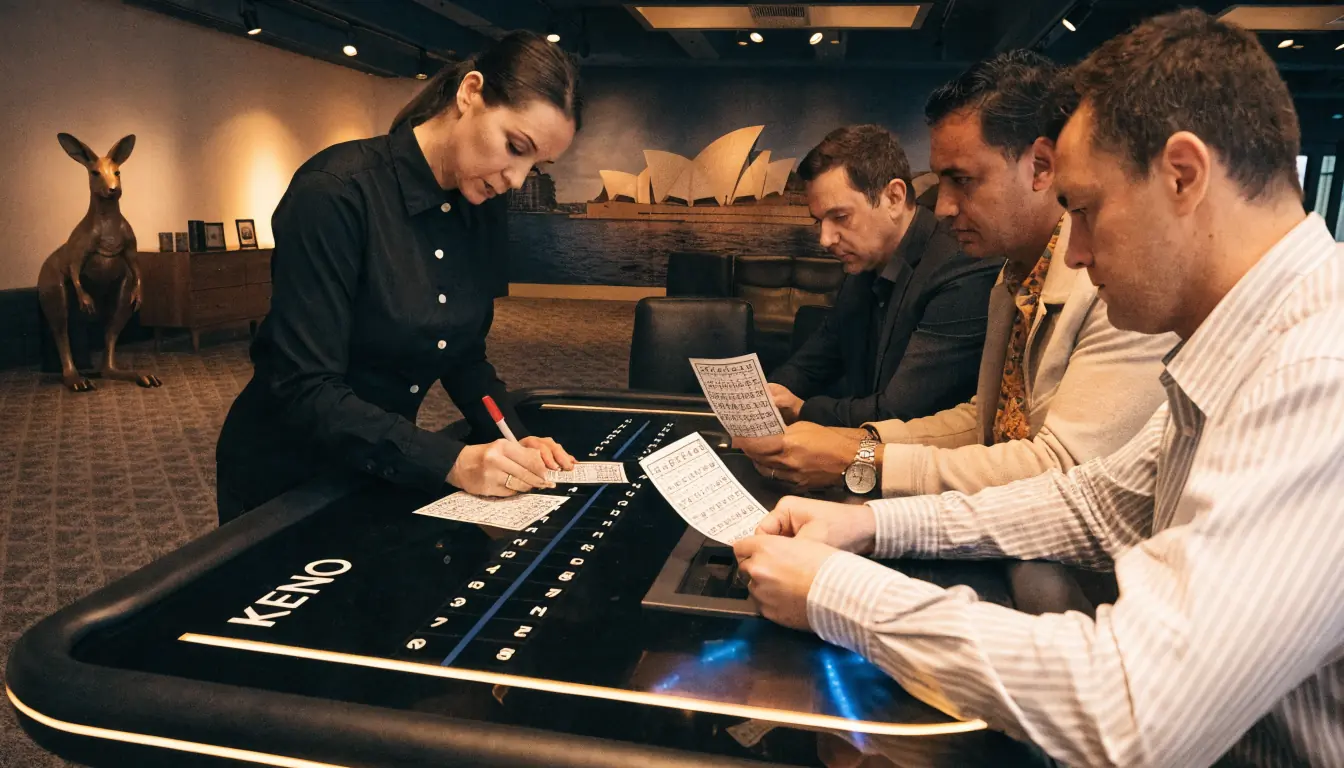
The payment layer doesn’t change the enforcement picture either. The Australian Communications and Media Authority (ACMA) can request the blocking of websites offering games not permitted under Australian law — online casinos and online slots among them — and it has used that power against offshore crypto sites the same way it has against fiat operators. A domain that only ever touches blockchain rails is still a domain an Australian internet service provider can be ordered to block.
There is a practical wrinkle worth naming. Blockchain transactions settle without an Australian intermediary, so ACMA cannot squeeze a local payment processor the way it could with a card-based operator. Its levers are different: blocking notices to ISPs, warning letters to third parties ancillary to a contravention, referrals to the Australian Federal Police where warranted, and liaison with foreign regulators. None of that reverses a transaction. Once crypto leaves a wallet to an offshore operator, recovery is not something an Australian regulator can deliver.
Worth remembering, too, that "crypto-native" and "better run" are not synonyms. The same operator that skips the banking system also skips the complaint channels a licensed bookmaker is obliged to maintain. Deposits move fast. Disputes stay where the server is.

One structural note: domestic rules here also bar credit cards and digital currencies for licensed betting — a sign of how regulators read crypto stakes generally. Not a loophole. The opposite.
Strategies, Rules and Staking in Crash Games
Every crash game runs on the same spine: a multiplier climbs, the player cashes out before it crashes, and the round settles instantly. There is no decision mid-round other than when to exit. That single lever is why people believe a strategy exists. I’ve watched the argument play out from the operator side, and the honest answer is: no betting pattern changes the mathematics of the game. What a plan can change is how long a bankroll survives and how badly a bad session hurts.
The rules worth knowing before anything else
- One bet, one decision. You set a stake, the round starts, and your only move is the cash-out. Some versions add an auto-cash-out setting, which removes the timing element entirely.
- The crash point is decided before the round displays. The animation is a presentation of an outcome already fixed. This is the part most tutorials quietly skip.
- Stakes are set per round, not per session. There is no carry-over, and a lost round does not influence the next one.
What "strategies" actually do
Martingale-style recovery — raising the stake after a loss to win it back — is the most advertised approach and the most dangerous, because a losing streak outpaces any bankroll eventually. Low-target systems, where a player cashes out early for modest returns, trade excitement for longevity, not an edge. I’ve never seen a pattern that beats the house edge; the smart players I worked with treated the game as entertainment with a fixed budget, nothing more.
Staking discipline that actually protects you
Set a session budget before opening the game, keep the per-round stake a small fraction of it, and stop at either boundary — profit or loss. Stop-loss and win-goal limits are the only tools that reliably change an outcome here, because they govern behaviour rather than the game. Free and demo versions, covered earlier, are the right place to test any of this. Discipline, not cleverness.
Bitcoin and Balloon Variants of Crash
Two offshoots of the standard crash format show up often enough to deserve separate treatment: the Bitcoin-branded crash game and the balloon mechanic. Both work on the same underlying idea — a rising multiplier that can stop at any moment — but the presentation and the framing differ, and the differences are worth understanding before anyone mistakes a skin change for a change in mechanics.
The Bitcoin variant
Bitcoin crash games are, in most cases, ordinary crash games with a cryptocurrency theme layered on top. The multiplier is dressed up as a rising Bitcoin price, a chart line, or a rocket tagged with the currency’s name. Bitcoin and Ethereum may also appear as accepted payment methods on offshore platforms, which is where the branding does its real work — it signals to crypto users that the site is built for them.
One point that matters under Australian rules: the IGA framework does not permit licensed online casino gambling domestically in any form, and digital currencies do not sit outside that. A Bitcoin-themed crash game offered to Australian residents is subject to exactly the same prohibition as any other online casino product. The regulator’s enforcement powers also apply regardless of how a site takes deposits.

There is also a gap in enforcement worth naming. ACMA has no power to require platforms like Facebook to block gambling advertisements targeting Australia, because of how the law words the prohibition on advertising ‘in Australia’. Crypto-gambling ads exploit that wording as readily as any other kind.
The balloon variant
Balloon crash games replace the climbing multiplier with an inflating balloon. Each tick of inflation raises the payout; cash out before the balloon pops and the stake is multiplied accordingly, wait too long and the round is lost. Mechanically it is the same wager as a standard crash game — timing an exit before a random stop — but the visual feedback is different, and the pacing tends to feel slower, which changes how people bet on it more than the maths does.
Same bet, different costume.
Provably‑Fair Play and Certification
"Provably fair" is the phrase crash games lean on hardest. The mechanics behind it are real enough: the round outcome is derived from a seed the operator publishes in advance, hashed so it can’t be quietly changed afterwards. A player can take the published hash, the round’s result, and verify that the multiplier that crashed the round was set before anyone placed a bet. For a game with no croupier and no visible wheel, that’s the closest thing to an audit the format offers.
What the phrase papers over is who stands behind the verification. The hash proves the round wasn’t altered after bets closed. It says nothing about the payout logic wrapped around that seed, about whether a crypto-based crash site honours withdrawals, or about who checks any of it. The verification is done by the player, on the operator’s own tooling, against data the operator supplies. That’s not certification. It’s self-attestation with arithmetic.
In Australia the gap is structural. ACMA can investigate and block prohibited interactive gambling services, but it cannot recover funds or settle individual disputes with offshore operators. No regulator is examining whether a provably-fair claim on an offshore crash site holds up. The math may be sound and the money still gone.
Trust the arithmetic. Not the hand offering it.