Best Casinos in Queensland: Hours, Licensing and Amenities
 Available in AU
- Opening Hours, Licensing and Regulatory Framework
- Casino Hotels in Queensland
- Nearby Accommodation Choices
- Parking and Accessibility
- Casino Gaming Areas and Poker Rooms
- Dining Options: Buffets and Breakfast
- Spa and Wellness Facilities
- Restaurants and Culinary Experiences
- Food Courts and Poolside Dining
- Contact Points and On‑Site Amenities
Opening Hours, Licensing and Regulatory Framework
Queensland’s land-based casinos don’t keep a single uniform schedule — each property sets its own gaming floor hours under the conditions of its individual licence. What can be stated with certainty is the entry rule that applies across the board: the minimum legal gambling age in Australia is 18, and Queensland venues enforce photo ID checks at the door. Anyone who looks under 25 should expect to be asked for identification, and staff at the entrance have the discretion — and the obligation — to refuse entry without it.
I’ve stood on the operator’s side of that checkpoint, and the age rule is one area where there is no flexibility. It sits in the licence conditions, and a breach is a compliance matter, not a customer-service question.
A layered system, not a single authority
Australia has no single overarching statute and no single national gambling authority. Regulation is split between the federal level and the states and territories, and each layer governs something different.
At the state level, Queensland licenses and supervises its land-based casinos, including their operating hours, gaming machine entitlements and venue conditions. This is the layer that decides whether a property can stay open around the clock, whether it can add tables, and how it manages patron safety on the floor.
At the federal level, the Australian Communications and Media Authority (ACMA) enforces the Interactive Gambling Act 2001. That law targets online gambling — and here the distinction matters. Online casino-style games, including pokies, poker, blackjack and roulette, are prohibited for Australian residents. It is illegal to offer them, and there is no domestic licence an operator can obtain to do so. What is not illegal is the act of an individual playing at an offshore-licensed online casino; the law pursues operators, not players. Anyone writing otherwise is conflating two very different legal positions.
One point worth flagging honestly: sources disagree on the statute itself. Most references cite the Interactive Gambling Act 2001 as the primary Commonwealth law; some material cites a 1997 Act covering the same prohibition. The 2001 date is the one regulators themselves use, but the discrepancy exists and shouldn’t be papered over.
Where online bookmakers actually come from
The Northern Territory Racing Commission (NTRC) functions as Australia’s de facto online gambling regulator — not because the Territory was given that role nationally, but because most of the country’s online bookmakers choose to license there for the lower tax rates. Online sports betting is legal under state and territory licences; online casino games and live in-play betting online are not. Live betting by telephone, oddly enough, remains legal.
What this means for a Queensland visitor
For someone walking into a Brisbane or Gold Coast casino, the practical framework is straightforward:
- Entry: 18 or over, photo ID in hand.
- Hours: set by each venue under its Queensland licence — check the property’s own schedule rather than assuming.
- Onshore online casinos: none are licensed, and none can be. Any site claiming an Australian online casino licence is misrepresenting the market.
- Sports betting: legal through state- and territory-licensed bookmakers, most of them licensed by the NTRC.
- Winnings: gambling winnings are not taxed in Australia.
The regulatory picture is layered and occasionally contradictory, but it is legible once the layers are separated. Queensland polices the floors; ACMA polices the internet; the Northern Territory, through tax arithmetic, ended up policing most of the country’s online bookmakers. Three regulators, three jobs. That’s the whole map.
Casino Hotels in Queensland
Choosing a casino for Queensland players means weighing licensing, bonus structure and payout practicalities before signing up, so here’s a quick verdict on each option to help narrow things down.
License: Curacao Gaming Control Board OGL/2023/174/0082 (Dama N.V.) · Bonus: up to A$5,000 + 300 free spins across 4 deposits Licensed under the Curacao Gaming Control Board via Dama N.V., SpinsUp offers a sizeable welcome package spread across four deposits, including free spins alongside the cash match.
License: Curacao – Antillephone N.V. (Versus Odds B.V.) · Bonus: up to EUR 2,000 across 5 deposits + 200 free spins · Min. deposit: EUR 20 Operating under a Curacao licence through Versus Odds B.V., Thor Casino spreads its welcome bonus over five deposits with free spins included, and keeps the entry deposit relatively modest.
License: Curacao eGaming (Dama N.V.) · Bonus: up to A$10,000 + 180 free spins, 40x wagering Licensed by Curacao eGaming under Dama N.V., JeetCity Casino stands out with a large headline bonus figure and free spins, backed by a clearly stated wagering requirement.
Bonus: up to A$7,500 + 550 free spins across 10 deposits, 50x wagering · Payout speed: crypto under 1 hour, PayID 1-3 business days · Min. deposit: A$20 (A$30 to qualify for the bonus) Ricky Casino combines a generous multi-deposit bonus with free spins, and is notable for fast crypto payouts alongside PayID processing within a few business days.
License: Curacao Gaming Authority (Jumpman Gaming Ltd) · Bonus: up to A$6,600 + up to 250 free spins across 4 deposits Licensed via the Curacao Gaming Authority under Jumpman Gaming Ltd, DragonSlots Casino offers a solid welcome bonus with free spins spread across multiple deposits.
License: Curacao eGaming (Roby Games Ltd) · Bonus: 100% up to A$750 + 200 free spins Roby Casino holds a Curacao eGaming licence through Roby Games Ltd and provides a straightforward percentage-match bonus paired with free spins.
Bonus: 240% up to A$4,100 + 300 free spins WinShark features a high-percentage welcome bonus with a substantial free spins allocation, making it a notable pick for new sign-ups.
License: international iGaming licence – jurisdiction not named in the source · Bonus: 100% up to A$1,000 + 100 free spins, 35x wagering · Payout speed: PayID 1-24 hours · Min. deposit: A$30 (PayID from A$10) House of Pokies operates under an international iGaming licence and pairs its welcome bonus with fast PayID withdrawal times and a low minimum deposit option.
License: Curacao eGaming (Hollycorn N.V., since 2017) · Bonus: 225% up to A$1,540 + 600 free spins across 4 deposits, 20x wagering · Min. deposit: A$20-30 (depends on the offer) Licensed by Curacao eGaming through the long-standing Hollycorn N.V. (since 2017), Playfina Casino offers a high-percentage bonus across several deposits with a comparatively low wagering requirement.
License: Curacao Gaming Control Board · Bonus: up to A$5,000 + 400 free spins Licensed under the Curacao Gaming Control Board, JustCasino provides a considerable bonus package that includes a large number of free spins.
A casino hotel is a specific product, and it pays to understand what it actually is before booking. I spent years watching guests walk up to the front desk expecting one thing and getting another. The hotel attached to a Queensland casino is not a hotel that happens to sit near a gaming floor. It is part of the same operation, run by the same company, with the gaming floor as the anchor that pays for everything else. That shapes the rooms, the rates and the deals in ways a standalone hotel down the road never has to worry about.
Why the on-site hotel works differently
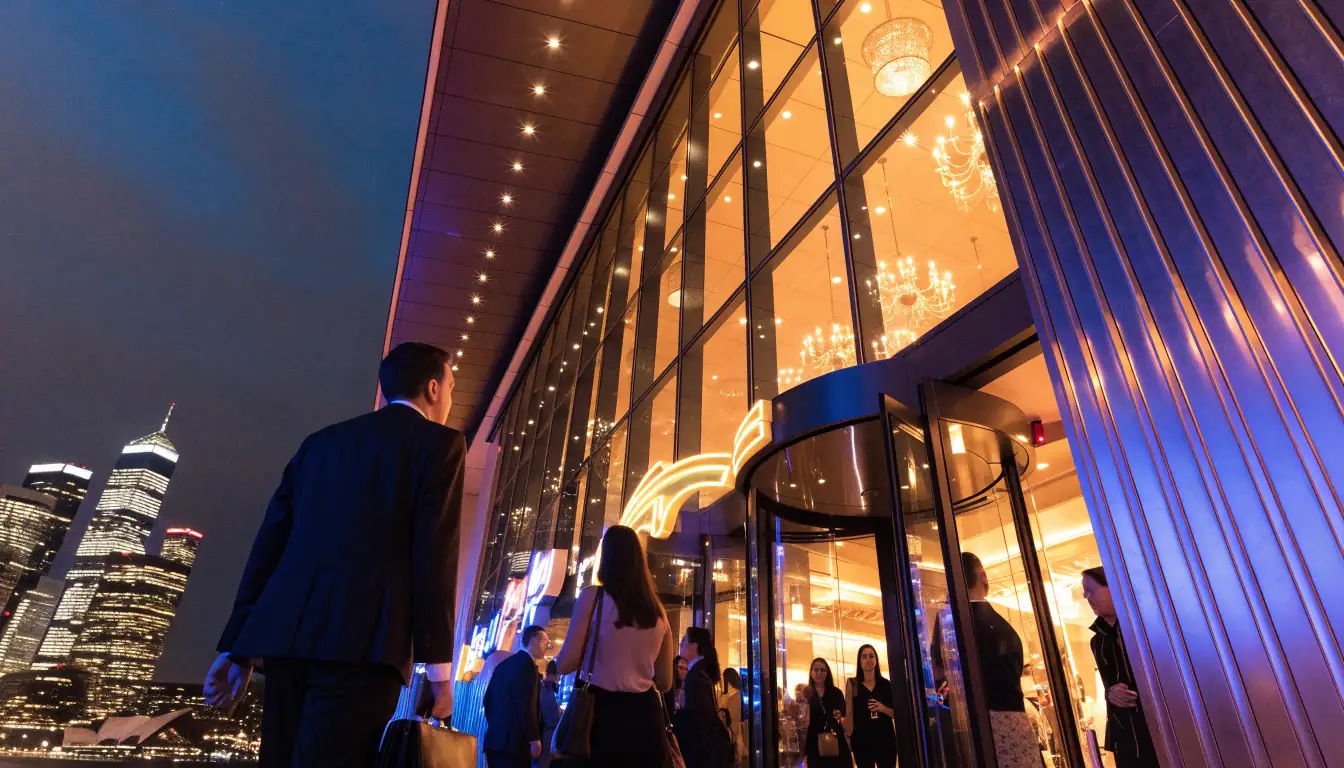
The first thing the on-site property sells is proximity. You step out of your room, walk down a lift, and you are inside the venue — no roads, no weather, no taxi queue. For guests who came specifically for the gaming floor, the pokies, the tables, the poker room, that short walk is the entire value proposition. Everything else is secondary.
Attention! Integration of your room key with your player account means your gambling activity can be directly linked to your accommodation charges. This may affect your ability to separate personal expenses from gaming spend.
The second thing it sells is integration. Your room key, your player account and your spending inside the venue are connected systems, even when they are not advertised that way. A guest who plays regularly and stays on-site is the most valuable customer the building has, and the commercial logic of the hotel reflects that: rooms exist partly to keep serious players on the property rather than leaking out to a competitor across the river.
What "casino hotel deals" actually are
The word "deal" does a lot of quiet work in this market. When a Queensland casino hotel promotes a package, it is rarely a discount in the ordinary sense. The common structures are:
- Room-and-credit packages, where part of what you pay comes back as credit usable inside the venue rather than as cash off the rate.
- Member rates, tied to the venue’s own loyalty program, which price the room according to your play history rather than the public rack rate.
- Event-driven pricing, where rooms are bundled around entertainment, dining or function nights, because those nights fill the hotel regardless.
None of this is hidden, but it is structured so the headline price looks better than the underlying economics. A package that returns credit instead of dollars is a deal only if you were going to spend inside the venue anyway. If you were not, you have simply prepaid for a category of spending you had not planned.
The rooms themselves
Casino hotel rooms in Queensland follow a pattern I have seen in every property of this type: a wide spread between entry-level rooms and the top tier, with very little in between. The base rooms are built and priced for the guest who is there for the floor and treats the room as somewhere to sleep. The upper tiers — suites and the like — are built for the guests the venue most wants to keep, and they are priced and allocated accordingly.
What this means in practice: if you book the cheapest room expecting a resort experience, you will be disappointed, because that room was never designed for you. If you book a suite expecting the rate to reflect only the square metres, you will also be disappointed, because the top tier is priced against the customer’s total value to the operation, not against the wallpaper.
Who the on-site hotel is for
The statistics explain why these hotels stay full. In 2022, 72.8% of Australian adults had gambled in the previous twelve months, and 38% gambled at least once a week. That is an enormous base of people for whom a trip built around a gaming floor is a normal weekend, not an occasional novelty. The on-site hotel is built for exactly this customer — the person whose itinerary revolves around the venue and who values being inside it above almost anything else.
For that guest, the on-site property is genuinely the right answer. The walk from room to floor is measured in minutes. Food, bars and entertainment are in the same building. There is no point in the evening where the night ends because transport does.
What the on-site hotel is not
It is not automatically the best-priced room in the area, and it is not a resort in the ordinary Queensland sense. It is also not a product where the operator publishes the mechanics of its member pricing — how rates relate to play history is internal information, and no venue discloses it. Anyone comparing an advertised casino hotel rate against a standalone hotel nearby is comparing prices built on different logic.
Choose the on-site hotel when the venue is the destination. Choose somewhere else when it is not. That is the whole decision.
The floor pays for the lift. That is the model.
Nearby Accommodation Choices
I’ve worked the check-in desk side of this business, and the pattern never changes: the casino’s own rooms fill first, then the overflow starts shopping outward. What surprises people is how quickly "nearby" stops meaning "walking distance." Booking platforms happily label a property as close to the casino when the actual walk involves a highway crossing or a stretch of road with no footpath. The label and the reality are two different products.
What "near the casino" actually means
The distinction worth knowing is between accommodation that markets itself on the casino’s proximity and accommodation that simply happens to be in the same district. The first group prices its location into the rate — I’ve watched rates climb when the gaming floor runs a big event weekend and drop the week after, for identical rooms. The second group, a few streets back, tends to hold steadier pricing because it’s selling to a different crowd: hospital shift workers, business travellers, families. Staying one street removed from the "casino district" pricing zone is the oldest trick on the desk.
The practical test I use: can the walk be done after midnight, in the rain, without a detour? If the answer requires checking a map, treat the property as transport-dependent, not walkable, and budget for that.
The transport question nobody asks until it’s late
Public transport in Queensland casino precincts is built around peak hours and event nights, not around a gaming floor’s operating rhythm. A train or bus service that looks fine on the timetable at dinner time may have stopped running well before the gaming floor closes. Anyone planning to stay out late and sleep elsewhere should check the last service, not the first — this is the single most common complaint I processed at the desk, and it was always the guest’s word against the timetable.
Ride-share availability at closing time is a separate matter. It exists, it works, but demand spikes exactly when everyone else leaves too. I’m not going to invent a price range for that surge — operators don’t publish predictable figures, and anyone who quotes you one is guessing.
Deals and packages: read what’s bundled
External hotels near Queensland casinos run their own promotions, and the wording deserves attention. A "casino package" from a neighbouring property usually means a room plus some voucher or credit redeemable at the casino — it does not mean the hotel is affiliated with the operator, and it does not carry the operator’s guarantees. When I see "casino deal" in a third-party listing, I read it as marketing adjacency, not partnership. The perks are real if the vouchers are real; just verify where they’re redeemed before paying a premium for the bundle.
One thing I tell anyone comparing the casino’s own rooms against external options: the non-gaming reasons to stay nearby are the ones that decide the visit. The gaming floor doesn’t go anywhere. The accommodation is where the money is actually spent on comfort.
A note on winnings and budgeting
For what it’s worth when planning the trip budget: gambling winnings are not taxed in Australia, so a win on the floor is a win in the hand. That doesn’t change what a room costs, but I’ve seen enough travellers budget for a tax that doesn’t exist to mention it here.
Where parking fits into all of this — street options, dedicated facilities, access routes — is covered in the next section.
Parking and Accessibility
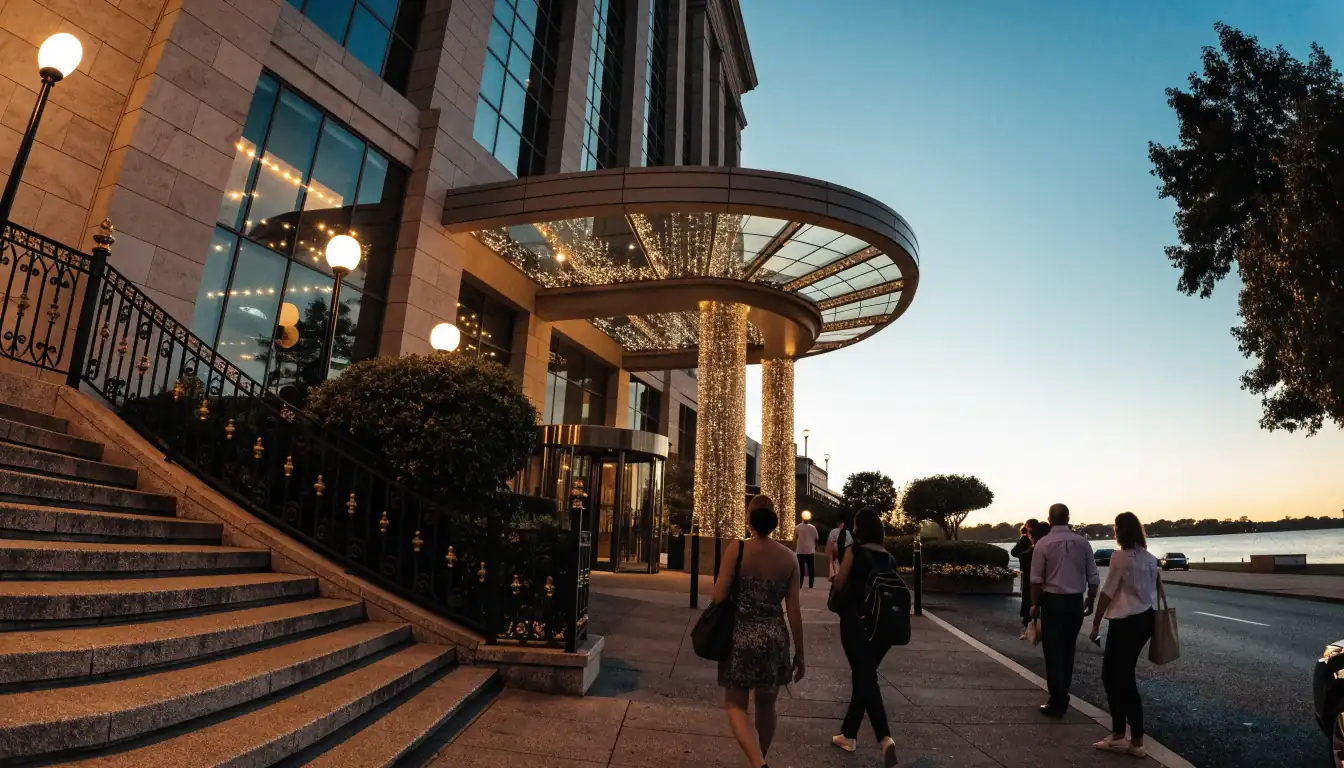
Parking is the least glamorous part of any casino visit, and it is usually the part that decides whether the visit happens at all. I’ve watched guests circle a block for a spot, give up, and drive home before they ever reached the gaming floor. That’s a real cost, and Queensland operators know it — which is why parking arrangements at casino properties are treated as part of the product, not an afterthought.
What the searches get wrong
A lot of people look for "free parking" at a Queensland casino as if it were a fixed feature. It isn’t. Parking terms at large casino complexes are typically tied to how you use the venue: spend at the restaurants, the hotel, or the bars, and validation schemes tend to come into play. Show up purely for the pokies and leave after an hour, and the daily rate is what it is. That structure is deliberate. The venue wants dwell time, not drive-by visits, and the parking pricing quietly reflects it.
What I can’t give you is a specific rate card. Casinos in Queensland don’t publish standardised parking pricing the way they publish, say, the legal age of entry. Rates shift with events, seasons, and redevelopment works on-site. Any page quoting you a flat figure without naming a date is guessing. Check the property’s own site or call ahead — the numbers are only real when they come from the operator on the day.
Valet parking
Valet is the tier above self-parking, and it works exactly the way you’d expect: hand over the keys at the entrance, collect them when you leave. What’s worth knowing is who it’s actually priced for. Valet is rarely aimed at the casual gambler — it’s aimed at hotel guests, diners heading to the signature restaurants, and people arriving for functions. If you’re a hotel resident, valet access is often bundled into the stay; if you’re a walk-in, you pay for the convenience like everyone else.
The honest gap here: I have no verified pricing for valet at Queensland properties, and I won’t invent a range. "Usually" and "around" don’t make a number true. Ask when you book.
Accessibility provisions
This is where casino properties do better than most large venues, because regulation forces it. As covered in the licensing section, gambling in Queensland sits under a multi-layered regulatory framework — and accessibility obligations attach to the venue as a licensed premises like any other public building in the state. In practice that means:
- Accessible parking bays close to lifts and entrances, marked and enforced.
- Step-free routes from parking into the main gaming floor, restaurants, and hotel lobby.
- Accessible toilets on the levels where the public operates.
- Lift access to any upper or lower gaming and dining areas.
If a specific access need matters — a drop-off point, wheelchair access to a particular restaurant, assistance at the entrance — the venue can confirm arrangements in advance. I’ve never seen a property refuse a reasonable access request at a licensed venue, but I’ve also seen the request work far better when it was made before arrival rather than at the door at 9pm on a Friday.
Parking, the state, and the money
It’s worth understanding why casino precincts are so well served by roads and parking in the first place. Gambling revenue accounted for 7.7% of state and territory taxation revenue back in 2015–16 — a meaningful slice of the state budget. Governments have a structural interest in these venues succeeding, and road access, transit links, and precinct planning tend to follow that interest. The car park you’re pulling into isn’t an accident of design. It’s infrastructure that the state has a financial stake in.
One more thing worth naming plainly, since parking choices and gambling decisions are made in the same breath. Around 80,000–160,000 Australian adults experience significant gambling problems. If getting to the venue is easy enough that it stops being a decision at all, that ease cuts both ways. BetStop — the national self-exclusion register — exists precisely for that, and it’s free to use.
Getting the facts that matter
For current parking rates, valet availability, and access arrangements, the property itself is the only reliable source. Travel sites and aggregator listings copy each other, and stale parking information is one of the most common complaints about them. A two-minute call beats an outdated webpage every time.
Casino Gaming Areas and Poker Rooms
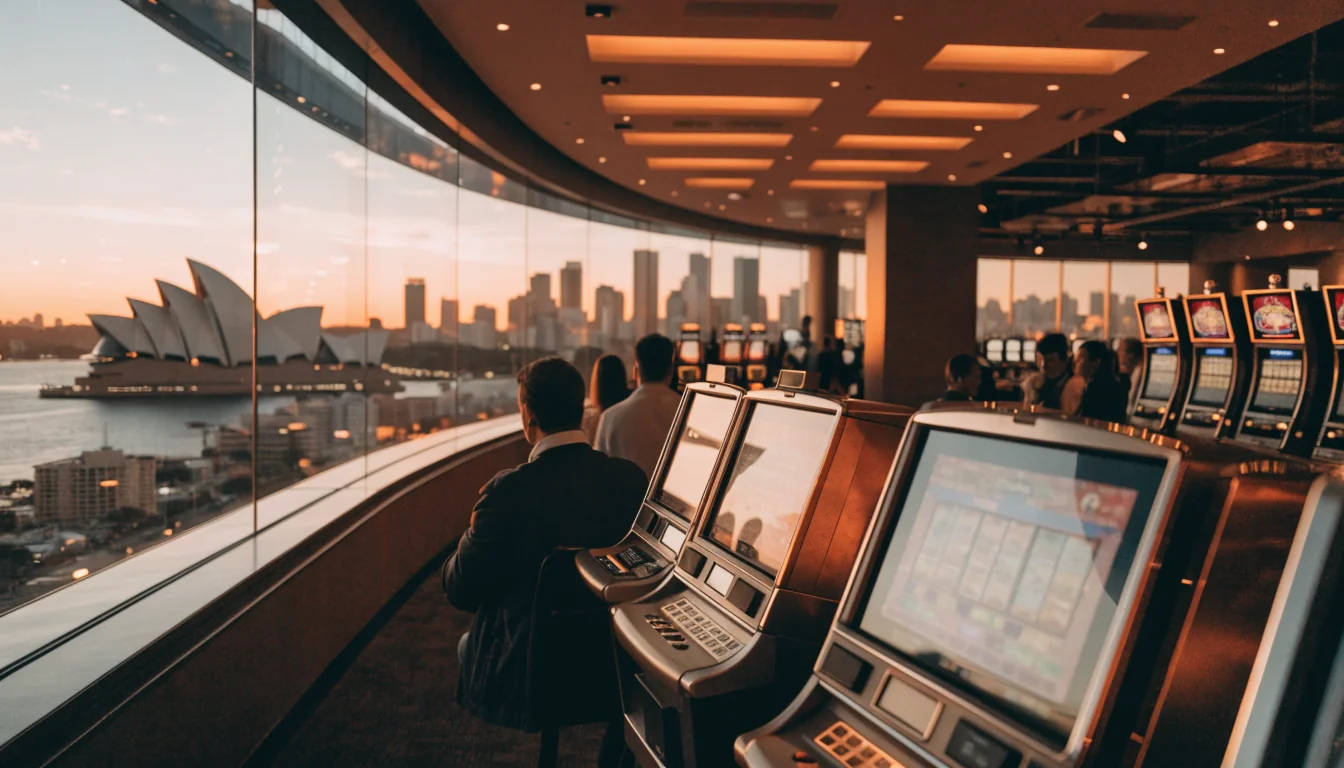
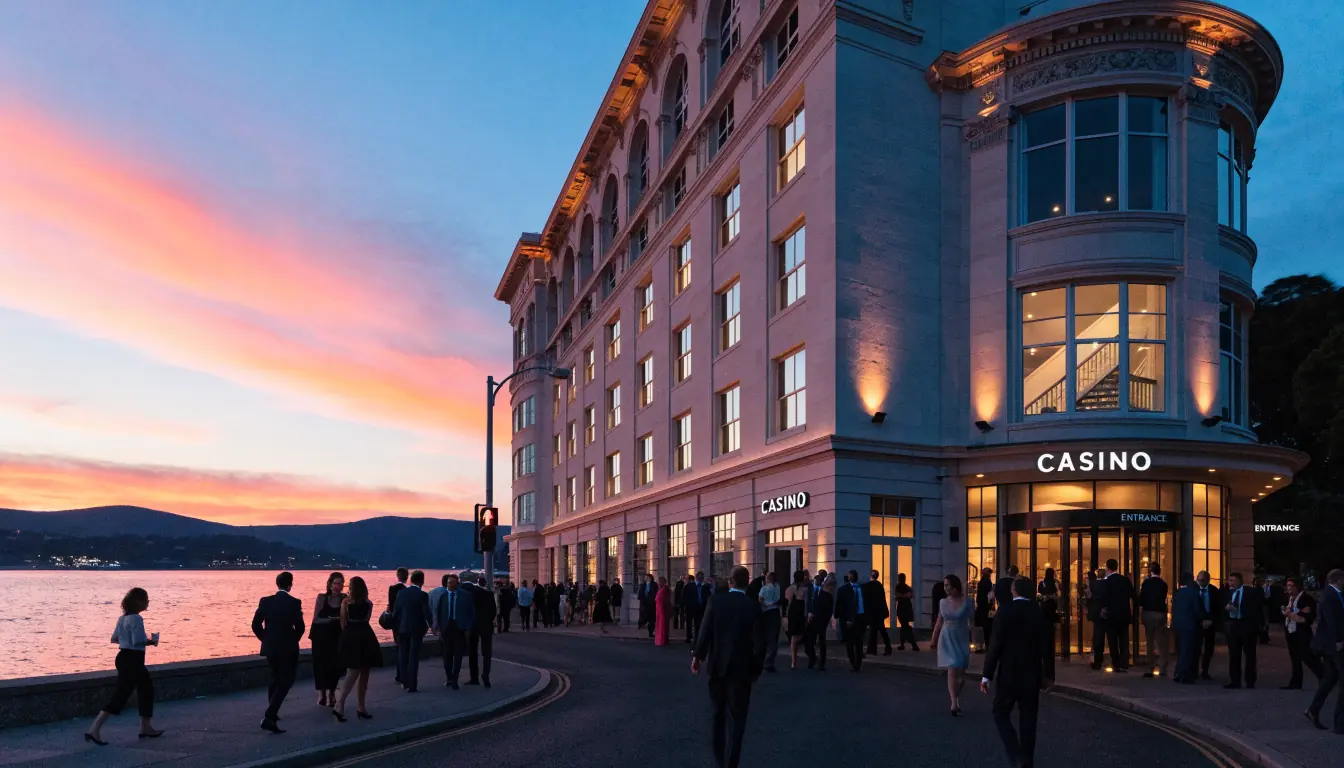
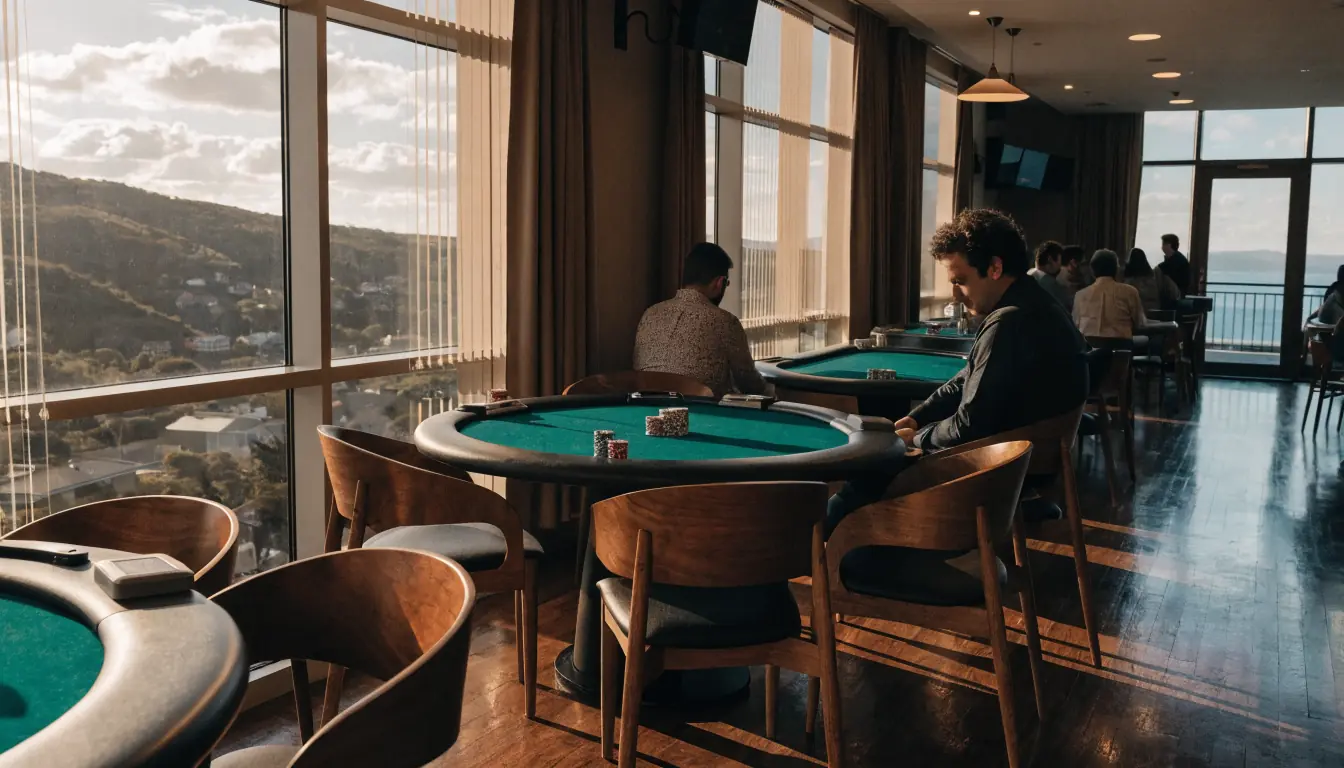
Having walked a few of these floors professionally, I can tell you the one thing brochures never explain: a Queensland casino’s gaming area is not one space but several, each engineered for a different kind of visitor. The main floor with its pokies, the table games pit, the poker room, and the sports bar operate as separate zones with separate rhythms. Knowing the layout before arrival changes the entire visit — where the entrances are, where the poker room sits relative to the main pit, and which area actually fits what a visitor came for.

The Main Gaming Floor
The primary gaming floor is where most people picture themselves when they imagine a casino: banks of pokies running along the walls and aisles, table games clustered in the centre under brighter light. Pokies are the engine of every Australian casino floor — the term itself is the local one, and staff will look mildly confused by anything else. Tables sit in a pit arrangement so supervisors can see every game at once; that layout is about surveillance, not aesthetics.
One structural point worth stating plainly: Australians placed bets totalling $244.3 billion in 2022–23, and losses amounted to $31.5 billion in the same period. The gaming floor is where a large share of that activity physically happens. The floor is designed — lighting, sound, the absence of clocks and windows — to keep people playing. That is not a conspiracy theory; it is floor design as a discipline. Recognising the design is the first step to deciding how long to stay.
The Poker Room
The poker room is a different animal. It is deliberately separated from the main floor — quieter, with its own cashier and its own staff — because poker players behave differently from pokies players. They play against each other, not against the house, and the casino earns its money from the table fee rather than the game’s outcome. That changes the atmosphere entirely: it is the one area of a casino where the venue has no stake in who wins.
What I can say from experience, and what I cannot: cash games and tournament play are both part of the offering at Queensland’s dedicated poker rooms. What I cannot honestly supply is a schedule of buy-in levels, blind structures or guarantee amounts — venues adjust these constantly and publish them on their own channels rather than through third parties. Anyone promising fixed tournament details on a page like this is inventing them. Check the venue’s own poker calendar before travelling for a specific event; that is not a hedge, it is how the industry actually works.
Tournaments and How They Actually Run
Tournament play in a Queensland poker room follows a structure familiar to anyone who has played anywhere in Australia: a scheduled start, registered players seated, blinds rising on a clock, play down to a final table. The honest observation from inside the industry is that tournament schedules are the most volatile information a casino publishes. A weekly event can move nights, change format or be cancelled for a seasonal promotion without much notice. Treating any published schedule as permanent is the most common mistake visitors make.
Registration for tournaments runs through the poker room desk itself, not the main cashier. That distinction matters on busy nights, when the main floor queue is long and the poker desk is quiet.
The Sports Bar — and a Legal Line Worth Knowing
The sports bar is the third distinct zone, and it is worth separating it from the rest of the floor in a visitor’s head. It is a licensed bar with screens, TAB-style wagering on racing and sport, and seating for people who have no intention of touching a table game. Sports betting is legal in Australia under state and territory licences — that is why the sports bar can offer it openly while the pokies sit metres away.
Here is where the legal architecture gets genuinely odd, and where a lot of visitors get confused. Online casino-style games — pokies online, online poker, blackjack, roulette — are prohibited under the Interactive Gambling Act 2001. There are no domestically licensed real-money online casino operators available to Australian players, and it is not possible to obtain a domestic licence to run one. The law targets operators, not individual players, but the practical upshot on the floor is simple: the poker you play in a Queensland casino room is a land-based product, and there is no licensed Australian online equivalent sitting behind it. Anyone inside or outside the venue offering to move a game "online" is operating outside what any Australian licence permits.
Legal Risk
Offering or seeking online casino games that are prohibited under the Interactive Gambling Act 2001 can result in significant penalties for operators and users. Always ensure the platform you use is fully licensed and complies with Australian law.
Practical Floor Notes
- Age is checked at the door, not the table. The minimum gambling age in Australia is 18, and casino entrances enforce it with government-issued ID checks. No ID, no floor — this is applied more strictly than almost any other venue rule.
- The poker room has its own etiquette. It runs on the quiet end of the building. The main floor noise stays on the main floor.
- Bars within the gaming area are separate from the sports bar. Drinks service on the floor exists; it is not the same thing as the sports bar’s TAB facilities.
- “Open now” is not a stable fact. Operating hours shift by day, season and event. They belong to the venue’s own published schedule, and no third-party page — including this one — should freeze them in text. The licensing and hours framework is covered elsewhere on this page; on the floor itself, ask staff or check the venue’s official channels.
The gaming floor, the poker room and the sports bar share a building and little else. Treating them as one "casino experience" is how visits go wrong — the tournament player who booked near the nightclub, the sports bettor seated at a poker table out of politeness. Three rooms, three purposes.
Dining Options: Buffets and Breakfast
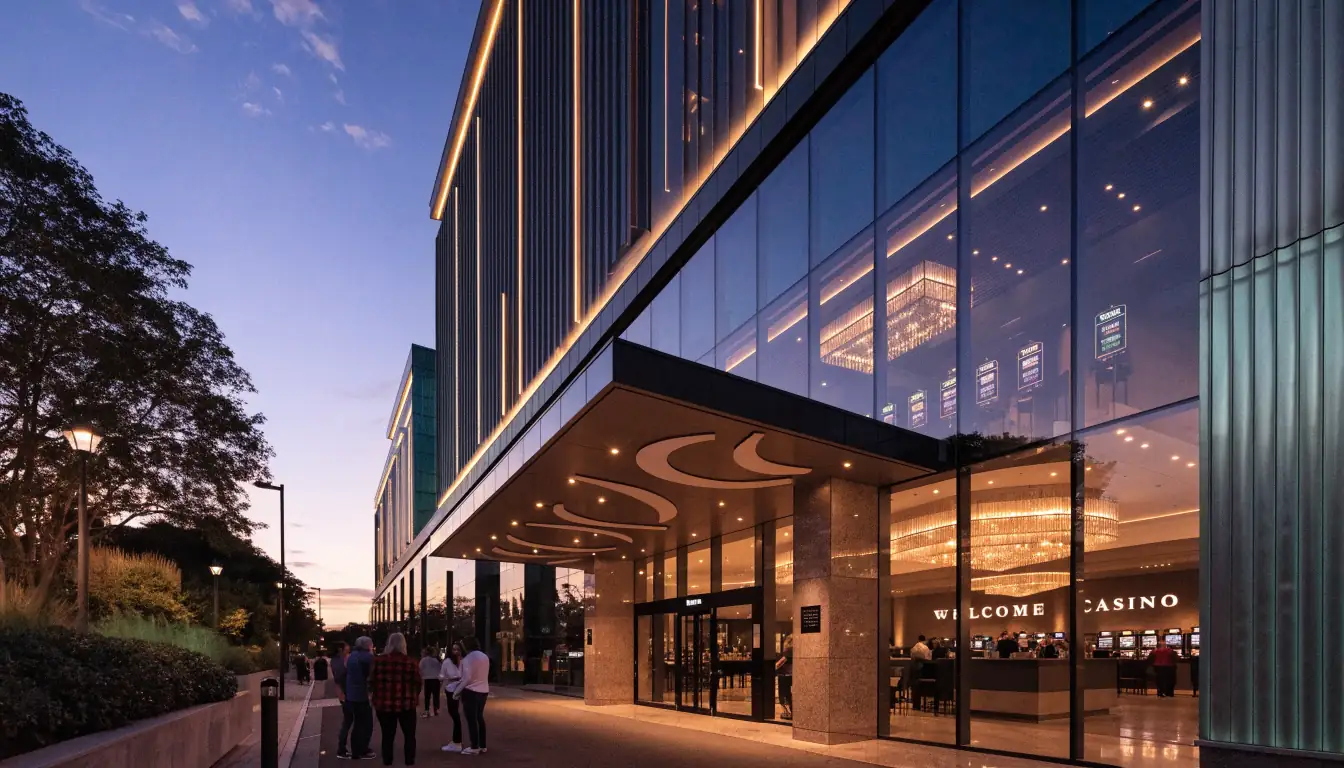
The buffet is the one part of a Queensland casino resort that almost everyone uses, including people who never touch the gaming floor. It’s the engine of the hospitality side: it feeds hotel guests, conference crowds and tour groups at a scale no à la carte kitchen can match. From the operations side, that’s the whole point of it — predictable volume, predictable cost, and a price that holds steady whether the room is half full or packed.
What a casino buffet actually is
There’s a reason casino buffets sit close to the gaming floor, and it isn’t décor. The buffet is designed as a hold point: a place where guests stay inside the resort instead of driving off to eat elsewhere, after which the floor is a short walk away. When I worked hospitality, we called this "dwell time" without irony. Every hour a guest spends on property is an hour they might spend money somewhere else on it. The buffet is priced to make staying the easy choice.
That’s also why breakfast is the meal casinos treat most seriously. It’s the one meal a hotel guest eats on-site almost by default, and it’s the first impression of the resort’s food operation. A buffet breakfast here is built for breadth — hot items, pastries, fruit, the standard egg station — refreshed in waves rather than in one sitting. That matters for anyone arriving late in service: the buffet that’s been picked over for an hour is not the buffet that opened, and decent operations know this and replenish accordingly.
Buffet versus à la carte: the honest difference
The à la carte restaurants — covered separately in this article — trade breadth for depth. A buffet gives you range and speed; a restaurant gives you a dish cooked to order and a bill to match. Neither is "better". They’re built for different jobs, and a resort prices them so that the buffet stays the default and the restaurant stays the occasion.
What a buffet will not do is tell you what’s in season or what the kitchen does best. It tells you what scales. Once you’ve seen the purchasing side of the business, you stop reading a buffet as a menu and start reading it as a logistics exercise — and there’s nothing wrong with that, as long as you know what you’re buying.
Breakfast and the rewards angle
This is where the "rewards" language that casinos use deserves a closer look. Membership programs at Queensland casino resorts are typically sold on the gaming side, but their practical value for most guests is mundane: member pricing on food, including buffet breakfast, sometimes on parking and other on-site services. For a visitor who eats breakfast at the property each morning of their stay, that food discount is often the part of the program that actually gets used.
The marketing doesn’t frame it that way. Rewards programs are advertised with images of tables and excitement, because that’s what sells memberships. The quiet truth from the inside is that a large share of members redeem almost nothing but breakfast and the odd coffee. Whether that’s a good deal depends entirely on whether you were going to eat there anyway — if yes, membership costs you nothing and saves you a little; if no, you’ve joined a program to buy food you weren’t planning to buy.
One thing worth saying plainly: whether a specific Queensland property runs its buffet daily, or only on weekends, and what hours it keeps, varies by venue and by season. Operators adjust buffet service to occupancy, and official sources publish current hours rather than a fixed schedule. Check the venue’s own listing before building a morning around it — the one consistent complaint I heard at the front desk wasn’t about food quality, it was about guests arriving at a buffet that had closed for the season.

The economics behind the cheap eggs
Casino food pricing only makes sense against the wider gambling economy. Australians placed bets totalling $244.3 billion in 2022–23, and per-capita bets ran to AUD 9,885 in FY 2020-2021, with an average loss of AUD 1,200. Against numbers of that scale, a buffet that barely breaks even is not a failure — it’s bait that pays for itself in time spent on property. This isn’t a scandal; it’s how every resort business in the world works. But knowing it changes how you read the price on the door.
The same logic explains why breakfast is bundled into accommodation rates so readily. The casino isn’t being generous with the eggs. It’s buying your morning.
Around 80,000–160,000 Australian adults experience significant gambling problems, and for that group, the "cheap meal keeps you here" mechanism is not a bargain — it’s part of the trap. Free GamblingHelpOnline.org.au and 1800 858 858 exist for exactly this, and anyone who finds the floor pulling harder than the buffet should have those numbers before the next visit, not after.
Eat the buffet. Just know what it’s for.
Spa and Wellness Facilities
A spa inside a casino is not charity. It exists because the property wants guests to never have a reason to leave the building — and, more cynically, because a relaxed guest stays longer at the tables than a tense one. I’ve seen the internal logic: wellness is positioned as the "responsible" face of the resort, the line that appears in the corporate brochure while the gaming floor does the revenue work.
That framing matters when evaluating what a Queensland casino spa actually offers. The honest position is this: no verified treatment menus, pricing or package details for specific Queensland casino spas are published in the sources behind this page, and I won’t invent them. Any page listing "signature treatments" with prices for a property it hasn’t verified is filling space, not informing anyone. What can be said with confidence is structural.
What a casino day spa in Queensland typically is
A day spa attached to a casino resort generally runs on a model I’d describe as hotel-spa-plus: the same massage, facial and body-treatment structure as any five-star property spa, but with opening hours and staffing shaped by the casino’s rhythm rather than a standard hotel calendar. Late evening availability is the tell — a spa open well past normal hours exists to catch players stepping away from the floor, not to serve a checkout crowd.
Spa services at Queensland casinos are commercial amenities, not gambling‑harm mitigation tools. They do not replace professional support for problem gambling, which is available through BetStop (1800 858 858) and GamblingHelpOnline.org.au.
Wellness as the counterweight
Here it’s worth being direct about the industry’s own language. Australian gambling regulation — the Interactive Gambling Act 2001 chief among the Commonwealth instruments — is explicitly built around harm minimisation, and casino operators know it. Wellness amenities are part of the presentation: the "integrated resort" pitch, where pokies, poker rooms and buffets sit alongside a spa, is how these properties argue they are entertainment destinations rather than gambling venues. The spa is real, but it is also a talking point. Both things are true at once.
What to actually check
Rather than trusting promotional copy, verify the specifics before booking:
- Whether the spa is open to day guests or reserved for hotel residents — properties differ, and published details on this point are thin.
- Whether treatment bookings are bundled with any hotel package, since standalone spa pricing is not consistently disclosed.
- What the cancellation terms are — a casino spa attached to a loyalty program sometimes treats a missed appointment differently from a standard hotel spa.
One thing the spa is not
It is not a responsible-gambling service. A massage does not offset losses, and anyone treating a "wellness package" as a sign the operator has their interests at heart is reading marketing as policy. The real support infrastructure — free, confidential help via GamblingHelpOnline.org.au or the phone line 1800 858 858 — sits outside the resort entirely, funded independently of it.
The spa is pleasant. It is also a business decision.
Restaurants and Culinary Experiences
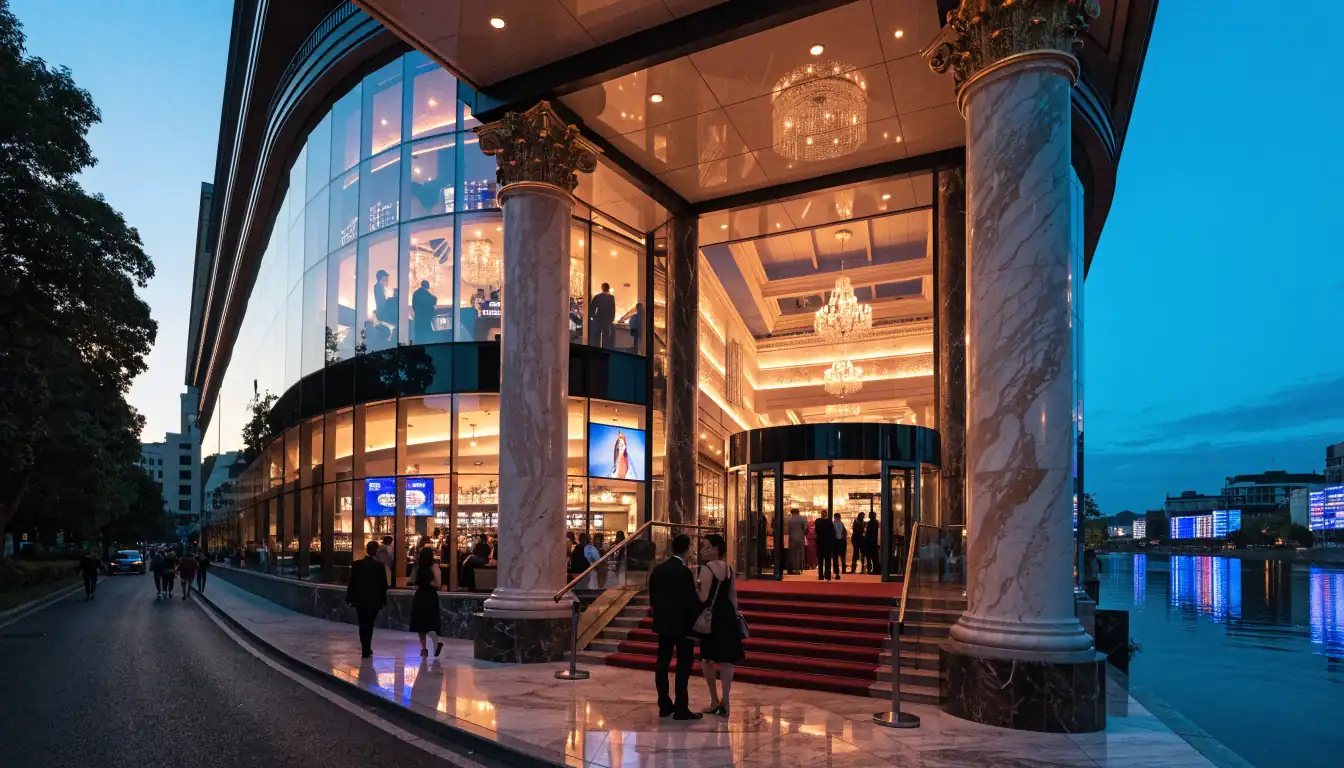
The à la carte restaurants inside a Queensland casino are a different animal from the buffet line, and the difference is mostly about pacing. A buffet exists to move volume; a sit-down restaurant exists to keep a guest on property for an entire evening. From the operations side, that’s the whole point of a fine-dining room next to a gaming floor: the longer the dinner runs, the more floor time before and after.
What that means in practice:
- Set courses, ordered off a menu. No trays, no serve-yourself counters. Kitchen cooks to order.
- Reservations over walk-ins. Peak nights — Fridays, weekends, event nights — fill first, and priority goes to hotel guests and loyalty members.
- Dress codes that get enforced unevenly. The written standard and what the door actually turns away are rarely the same thing. I’ve watched both versions of that door.
Cuisine types you’ll find
Casino dining in Queensland follows a pattern I’d call conservative-by-design: steak and seafood carry the menu, Asian cuisine covers the middle, and an Italian or modern-Australian option rounds it out. Steakhouses anchor the offer because they pair with the two things a casino can never run short of — late hours and expense-account logic. Seafood makes sense in a state with the coastline Queensland has. None of this is adventurous, and that’s deliberate: the menu has to satisfy a room full of strangers, not a table of regulars.
The rooftop bar question
A rooftop bar is the property’s single best piece of visual advertising, which is why nearly every major Australian casino complex leans on one. The economics are simple — a bar with a view sells the same drinks at a premium, and it photographs well. What the marketing won’t mention: on busy nights the wait for that view can stretch well past what the drinks list justifies, and the bar is often the first space to close for private functions. If a rooftop booking matters to the visit, checking ahead isn’t paranoia; it’s just reading the venue’s calendar the way staff do.
What’s behind the pricing
Restaurant pricing inside a casino complex sits above comparable venues outside it, and there’s no mystery as to why — the operator prices a captive, captive-adjacent audience with the convenience of not leaving the building. Some venues soften that with dining credits tied to loyalty play, which is a trade worth understanding before accepting: a credit earned through the gaming floor is not a discount, it’s a retention device.
One honest gap: specific restaurant names, head chefs and current menus for Queensland casino venues aren’t something verified sources publish in stable form — venues change concepts and operators more often than directories update. Anything naming a current chef or a fixed degustation price here would be a guess dressed as a review. The structure above holds regardless of which concept currently occupies the room.
A note on the distinction
None of this touches the online side of gambling, and it’s worth keeping the two separate. Online casino-style games — pokies, poker, blackjack, roulette — are prohibited for Australian residents under the Interactive Gambling Act 2001. Land-based casino dining is an entirely different regulatory world, licensed at state level. The restaurant is legal entertainment; the phone version of the pokie isn’t licensed for anyone. Different rooms, different rules.
Dinner is real. The brochure photo of the rooftop is the advertisement.
Food Courts and Poolside Dining
Not every meal at a Queensland casino needs a reservation and a dress code. Below the restaurants and the buffet, there is a layer of casual eating that most visitors actually use: the food court counters and the poolside venues that keep you fed without pulling you away from the floor or the water for long.
The distinction matters in practice. A full-service restaurant runs on sittings, table service and a bill at the end. A food court counter runs on speed — order, collect, eat, move on. Poolside venues sit somewhere in between: lighter menus, drinks, and the assumption that patrons are in swimwear rather than dinner attire. Anyone who has worked a resort floor knows the pool bar is where the day’s rhythm is really set, long before anyone books a table upstairs.
What I can’t do is quote menus, prices or trading hours for these outlets. The operators do not publish that detail in a form that survives contact with reality — outlets rotate, seasonal menus replace permanent ones, and a pool kiosk that shut last year still lives on in old listings. Official sources simply do not keep this layer of hospitality up to date, and I would rather say so than pass on a stale price.
The honest advice: treat the food court and poolside options as what they are — convenient, informal, and checked on arrival rather than in advance. The confirmed details worth planning around — phone numbers, bar locations, other on-site services — are covered at the end of this article. Everything else, verify at the door.
Contact Points and On‑Site Amenities
A casino’s contact details look like the boring part of the brochure until the moment something goes wrong — a lost card, a dispute at a table, a query about a show. Then it matters enormously how quickly a real person picks up, and whether the number you dialled leads anywhere at all. I’ve fielded those calls; the difference between a property that answers and one that hides behind a switchboard menu is the difference between a resolved complaint and a review that never comes down.
What to expect at the front line
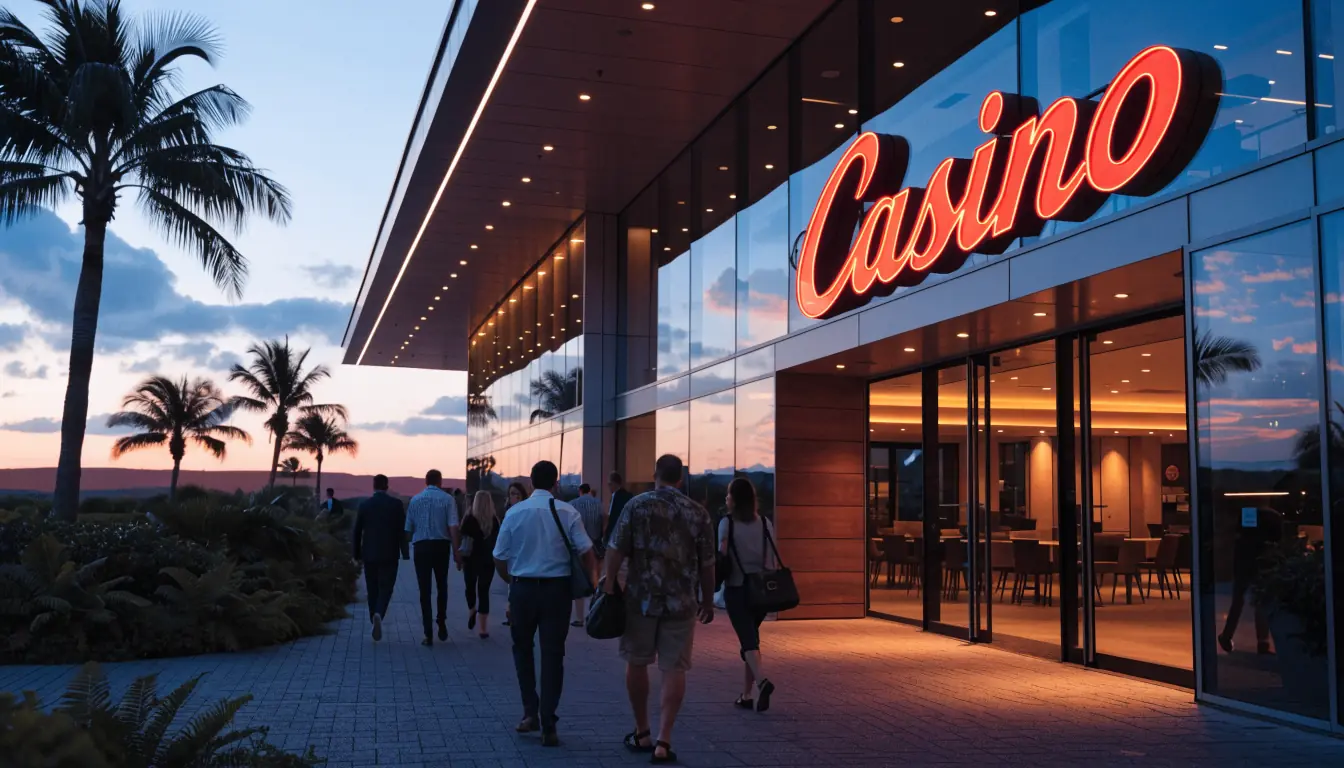
Queensland’s land-based properties run a concierge or guest services desk near the main entrance, and that desk — not the gaming floor staff — is the correct channel for general enquiries: showtimes for concerts and resident entertainment, function bookings, dress code questions, lost property. Table staff won’t leave a baccarat or craps pit mid-game to answer the phone, and asking them to sets everyone up for a bad night. The bars operate on the same logic: each has its own service zone, and bottle-service or function enquiries go to the events team, not the bartender pulling schooners on a Friday.
One number worth committing to memory has nothing to do with any property: 1800 858 858, the national Gambling Help line, with online support at GamblingHelpOnline.org.au. A well-run venue will point to it unprompted. If a property makes that information hard to find, that tells you something about how it sees its customers.
Why the "map" question is harder than it looks
People search for a casino map expecting a single floor plan. What actually exists is a set of overlapping layouts: gaming floor, bars, entertainment venues, and car park access, each managed by a different department. The published versions are often simplified for print, and I’ve watched guests walk a long way from a parking entrance to a bar that the brochure placed "just inside." Where a property doesn’t publish an up-to-date internal layout, the honest answer is to ask guest services on arrival — they know what the print run got wrong.
How contact quality gets measured
At Casino Mobile Guide, support responsiveness is not a vague impression. It is a weighted component of how properties are assessed: customer support responsiveness carries a 15% weighting in the ranking formula, alongside bonus generosity at 30%, payout reliability at 25%, game library breadth at 20%, and user-submitted feedback at 10%. Every listing is scored on bonus transparency, cashout speed, customer care, and licensing integrity. Rankings are recalculated every week, so a property that lets its service standards slip doesn’t coast on an old score for long.
That weighting exists because support is where problems surface. A payout question or a disputed table decision is only resolved as fast as the channel behind it.
Digital contact, and what the law allows
For enquiries directed at Casino Mobile Guide rather than a physical property, the channel is email at [email protected]. Worth being clear about the boundary, though: online casino play — pokies, roulette, live dealer games offered over the internet — is prohibited for operators in Australia under the Interactive Gambling Act 2001, enforced by the Australian Communications and Media Authority. The law targets operators, not players. So any "contact" pitch promising a licensed domestic online casino is not a service; it’s a claim with no licence behind it, because no such licence exists to hold.
One line of caution. Two source documents disagree on the statute — one cites an Interactive Gambling Act 1997, the other the 2001 Act — and rather than quietly pick one, that discrepancy is flagged here directly. The 2001 Act is the one ACMA enforces today.
On-site amenities worth asking about by name
When contacting guest services, specific beats general:
- Cloakroom and bag storage policies, which change on concert nights
- Bar operating zones versus entertainment venue hours — they are not the same schedule
- Access arrangements from the car park to the gaming floor after dark
- Self-exclusion and BetStop registration, which staff can explain but cannot process at the bar
A property that answers these four cleanly in one phone call has its internal communication sorted. One that transfers you three times is telling you, before you’ve wagered a dollar, exactly how your future complaints will be handled.
What are the best online casinos in Australia for 2026?
None can be recommended as Australian-licensed, because no real-money online casino is licensed domestically — offering online casino games to Australian residents is prohibited. Individual players are not prosecuted for using offshore-licensed sites, but there is no legal onshore online casino market to rank.
What is the minimum legal gambling age in Australia?
18 years. Queensland venues enforce photo ID checks at the door, and anyone who looks under 25 should expect to be asked for identification.
What are the requirements for an interactive gambling licence?
No domestic licence for online casino gambling can be obtained at all — it is illegal to offer online casino-style games (pokies, poker, blackjack, roulette) to Australian residents. The only online gambling licensed under state and territory law is sports betting through bookmakers.
Is online gambling legal in Australia?
Online sports betting is legal under state and territory licences, but online casino games, poker and live in-play betting are prohibited federally under the Interactive Gambling Act 2001, enforced by ACMA. Playing at an offshore-licensed online casino as an individual is not illegal — the law targets operators, not players.
Created by the ”Casino Mobile Guide” editorial team.