Pokies Tips and Tricks: How to Improve Your Odds
 Available in AU
How to Increase Your Chances of Winning at Pokies
Before anyone talks about tips to win on the pokies, there is a set of numbers that shapes every outcome on those machines, and almost none of it appears in the promotional material. Having spent years around venues, watching how the floor actually works, I can say this plainly: most of what passes for winning advice ignores the statistical and market structure entirely, and that structure is where the real answer lives.
Australians bet almost AUD$150 billion on electronic gaming machines in the 2020–2021 financial year. The player loss — the amount actually kept by machines and not returned as wins — was AUD$12 billion. Those two figures sit in the same sentence for a reason. The overwhelming majority of money cycled through pokies comes back out as wins, but the aggregate direction of travel, measured across every player, every venue and every machine, is a $12 billion hole. No tip, no system, no seating position changes that direction. What tips can realistically do is change how an individual session fits inside that structure — how long a bankroll lasts, how losses are recognised, and how decisions are made while the machine is running.
Before spinning the reels in 2026, it helps to know which pokies-friendly casinos actually back up their promises with solid licensing, fair wagering terms, and welcome offers worth claiming.
License: Curacao Gaming Control Board OGL/2023/174/0082 (Dama N.V.) · Bonus: up to A$5,000 + 300 free spins across 4 deposits Licensed under the Curacao Gaming Control Board, this operator pairs its authorisation with a multi-deposit welcome package worth up to A$5,000 plus 300 free spins spread across four deposits.
License: Curacao – Antillephone N.V. (Versus Odds B.V.) · Bonus: up to EUR 2,000 across 5 deposits + 200 free spins · Min. deposit: EUR 20 Operating under a Curacao licence via Antillephone N.V., it offers a sizeable five-deposit bonus package with free spins and a clearly stated minimum deposit for those looking to get started.
License: Curacao eGaming (Dama N.V.) · Bonus: up to A$10,000 + 180 free spins, 40x wagering Holding a Curacao eGaming licence, this casino stands out for a generous bonus of up to A$10,000 with free spins, backed by a stated 40x wagering requirement.
Bonus: up to A$7,500 + 550 free spins across 10 deposits, 50x wagering · Payout speed: crypto under 1 hour, PayID 1-3 business days · Min. deposit: A$20 (A$30 to qualify for the bonus) A large ten-deposit bonus package with hundreds of free spins is matched by fast crypto payouts and PayID processing within a few business days, making it worth a look for pokies players who value both offer size and withdrawal speed.
License: Curacao Gaming Authority (Jumpman Gaming Ltd) · Bonus: up to A$6,600 + up to 250 free spins across 4 deposits Licensed through the Curacao Gaming Authority under Jumpman Gaming Ltd, it offers a multi-deposit welcome bonus with a solid free spins allowance.
License: Curacao eGaming (Roby Games Ltd) · Bonus: 100% up to A$750 + 200 free spins Licensed via Curacao eGaming, this casino keeps its welcome offer straightforward with a percentage match bonus and a set of free spins.
Bonus: 240% up to A$4,100 + 300 free spins Notable for a high percentage match bonus alongside a generous free spins allowance, making it a pick for players chasing a bigger headline offer.
License: international iGaming licence – jurisdiction not named in the source · Bonus: 100% up to A$1,000 + 100 free spins, 35x wagering · Payout speed: PayID 1-24 hours · Min. deposit: A$30 (PayID from A$10) Backed by an international iGaming licence, it combines a straightforward welcome bonus with fast PayID payout times and a low minimum deposit for PayID users.
License: Curacao eGaming (Hollycorn N.V., since 2017) · Bonus: 225% up to A$1,540 + 600 free spins across 4 deposits, 20x wagering · Min. deposit: A$20-30 (depends on the offer) Licensed under Curacao eGaming since 2017 via Hollycorn N.V., it offers one of the larger multi-deposit bonus packages on this list with a relatively low 20x wagering requirement.
License: Curacao Gaming Control Board · Bonus: up to A$5,000 + 400 free spins Operating under a Curacao Gaming Control Board licence, it rounds out the list with a solid welcome package combining bonus funds and free spins.
What the Machines Actually Are
Pokies — formally electronic gaming machines, or EGMs — are widely used in Australian pubs, clubs and casinos. That phrasing matters. A machine in a pub is not a different species from a machine in a casino; the underlying mathematics is the same class of design. What differs is the regulatory environment around the machine, not the machine’s fundamental behaviour.
Every EGM is built around a return-to-player model encoded in its software. The machine is programmed to retain a defined share of everything wagered over its long-run operation. Individual sessions deviate from that model wildly — this is what makes gambling feel like a game of skill or luck rather than arithmetic — but the model is the only reliable prediction available. A machine does not know who is playing, how long they have played, or how much they have lost. It knows nothing. It executes.
That last point deserves emphasis because so much folklore depends on the opposite belief. The machine that "hasn’t paid out in a while" is not due. The machine that just paid a big win is not "cooled down." Each spin is generated independently of the last. I have watched players move between machines on the basis of these theories with total conviction, and I understand why — a random process produces streaks and patterns that look like cause and effect. But the conviction is misplaced. Understanding this is the single most useful thing a player can carry into a venue, more useful than any betting pattern.
The Volume Problem
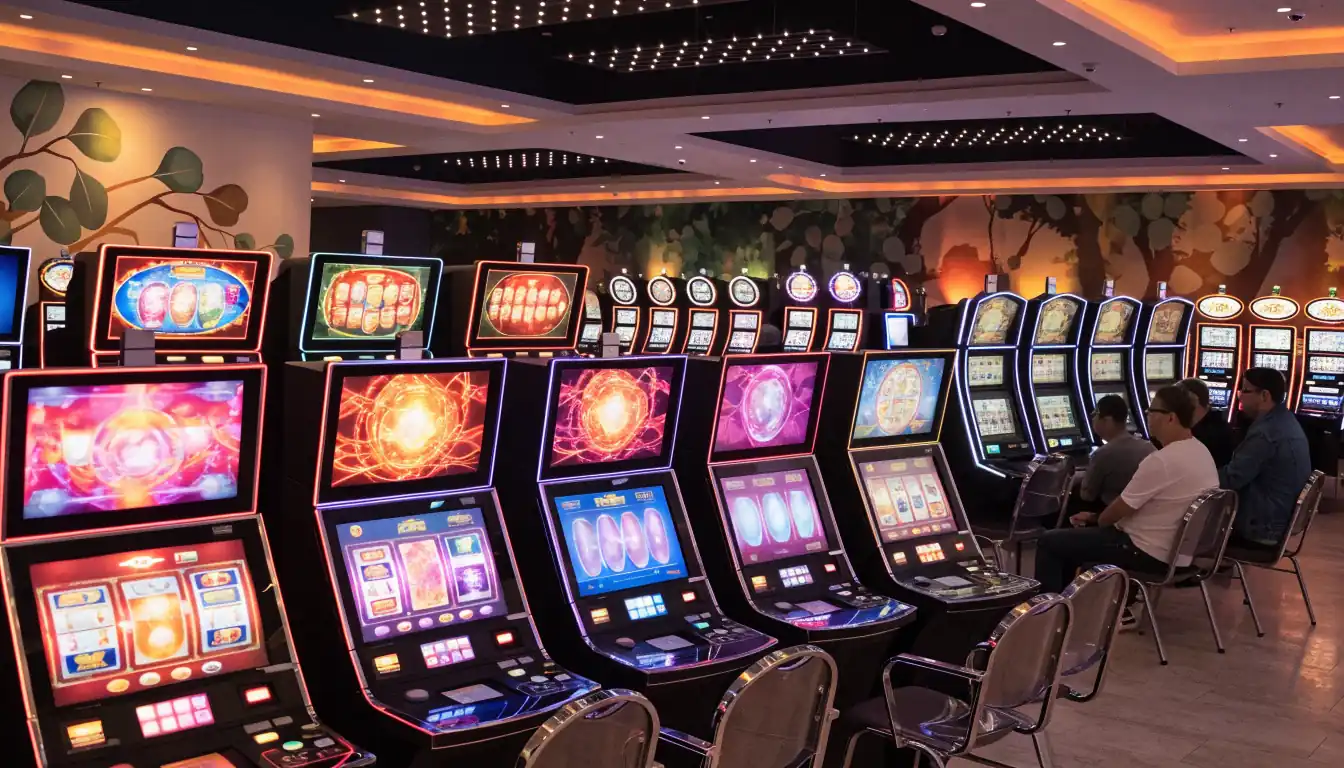
Here is the part of the equation most people never see. Australia is home to 3% of the world’s pub and club poker machines while holding only 0.3% of the global population. Read those two figures against each other. Per person, Australia carries roughly ten times the world’s share of pub and club machines. This is not an accident of geography or taste. It is the result of decades of policy decisions, licensing arrangements and revenue structures that made EGMs one of the most accessible forms of gambling in the country.
The prevalence is not evenly distributed, either. There are approximately 95,800 pokies in New South Wales alone — a single state, holding a machine population that would be remarkable for an entire country. When people ask about Australian pokies tips, they are usually asking about a machine environment of unusual density, where the pokies are in the local pub, around the corner, embedded in the social infrastructure of everyday life.
Why does machine density matter to the question of winning? Because density is what converts individual gambling decisions into a market-scale statistical outcome. Each machine individually is a small engine of programmed retention. Tens of thousands of machines, running every day, in every suburb and town, produce the aggregate result: nearly AUD$150 billion wagered in a single financial year, and AUD$12 billion lost.
Per‑capita loss of AUD$608 in FY 2020–2021 shows how quickly a player can lose money, even if they only gamble occasionally.
There is a claim, made by a single source — complyadvantage.com — that Australia holds about 18% of the world’s poker machines. Other reporting puts the pub and club share at 3%. I mention the 18% figure only because it circulates, and it should not be repeated as an established market norm; the sources disagree on what is being counted and how. The 3% pub-and-club figure, set against 0.3% of world population, is the comparison that carries weight, because it compares like with like.
Per-Capita Loss: The Number That Explains Everything
The per-capita loss from electronic gaming machines in the 2020–2021 financial year was AUD$608. That is per person — per resident of the country, not per player. Averaged across every adult, every child, every person who has never touched a pokie, the machines extracted $608 each.
Pause on the mechanics of that average. Losses are not distributed evenly. A large share of that money comes from a relatively small group of people who play heavily and regularly. The average is the arithmetic residue of a distribution where most people lose a little or nothing and a minority lose an enormous amount. Anyone who has worked in a venue knows the shape of that distribution without needing the research literature: there are faces you see every week, always at the same machines, always feeding them.

This is why "how to increase your chances of winning" is a question that needs to be reframed before it can be answered honestly. Across the whole population of players, the aggregate outcome is fixed by the machines’ programmed retention. The distribution of that outcome — who absorbs the losses — is where individual behaviour actually has influence. A player who sets limits, recognises when a session is going badly and stops, and treats the machine as entertainment rather than income, positions themselves in the mild end of that distribution. A player chasing losses positions themselves in the other end. Same machines, same mathematics, radically different personal outcomes.
That is the honest version of "improving your chances." The dishonest version — the one sold in systems, guides and supposed secret methods — claims to bend the machine’s mathematics. It does not. It cannot.
Where the Money Goes: The Club Profit Picture
NSW clubs earned $1.945 billion in net profit from pokies between December 2017 and May 2018. That is a single half-year window, in a single state, in clubs alone — pubs, hotels and the casino are separate lines.
I include this figure because it answers a question players rarely ask directly but should: who is on the other side of the machine? When a pokie is described as entertainment, the image is of a small stake against a big jackpot, a bit of fun with a chance at a windfall. The club profit figure shows the other side of the arrangement. The machines are a business line — and a very large one. Venues depend on them. In many clubs, pokies revenue underwrites the rest of the operation: the bistro, the sports teams, the function rooms. The community contribution is real, and it is funded, in aggregate, by player loss.
NSW clubs earned $1.945 billion in net profit from pokies between December 2017 and May 2018, illustrating that the machines are a major revenue source for venues.
This is not a moralising point. It is a structural one. A business that derives net profit on that scale from a product does not have an incentive to help players win, whatever the responsible-gambling signage says. The signage is a regulatory obligation, not a business strategy. Knowing that the counterparty’s income is your loss — averaged, inevitable, and budgeted for — is basic commercial literacy. I have never seen a club’s annual report lead with the pokies profit figure in its marketing; it appears in the financial statements, where it belongs.
Why "Winning Tips" Online Are Structurally Flawed
Search for tips for winning at the pokies and a familiar set of answers appears: bet max to unlock the jackpot, play machines at the end of rows, look for machines that have just been refilled, follow the pattern of recent payouts. Some of this advice is harmless ritual. Some of it actively costs money — betting maximum on the theory that it improves the return is a fast way to accelerate loss on a machine whose programmed retention does not care about stake size relative to its own mathematics.
The people generating this content are, overwhelmingly, not people who have worked with these machines. The content exists to rank in search results, not to survive contact with a gaming floor. When I read a guide promising a system, the tell is always the same: it discusses the player’s behaviour as if the machine were passive, and never discusses the machine’s behaviour as an active, programmed counterparty.

The machine is not passive. It is the most disciplined participant in the room. It never deviates from its model, never gets tired, never chases its own losses, and never plays one spin more than its mathematics dictate. Every "tip to win at pokies" that survives scrutiny is really a tip about the player: about discipline, session structure, and understanding what the machine is doing. There is no tip that changes the machine.
Named Games, Named Systems
A word on the specific titles people search for — Dragon Link, 5 Dragons, and the like. Players want tips tailored to a specific game, on the theory that each machine has a distinct exploitable character. The honest position is this: the verified, public data does not provide per-title RTP figures, volatility ratings or machine-specific winning attributes for these games. Any guide that claims a specific, measurable edge on a named title — a precise RTP percentage, a proven trigger pattern, a "best time" to play it — is supplying a number that official sources do not publish.
What is true of every linked progressive system, of which Dragon Link is the widely known example, is general: a portion of each wager feeds a shared jackpot pool, and the headline jackpot is funded by the accumulated contributions of players who did not win it. That is the structural fact. It is not a tip, and it does not improve an individual’s chances. It explains where the big number on the screen comes from.
Misleading Online Tips
Advice that tells Australian players to “check the operator’s licence” is misleading – there is no domestic licence for online pokies, so the warning is ineffective.
Where a specific game’s parameters are not publicly verified, I will not invent them. No one else should either.
The Online Question
The searches about how to win online pokies deserve a direct answer on the legal shape of the market, because it frames everything else. The Interactive Gambling Act 2001 is the primary Commonwealth law governing online gambling in Australia, introduced to protect the public with a focus on harm minimisation. Under that framework, online casino-style games — including slots, poker, blackjack and roulette — are prohibited for provision to Australian residents. There are no domestically licensed real-money online casino operators available to Australian players, and it is not possible to obtain a licence to operate an online casino domestically. The law targets operators, not players; it is not illegal for an individual Australian to play at an offshore-licensed online casino, but the domestic licensing regime for that product does not exist.
This matters for the "tips" question in a specific way. Advice that tells a player to "check the operator’s licence" or "play only at licensed online casinos" is, in the Australian context, misleading — there is no domestic licence to check, and no local register of licensed online casino operators, because that licence does not exist. Advice that speaks of "choosing regulated online casinos" as if comparing a licensed local field of options imports a framework from another market. It sounds like diligence. It is actually noise.

So when a guide offers online pokies tips that begin with picking a trustworthy licensed site, the guide has already left the Australian market behind. That does not mean the games offshore are rigged beyond the norm or honest beyond the norm — it means the ordinary consumer protection architecture a licensed market provides is absent, and any tip built on that architecture is built on nothing. For players who use offshore sites regardless, that absence is the operating condition: disputes have no domestic regulator to resolve them, and the standards of the jurisdiction of licence are the only standards in play.
One more financial point specific to Australia, and it surprises nearly everyone: gambling winnings are not taxed in Australia. A pokie win is not income in the hands of a recreational player. That fact cuts both ways — it removes a complication from a genuine win, and it removes a common illusion that losses are somehow recoverable or deductible. They are not.
Volume, Loss, and What "Chances" Can Actually Mean
Return to the three numbers that open any honest treatment of this subject:
| Measure | Figure | Period |
|---|---|---|
| Total wagered on EGMs | Almost AUD$150 billion | FY 2020–2021 |
| Total player loss | AUD$12 billion | FY 2020–2021 |
| Per-capita loss | AUD$608 | FY 2020–2021 |
Between the first row and the second sits the return-to-player model — nearly $138 billion returned as wins, which is why the experience of playing feels winnable. Between the second and third sits the distribution of harm — the fact that $608 averaged across every resident concentrates heavily on a minority of players.
Within that structure, the phrase "increase your chances of winning" can mean three different things, and only one of them is honest:
First, the impossible reading: increase the probability that the machine returns more than it takes, systematically, over time. No. The machine’s mathematics does not permit it, and no behaviour changes it. Anyone selling this is selling fiction.
Second, the trivial reading: maximise the chance of a large single win within a session. Betting larger amounts does raise the nominal size of possible wins relative to stake, and progressive jackpots do occasionally pay. This reading is technically available and practically ruinous — it converts the player’s bankroll into machine turnover faster, which is precisely the direction the aggregate loss figures point. A "tip" that increases exposure to a negative-expectation product is not a tip. It is a receipt.
Bet Max Risk
Betting the maximum to chase a jackpot speeds up cash outflow and increases the chance of hitting the machine’s built‑in negative‑expectation return.
Third, the useful reading: improve the odds of walking away in a position you chose, rather than a position the machine chose for you. This is where real behaviour matters — setting a session limit before sitting down, understanding that the machine is programmed retention rather than an opponent, refusing to chase, and treating any win as money the machine has temporarily lent rather than evidence of a working system. Players operating this way occupy the mild end of the loss distribution. They lose less on average, not because they have bent the mathematics, but because they have limited their exposure to it.
The distinction between the second and third reading is where most gambling content fails. It optimises the wrong variable — jackpot probability instead of session outcome — because jackpot probability is what players ask about and session outcomes are what players actually experience.
Prevalence as a Factor in Outcomes
Machine prevalence deserves its own treatment, because it is the market factor most often left out of the conversation entirely. The approximately 95,800 pokies in New South Wales are not distributed as a neutral convenience. They are licensed, placed and operated as commercial decisions by venues whose profit — as the $1.945 billion club figure shows — depends on their throughput. A dense machine environment means short travel distance, familiar social settings, and the normalisation of play as part of ordinary pub and club life.

The practical consequence for anyone thinking about their own outcomes is that exposure is not purely a matter of personal choice; it is shaped by environment. Someone who lives or socialises within a high-density machine environment faces more moments of decision than someone who does not. Recognising that the environment is engineered — that accessibility itself is a commercial variable — reframes what "willpower" means in this context. The question is not only how to behave in front of a machine, but how many machines a week’s ordinary life places in front of you.
Prevalence also explains why Australian pokies tips differ from generic slots advice written for other markets. In many countries, electronic gaming machines are concentrated in dedicated casinos — a destination requiring a deliberate trip. In Australia, the EGM is a neighbourhood fixture. Advice calibrated for a destination-gambling environment misses the actual risk profile of the Australian player, which is frequency and convenience, not the single big night out.

A Note on Harm, Because It Belongs Here
Poker machines are identified as the most harmful form of gambling in NSW. That statement is not a slogan; it comes from the same body of evidence that produced the turnover and loss figures above. Harm from EGMs concentrates precisely because of the characteristics described in this section — the density of machines, the speed of play, the programmed retention, and the distribution of losses onto a minority of heavy players.
For anyone whose pokies play has stopped feeling like entertainment, the practical steps exist and are documented: BetStop, the national self-exclusion registry, was launched in August 2023 and registered 18,000 users in its first six months — a number that tells you two things at once: that the service works as intended, and that a great many people reached the point of needing it. Gambling Help Online operates as a national support service. These are not "tips" in the winning sense. They are the controls that exist when the statistical reality described above has caught up with someone, and no honest treatment of the subject can leave them out.
What This Section Has Established
The foundation laid here is deliberately unglamorous. The winning outcomes on Australian pokies are shaped by three verifiable forces: the machines’ programmed retention, which converts volume into loss at a predictable aggregate rate; the extraordinary prevalence of machines in the Australian environment, which converts availability into volume; and the distribution of that loss across the player population, which is where individual behaviour has its only real influence.
The numbers do not care about systems, machines that are "due," or the seating position. Nearly $150 billion in bets and $12 billion in loss in one financial year — that is the machine environment operating exactly as designed.
The next section turns to the practical side: how behaviour at the machine, venue operations, and the regulatory and anti-money-laundering controls now surrounding Australian pokies actually affect the playing experience. The tricks that survive scrutiny are not the ones that promise to beat the machine. They are the ones that work with an accurate picture of what the machine is.
That picture is now on the table.
Practical Tricks and Strategies for Playing Pokies
After the numbers on volume and player loss, the practical side follows naturally: what actually happens when a person walks up to a machine, what the venue sees, and what the rules around the machines mean for how a session plays out. Most advice about pokies stops at "set a budget" and "know when to stop." That advice is not wrong, but it is incomplete. The machines sit inside a regulated system, and the way that system works — the cash rules, the identification rules, the shift toward account-based play — changes the experience in ways the average guide never mentions. This section covers both layers: the strategies that hold up against how the machines actually behave, and the operational realities that explain why venues handle money the way they do.
Start With the Things That Are Structurally True
Every honest strategy list has to begin with an admission. Pokies are electronic gaming machines, and their outcomes are generated in ways a player cannot influence from spin to spin. There is no button timing, no "hot" machine, no way to read a machine’s mood. Anyone selling a system that claims otherwise is selling nothing.
What remains, then, are the things a player genuinely controls:
- Session length. The machine’s mathematics work over the long run. The longer the session, the more the long run asserts itself. Shorter sessions are not luckier; they simply expose less money to the machine’s built-in advantage.
- Bet sizing relative to a fixed amount. Deciding the total amount before walking in, and treating it as an entertainment cost rather than an investment, is the only financial decision that is fully in the player’s hands.
- Machine selection as preference, not advantage. Choosing a machine because it is enjoyable — theme, pace, denomination — is legitimate. Choosing one because it “hasn’t paid out in a while” is not. Machines do not keep score of what they owe.
- Knowing that winnings are not taxed. This is one of the genuinely distinctive features of the Australian landscape: gambling winnings are not taxed in Australia. A player who wins keeps what the machine pays. There is no portion set aside, no obligation to report a pokies win as income the way some other jurisdictions require. This matters for planning, and it is one of the few structural facts that works in the player’s favour.
I have watched people build elaborate theories around machine placement, time of day, and the order in which machines "cycle." None of it survives contact with how the machines are actually built. The honest version of pokies tips is short: control the amount, control the time, and enjoy the machine for what it is.
Why the Cash Question Follows You to the Machine
Here is the part of the pokies experience that almost no guide covers, and it is the part that has changed the most in recent years.
Pokies run on cash. High volumes of cash transactions and limited traceability are precisely what has made them attractive for money laundering — this is not an accusation from the fringe; public inquiries and sector guidance have identified pokies as a major AML risk area, and regulators have responded accordingly. For a player, this means the environment around the machines is now watched more closely than it used to be.
The classic laundering pattern is simple: large amounts of cash go into an electronic gaming machine, and the money comes back out after little or no gameplay. Cash goes in dirty, comes out clean, and the machine is just a laundering device rather than a game. The counter-pattern — frequent small redemptions spread across venues — achieves the same end at lower visibility. Both are known typologies, and both are on the list of red flags venues are trained to look for.
Why does this matter to an ordinary player? Because the controls built to catch laundering affect everyone at the machine.
Red Flags That Change How Venues Treat You
A venue operator watching the floor is not looking for lucky players. They are looking for patterns, and the patterns that concern them are well defined:
- Large cash insertions followed by minimal play and an immediate cash-out.
- Frequent small redemptions spread across multiple venues.
- Multiple patrons appearing to work together to move cash.
- Customers refusing identification, or switching between multiple player cards.
- Redemption patterns that stand out against the venue’s averages.
- A patron with access to more cash than their profile suggests.
- Consistently depositing higher values and larger amounts of cash than expected.
None of these behaviours is illegal on its own, and none of them proves anything. But a player who, entirely innocently, behaves in ways that resemble these patterns — feeding in large notes, cashing out quickly, moving between venues — will encounter friction: questions, identification requests, delayed redemptions. Knowing the red flags exists is practical knowledge. It explains why the cashier asks questions that feel intrusive, and it lets a player avoid accidentally impersonating someone the venue is required to report.
The employee-facing side of this is real. Customer verification and patron profiling are standing AML controls, not optional courtesies. Venue staff are trained to profile patrons, and a big part of that profiling is simply noting whether the money flowing through a machine matches the person in front of it.
The Shift to Transparent, Account-Based Pokies
The structural response to the cash problem is already underway: cashless and account-based pokies improve traceability, and the industry’s language around them is telling. The term "transparent pokies" — as opposed to "traditional pokies" — is used precisely because these machines run on account-based systems rather than anonymous cash.
For a player, this changes the texture of the experience:
- Identification becomes routine. Where an account-based machine is in place, the play is tied to a person. For anyone used to the anonymity of cash play, this is the single biggest adjustment.
- Cash-in and cash-out leave a record. The transactions that used to be invisible now exist as data. That is the entire point — traceability is the product, not a side effect.
- Player cards become the interface. The old trick of juggling multiple cards — a red flag in its own right — stops working when the card is the account.
- The floor gets quieter about large cash. Less cash on the floor means fewer of the cash-handling delays and fewer of the awkward questions at the cashier’s cage.
I will say plainly what the industry says more delicately: the move to transparent pokies is an anti-money-laundering measure first and a convenience feature second. Whatever messaging appears in the venue, the underlying driver is traceability. A player who understands this will not be surprised by the identification steps, the account requirements, or the staff who take an interest in unusual redemption patterns.
What the Regulatory Map Means for a 2026 Player
Two pieces of the legal frame are worth holding onto, because they explain the shape of everything else.
The first is the Interactive Gambling Act, passed on 28 June 2001. It governs online gambling in Australia, and its effect on this topic is direct: online casino-style games — including online pokies, poker, blackjack and roulette — are prohibited for provision to Australian residents. There is no domestic licence an operator can hold to offer them. This matters for anyone comparing tips for pokies in Australian venues with the advice that circulates about online slots. The venue machine is legal and regulated. The offshore online slot site, whatever it claims, sits outside a system that can hold it to anything, and the law targets operators rather than players. Practical tip, the honest kind: the machine in the pub is the one whose rules you can actually read.
The second is the sheer scale of the domestic machine market. According to complyadvantage.com, Australia holds about 18% of the world’s poker machines — a figure that source reports, though it sits oddly against other counts of the world’s machines, so treat it as one outlet’s claim rather than a settled industry statistic. The same source puts pokies turnover in Australian gambling at $191.2 billion in 2023. Whether or not those exact figures hold, the direction is not in dispute: this country runs an enormous physical machine market, and everything written above about controls, red flags and cash handling applies at that scale.
Tricks That Actually Belong on the List
Pulling the threads together, here is what a realistic set of pokies tricks looks like in 2026 — tricks that survive contact with how the system actually works:
- Decide the exit before the entry. The amount and the time are the two variables a player controls. Fix both before the first spin.
- Play the machine you enjoy, not the machine you believe in. Belief in a “due” machine is the most expensive superstition on the floor.
- Remember the tax position. Winnings are not taxed in Australia, so a win is a win. That also means there is no bookkeeping excuse to keep playing.
- Expect identification at the point where cash converts. Player verification is a standing control, not a suspicion. Carry ID when playing; refusing it is on the red-flag list.
- Use one player card, consistently. Multiple cards are a red flag for structuring, and a single account also makes redemption simpler under account-based systems.
- Do not feed large notes and cash out immediately. To a floor observer, that pattern is indistinguishable from cash placement with minimal play — the textbook laundering typology — and it will draw attention regardless of intent.
- Recognise the transparent pokies shift for what it is. Account-based play means the session is recorded. Play accordingly; there is no privacy to lose that the system has not already priced in.
- Stay on the legal side of the map. Venue and club pokies operate under state regulation. Online casino play is a different animal under the Interactive Gambling Act 2001 — prohibited to offer, with no domestic licence in existence, whatever an offshore site’s footer claims.
The Honest Summary of What Strategies Can Do
A fair reading of everything above is that "tricks to win on the pokies" is the wrong frame — the machine’s outcomes are not trickable. What is trickable, in the best sense, is the session itself: its cost, its duration, its friction with venue controls, and its legality. The player who fixes the budget, understands the red-flag list, accepts identification as ordinary, and plays within the regulated venue system has done everything that can genuinely be done.
That is a smaller promise than most pokies guides make. It also happens to be the only one that holds.
Created by the ”Casino Mobile Guide” editorial team.