
Real Money Casino Table Games in Australia: The Legal Picture
- Real‑Money Casino Table Games Available to Australian Players
- Free‑Play and Demo Versions of Table Games Online
- Finding Table‑Game Casinos Near You in Australia
- Understanding Odds and House Edge in Australian Table Games
- Casino Table‑Game Management Systems and Dealer Compensation
- House‑Edge Overview and Charts for Common Table Games
- Playing Table Games Without Downloads: Browser‑Based Options
- Bitcoin vs. Traditional Table Games: What Australian Players Should Know
- Pai Gow Poker: Rules and Availability for Australian Gamblers
- Table Games in Canadian Casinos: A Quick Comparison for Australian Players
Real‑Money Casino Table Games Available to Australian Players
The short answer to what real‑money casino table games are available to Australian players online is: none, legally. Not a small selection. Not a limited catalogue. None. There is no domestic licence for online casino gambling in Australia, no pathway to obtain one, and therefore no operator — local or foreign — that lawfully offers blackjack, roulette, poker tables or any other table game online to Australian residents. This isn’t a gap in the market that a clever workaround fills. It’s the market, defined by a single piece of Commonwealth legislation and enforced by a regulator that has spent the better part of a decade shutting doors.
Everything else on this page — how the law works, why the market looks the way it does, what exists at the edges — flows from that one fact. So it’s worth understanding properly rather than skimming past it, because most of what passes for information about "online casino table games Australia" is written by people who either don’t know the legal position or have a commercial interest in blurring it.
Before diving into table games for real money in 2026, it’s worth checking how each operator is licensed and what welcome offers are actually on the table, since these details shape the overall experience more than flashy branding does.
License: Curacao Gaming Control Board OGL/2023/174/0082 (Dama N.V.) · Bonus: up to A$5,000 + 300 free spins across 4 deposits Operates under a Curacao Gaming Control Board license held by Dama N.V., paired with a multi-deposit welcome package worth up to A$5,000 plus 300 free spins spread across four deposits.
License: Curacao – Antillephone N.V. (Versus Odds B.V.) · Bonus: up to EUR 2,000 across 5 deposits + 200 free spins · Min. deposit: EUR 20 Licensed via Curacao’s Antillephone N.V. framework under Versus Odds B.V., offering a welcome bonus of up to EUR 2,000 plus 200 free spins across five deposits, with a EUR 20 minimum deposit.
License: Curacao eGaming (Dama N.V.) · Bonus: up to A$10,000 + 180 free spins, 40x wagering Holds a Curacao eGaming license under Dama N.V. and offers a bonus of up to A$10,000 with 180 free spins, though wagering requirements sit at 40x.
Bonus: up to A$7,500 + 550 free spins across 10 deposits, 50x wagering · Payout speed: crypto under 1 hour, PayID 1-3 business days · Min. deposit: A$20 (A$30 to qualify for the bonus) Provides a substantial welcome package of up to A$7,500 plus 550 free spins across ten deposits at 50x wagering, backed by fast crypto payouts under an hour and PayID processing within a few business days; minimum deposit starts at A$20.
License: Curacao Gaming Authority (Jumpman Gaming Ltd) · Bonus: up to A$6,600 + up to 250 free spins across 4 deposits Licensed under the Curacao Gaming Authority through Jumpman Gaming Ltd, offering up to A$6,600 plus up to 250 free spins spread over four deposits.
License: Curacao eGaming (Roby Games Ltd) · Bonus: 100% up to A$750 + 200 free spins Operates under a Curacao eGaming license held by Roby Games Ltd, with a straightforward 100% match bonus up to A$750 plus 200 free spins.
Bonus: 240% up to A$4,100 + 300 free spins Stands out for a high-percentage welcome bonus of 240% up to A$4,100 plus 300 free spins.
License: international iGaming licence – jurisdiction not named in the source · Bonus: 100% up to A$1,000 + 100 free spins, 35x wagering · Payout speed: PayID 1-24 hours · Min. deposit: A$30 (PayID from A$10) Holds an international iGaming licence and offers a 100% bonus up to A$1,000 plus 100 free spins at 35x wagering, with quick PayID payouts within a day and a low minimum deposit via PayID.
License: Curacao eGaming (Hollycorn N.V., since 2017) · Bonus: 225% up to A$1,540 + 600 free spins across 4 deposits, 20x wagering · Min. deposit: A$20-30 (depends on the offer) Licensed by Curacao eGaming under Hollycorn N.V., a operator active since 2017, offering a 225% bonus up to A$1,540 plus 600 free spins across four deposits at a relatively low 20x wagering requirement.
License: Curacao Gaming Control Board · Bonus: up to A$5,000 + 400 free spins Licensed under the Curacao Gaming Control Board, offering a welcome bonus of up to A$5,000 plus 400 free spins.
The law that shapes everything
The Interactive Gambling Act 2001 (IGA) is the primary Commonwealth law governing online gambling in Australia. It was introduced with a stated focus on public protection and harm minimisation, and it does something quite specific: it prohibits the provision of online casino‑style games to Australian residents. The prohibited list is explicit — slots (or "pokies," as they’re called here), poker, blackjack, roulette, and other casino‑style table games. Not restricted. Not conditionally permitted. Prohibited.
One point of confusion worth addressing directly, because sources conflict: some references cite an Interactive Gambling Act 1997 as the law prohibiting online casino games, while the weight of material points to the Interactive Gambling Act 2001. The discrepancy exists in published sources, and this page doesn’t resolve it — the operative statute for current enforcement purposes is the IGA 2001, but the 1997 citation appears in some accounts and shouldn’t be silently buried. Where sources disagree, they disagree.

What the IGA does not do is criminalise the individual player. It is not illegal for an Australian to sit down at an offshore‑licensed online casino table and play. The law targets the provider, not the customer. This asymmetry — operators break the law, players don’t — is the single most misunderstood feature of Australian online gambling, and it explains a great deal about how the grey market around table games operates. Sites can’t lawfully serve Australians, but Australians who find those sites aren’t criminals for playing at them. That’s a deliberate policy choice, not an oversight.
What is licensed, and what isn’t
Australia is not an anti‑gambling jurisdiction. That’s a common misreading. The country runs one of the more liberal legal wagering environments in the world — for the products it chooses to licence.
Licensed and available online:
- Sports betting, under state and territory licences. A competitive national market of licensed online bookmakers, most licensed in the Northern Territory for its lower tax rates.
- Lotteries, licensed at state level.
- Race wagering, similarly licensed.
Prohibited online, federally, under the IGA:
- Casino table games — blackjack, roulette, baccarat, craps, any variant.
- Pokies and all other online slots.
- Online poker in casino‑style formats.
- In‑play (live) online sports betting. An odd inclusion worth noting: live betting by phone is legal, while the same bet placed online in‑play is not. The distinction is technological, not moral, and it gives a fair sense of how the legislation was drafted — around delivery channels as much as products.
So when a page promises "real money table games for Australian players," the honest framing is: real money table games for Australian players at brick‑and‑mortar casinos, which every state and territory has; or real money table games at offshore online casinos, which no Australian licence covers and which the regulator actively works to block.
Why there is no licensed online table‑game operator
This is where the Australian situation diverges from what most international gambling content assumes. In the UK, in Malta, in much of Europe and North America, the standard advice is "check the operator’s licence." That advice presumes a licensing regime exists for online casinos. In Australia, it does not — not a restrictive one, not an expensive one. There is no licence to check, no register to consult, no application to make. It is not possible to obtain a licence to operate an online casino domestically, full stop. The category of "licensed Australian online casino" doesn’t exist.
Illegal Offering
Offering real‑money casino table games to Australian residents is prohibited by the Interactive Gambling Act 2001. Operators doing so breach Australian law and risk enforcement action.
Any site presenting itself as a licensed Australian online casino is either licensed somewhere else entirely — under a foreign regulator whose licence confers no rights to serve Australians — or licensed nowhere at all. Either way, offering casino table games online to Australian residents breaches the IGA regardless of what badge sits in the footer.
This is why the familiar consumer guidance about verifying licences collapses here. On this market, the honest statement isn’t "make sure your table‑game site is licensed." It’s "no table‑game site serving Australians holds a licence that Australia recognises, because no such licence exists."
The regulator and what it actually does
The Australian Communications and Media Authority (ACMA) is the federal body that enforces the IGA. Its toolkit is narrower than most people assume, but it uses what it has.
Since November 2019, ACMA has had the power to order internet service providers to block illegal offshore gambling sites — and it has used that power at scale. The reported numbers vary by source and date, which is worth stating plainly rather than smoothing over. One published account, as of 2024, put the figure at 975 illegal gambling and affiliate websites blocked since November 2019. Another, per iclg.com as of August 2025, put it at 1,296 sites and affiliates blocked since 2019. The sources disagree; both are cited here rather than one being quietly preferred.
The blocking program is the visible edge of enforcement. Beyond it, ACMA can:
- Instigate civil proceedings against offending operators.
- Notify border‑protection agencies about the directors and principals of offshore operators who contravene the IGA — a mechanism with real teeth for anyone with reason to travel to Australia.
- Liaise with foreign regulators.
- Issue letters to software developers and other third parties believed to be ancillary to a contravention.
- Refer matters to the Australian Federal Police, which it has demonstrated a willingness to do.
What ACMA cannot do is equally important to understand. It cannot recover funds for players, and it cannot settle individual disputes with offshore operators. A player who loses money to an unlicensed offshore table‑game site — or has winnings withheld — has no Australian regulatory avenue for redress. The site broke the law by serving them; the law nevertheless leaves them to absorb the loss. That’s not a niche detail. It’s the practical consequence of the entire structure.
There’s also a curious limit on the advertising side: because the legislation prohibits gambling advertising "in Australia," ACMA has found it has no power to require platforms like Facebook to block gambling advertisements targeting Australians. The enforcement net catches websites; it misses the social platforms where much of the promotion actually happens. Whether that gap closes in future amendments is an open policy question, not a prediction anyone should bank on.
The exit of operators
Enforcement has produced measurable market effects, though — again — the figures come from single sources and deserve to be presented as reports rather than settled market statistics.
The reported numbers of blocked illegal gambling sites vary: one source cites 975 sites blocked since November 2019, another cites 1,296. Both figures are presented as reported estimates.
According to theiaga.org, more than 100 illegal gambling services, including online casinos, have exited the Australian market since ACMA began enforcing strengthened rules in 2017. Per iclg.com, as of August 2025, 220 illegal services had voluntarily exited the Australian market. A further account, from boomaff.com, puts voluntary exits at over 220. These are publisher‑specific figures describing a moving target, and they’re cited as such. The direction is consistent across all of them: enforcement pressure has pushed a substantial number of operators out.
The mechanics of those exits are less dramatic than the numbers suggest. Most departing operators weren’t raided; they did a commercial calculation. The Australian market — willing players, no domestic competition, real enforcement risk — was worth serving until the cost of serving it rose. Blocking orders cut traffic. The prospect of civil proceedings and border notifications cut the appeal for anyone with personal exposure. When the arithmetic flipped, the sites left. That’s how enforcement of this kind works in practice: it doesn’t eliminate supply, it reprices it.
The land‑based alternative
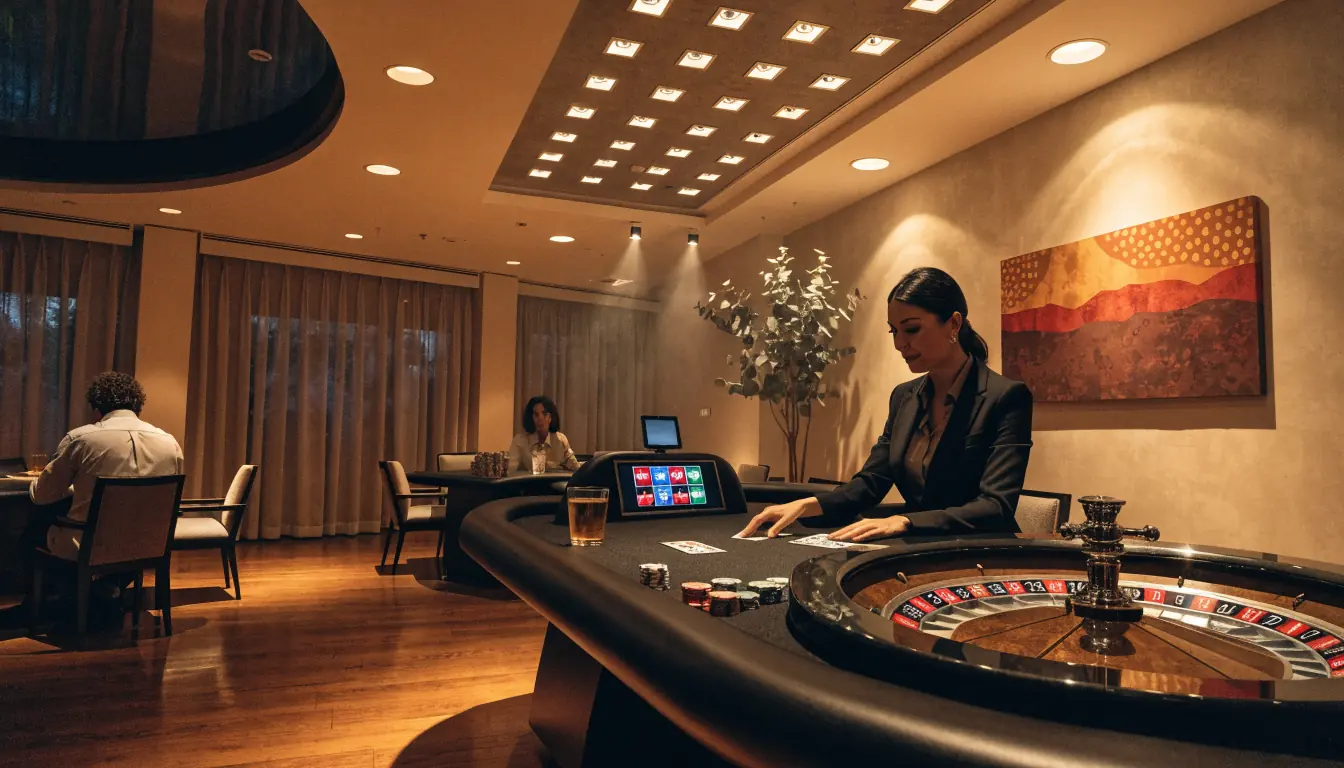
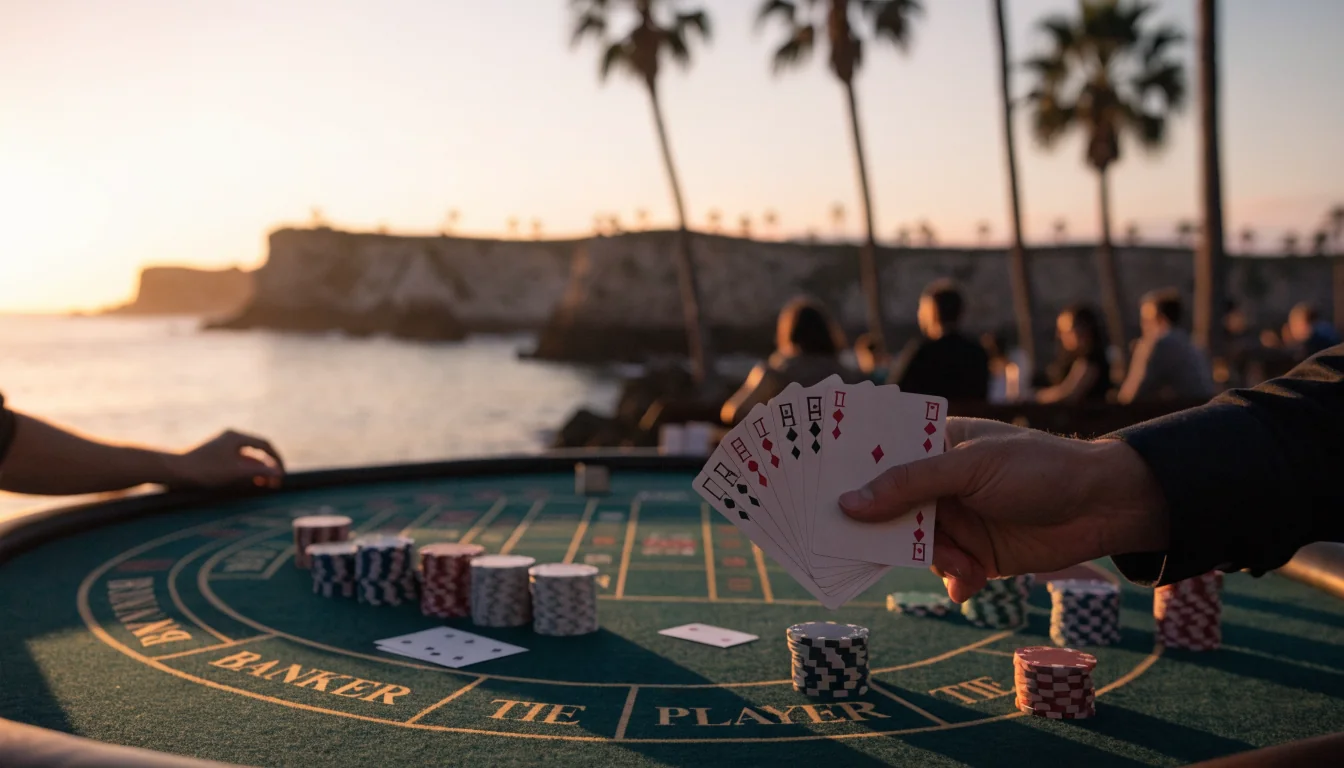
None of the above applies to physical casinos. Australia’s land‑based casinos — regulated by state and territory governments, each with its own gambling regulator — lawfully run full table‑game floors: blackjack, roulette, baccarat, poker, and more, for real money, for anyone over the minimum gambling age of 18. This is a completely separate regulatory stream from ACMA’s federal enforcement of the IGA. The states licence and police the physical venues; the Commonwealth polices the internet.
The result is a split market that visitors from licensed‑market countries often find strange. Walk into a casino in Melbourne, Sydney, Brisbane or Perth and the full range of table games is there, openly and legally. Sit down at the same blackjack table through a browser at home, and the legal position inverts entirely — the online version is a prohibited service, no matter who runs it.
That split is the honest answer to what this page’s heading promises. Real‑money table games in Australia exist in one place and one regulatory category only: the licensed physical casino floor. Online, the entire category sits outside the law as it applies to operators — and no list of "best online table games for real money" changes that, however confidently it’s formatted.
Why most "available games" lists are structured dishonestly
It’s worth pausing on what typically happens to a reader searching for real‑money table games in Australia, because the information environment around this topic is structured in a particular way.
Affiliate marketing drives many of the “top 10 Australian casino table game sites” lists. The economics incentivise presenting offshore operators as if they were locally licensed.
The search results — rankings, "top 10 Australian casino table game sites," comparison tables — are, in large part, affiliate marketing. The economics are straightforward: sites earn commissions for referring depositing players to offshore casinos. The referred‑to casinos cannot lawfully serve Australians. The referring content therefore has a commercial interest in not saying so, or saying so quickly and burying it under a table of welcome bonuses.
The techniques are consistent across the genre:
- Listing foreign licences as if they mattered locally. A Malta or Curaçao licence displayed next to an Australian flag tells the reader a licence exists; it omits that the licence authorises nothing in Australia and that serving Australians breaches Australian law regardless.
- “Play from Australia” framing. Technically true — players aren’t criminalised — presented in a way that implies the arrangement is lawful, or at least unproblematic.
- Game catalogues with no legal context. Long lists of blackjack variants and roulette tables, house‑edge commentary, strategy tips — anything that occupies attention so the one relevant sentence never lands.
None of this is subtle once you’ve seen the structure. The content answers a question the reader didn’t ask — "which offshore site should I use" — while declining to answer the one they did: what am I actually permitted and protected in doing here?
This page’s position is the simpler one. The permitted answer is the physical casino floor. The online answer is: no lawful offering exists, individual play isn’t a crime, and every protection a licensed market normally provides — dispute resolution, fund recovery, verified game fairness — is absent by design, because the regulator’s powers end at blocking and enforcement, not consumer redress.
What "new table games" actually means here
Search interest around new casino table games tends to assume a pipeline: studios releasing fresh variants, operators adding them to lobbies. That pipeline exists globally — game providers do release new table‑game formats and live‑dealer variants continuously for licensed markets elsewhere. None of it reaches Australia through any lawful online channel, because the channel itself is the prohibited thing. A new table game from an international studio isn’t "coming to Australian online players"; it’s coming to every licensed market except this one.
New table games do arrive in Australia — on land‑based floors, where state regulators approve games for licensed venues, and where the pace is correspondingly slower and the catalogue correspondingly conservative. The online novelty cycle, the live‑dealer innovations, the streamed table formats that define the modern product elsewhere: all of it sits on the wrong side of the IGA for Australian residents.

That’s the pattern to hold onto. Australian players see the same global gambling advertising as everyone else — the same game studios, the same formats — and are then surprised that the underlying products are legally unreachable. The advertising reaches Australia; the product doesn’t. ACMA’s own inability to compel platforms like Facebook to remove gambling ads targeting Australians ensures the gap between what’s promoted and what’s permitted stays wide.
The player in the middle
Strip the policy language away and the individual position is this. An Australian adult who wants to play table games for real money has one lawful, fully protected route: a licensed land‑based casino, age 18 or over, under state regulation. An Australian who plays at an offshore online casino commits no offence — but plays without any of the structures a licence normally carries. No regulator to complain to. No mechanism for recovering disputed funds. No Australian‑recognised standard the operator is bound to meet.
That’s not a warning delivered for form’s sake. It’s the actual shape of the market as the legislation built it. The IGA’s drafters chose to prohibit supply rather than licence and regulate it, gambling — reasonably or not — that blocking and enforcement pressure would keep the offshore sector contained. A decade of ACMA activity has blocked a lot of sites and pushed a lot of operators out. It has not created a single lawful online blackjack table. On the evidence to date, it won’t. Any page telling Australian players otherwise in 2026 is selling something.
Free‑play (demo) table games use real game engines but involve no monetary stake, so they are not prohibited interactive gambling services, unlike their real‑money counterparts.
Free‑Play and Demo Versions of Table Games Online
There’s a strange corner of the Australian online gambling landscape where the law goes quiet: the free-play table game. Blackjack, roulette, baccarat and poker simulations that run on play-money credits, with no deposit and no withdrawal, occupy a different legal category from the real-money versions of the same games. Understanding that distinction is worth doing properly, because the marketing around "free casino games" deliberately blurs it.
I’ve seen this from the operator side. The demo version of a roulette table and the real-money version are often the same piece of software with a different wallet attached. The wheel, the layout, the animations — identical. What changes is that one of them takes money and one of them doesn’t. And under Australian law, that difference is everything.
What the law actually prohibits
The Interactive Gambling Act is the Commonwealth statute that governs online gambling in Australia, and its target is the provision of real-money interactive gambling services to Australian residents — casino-style games, poker, and in-play online betting. Worth noting here, because the sources themselves disagree: some references describe the prohibition as coming from an Interactive Gambling Act 1997, while the operative federal law is the Interactive Gambling Act 2001. The discrepancy exists in the material itself; I won’t quietly pick one.
What the Act restricts is the offering of online casino games for money. It is not illegal for an individual Australian to play at an offshore-licensed online casino — the law targets operators, not players. That asymmetry shapes the entire market, including its free-play corner.

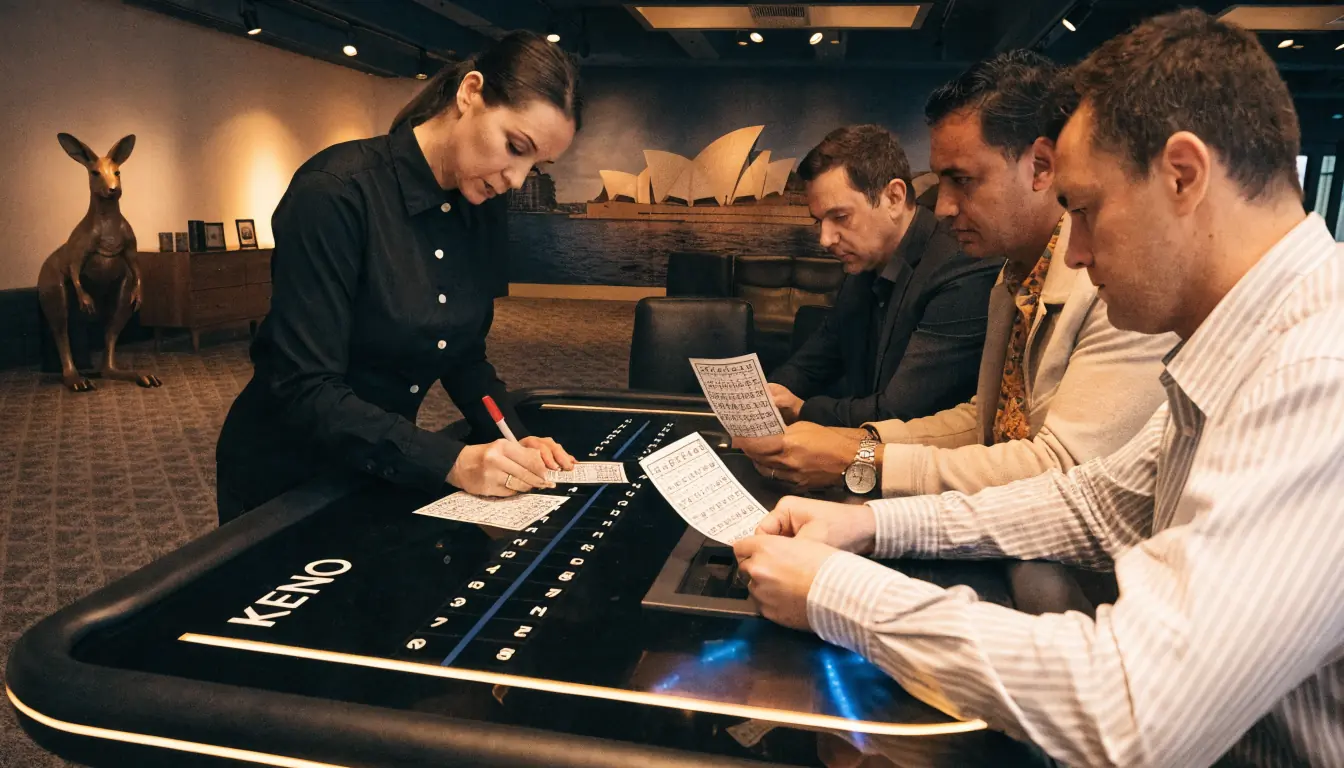
A demo table game, where no money can be wagered and no money can be won, doesn’t fall within the definition of a prohibited interactive gambling service, because there is no gambling in the statutory sense — no stake, no prize. That’s the legal logic that lets "free casino table games for fun" exist openly, even while the real-money equivalents sit on the other side of a prohibition the federal regulator, the Australian Communications and Media Authority (ACMA), actively enforces.
How the demo actually works
The mechanics are simpler than most descriptions suggest. A free-play table game is a browser or app-based simulation of blackjack, roulette, or another table game, running on virtual credits. The credits have no cash value, cannot be purchased in any meaningful sense, and cannot be cashed out. When they run out, they reset or can be reloaded for nothing.
Two things follow from this that are worth stating plainly.
First, the outcome of a demo round and the outcome of a real-money round on the same title come from the same class of software — random number games. The free version is not a "practice mode" with friendlier maths; it’s the same engine with a zero-value currency in front of it. Anyone presenting demo play as reliable preparation for real-money strategy is overselling what a simulation with nothing at stake can teach. The decisions are rehearsed; the psychology isn’t.
Demo versions are primarily a marketing funnel: they aim to convert players to the real‑money product, which is illegal to offer to Australians.
Second, the demo exists for a commercial reason, and it’s not generosity. Free table games are the top of a marketing funnel. The operator’s hope — often the explicit design goal — is that the player who has spent an hour on play-money blackjack develops an attachment to the interface and converts to the real-money product. On a properly licensed sports betting site, where a demo sits alongside legal wagering products, that’s one business. On an offshore casino site targeting Australians, the free table game is the display window for a product that is prohibited from being offered to them at all. Recognising which of the two you’re looking at matters more than any rule of the game itself.
What "free" doesn’t mean
The word "free" does a lot of quiet work in this space, and it deserves the quote marks. A few distinctions I’d draw:
- Free-play is not gambling, legally. No stake, no prize, no prohibited interactive gambling service. That’s the clean part.
- Free-play is not risk-free in practice. It requires no deposit, but it still trains repetition and normalises the game loop — which is precisely why operators fund it. Free play was never designed as a public service.
- A demo on an unlicensed site is not a “safe version” of that site. The site offering it may be exactly the kind of offshore operation the rest of this market’s enforcement is aimed at. The demo page is legal; the cashier two clicks away is not, for the operator, offering it to Australians.
That last point is where I’d push back on the framing you see in most search results. "Try before you buy" is sound advice for most products. For a product that cannot lawfully be sold to you in the first place, the demo isn’t a trial of a purchase you might make — it’s advertising for a transaction that sits outside the domestic licensing system entirely. There is no domestic online casino licence in Australia, so there is no licensed local operator whose demo you could "safely" graduate to. The choice the funnel points toward runs through offshore operators that ACMA has spent years blocking and pressuring out of the market.
Where free-play table games fit alongside legal products
The comparison with what is licensed locally is instructive. Online sports betting operates legally in Australia under state and territory licences, with the Northern Territory Racing Commission acting as a de-facto national online gambling regulator for most bookmakers, who licence there for its lower tax settings. A punter in Australia has a lawful, domestically licensed path for online wagering. For casino table games, no such path exists — which is why the free version, available to anyone with a browser, and the real-money version, offered by operators who cannot hold an Australian licence, sit in completely different legal positions despite being, on screen, the same game.
A practical reading
If the interest is in table games as games — the rules of blackjack, the mechanics of roulette, the betting layout of baccarat — free-play versions do that job adequately and cost nothing. As a rules tutor, the demo is honest enough.
If the interest is in playing for real money, the demo teaches almost nothing relevant. The legal position is what it is: no licensed domestic online casino, no licensed operator to choose, and an enforcement regime that treats the real-money side of the funnel as contraband. The free table game sits just outside that regime — deliberately placed, commercially useful, and legally unremarkable.
No Australian regulator can recover funds or settle disputes for players who lose money on offshore online casino sites.
Nothing wrong with spinning a demo wheel. Knowing why it’s there is the part most descriptions leave out.
Finding Table‑Game Casinos Near You in Australia
Australia has no single national gambling authority. That surprises people who assume there must be one register somewhere listing every licensed venue in the country. There isn’t. Gambling regulation is split between the Commonwealth and the states and territories, and each state and territory has its own separate gambling regulator. Land-based casinos answer to their state regulator and to state law enforcement — not to the federal body that polices online gambling. So the practical answer to "where’s the nearest casino with table games" is always a state-level question.
How to actually locate a venue
Because no national register exists, searching for a casino near you means going through the regulator of the state you’re in, or planning to visit. Each regulator maintains information about the venues it licenses — casinos are among the most heavily supervised premises in the country, and their licensing status is public record with the relevant state authority. A casino’s own website will list its gaming offering, but the licence itself is verified through the state regulator, not the venue’s marketing pages.
One wrinkle worth knowing: the Victorian Gambling and Casino Control Commission (VGCCC) monitors all wagering service providers, including those based in other states, for compliance with the National Consumer Protection Framework. That’s a framework for wagering, not casino floors, but it shows how the layers overlap — a state regulator can reach across borders in some contexts while remaining confined to its own state in others.

Opening hours and what to check before you go
Table-game opening times are set venue by venue, not by any regulator’s published schedule. I’ve seen people drive hours on the assumption that a blackjack table opens when the doors do; often it doesn’t. The reliable source is the venue itself — its current gaming schedule, which changes with seasons and demand. Checking with the casino directly, or through its state regulator’s licensing records, beats any third-party listing, which tends to go stale.
What this market doesn’t offer
Two things worth setting straight, because the search results for this topic are full of both. First, there are no domestically licensed real-money online casinos in Australia — an online venue offering live dealer table games to Australian residents is operating outside the domestic licensing system, full stop. The "closest casino with table games" is, in this market, a physical one. Second, anyone promising a no-deposit bonus for table games is making an offer no Australian licence backs, because no such licence exists for online casino play. A bonus attached to a table game online is an offshore operator’s marketing, whatever the banner claims.
The short version: find your state regulator, confirm the venue’s licence, then check its hours. Three steps. Nothing else is verifiable.
Understanding Odds and House Edge in Australian Table Games
Every table game is built so the house wins over time. That margin is the house edge, and "best odds" simply means a game where that margin is thinner than elsewhere. Blackjack played with sensible rules, for instance, costs the player less per dollar than roulette does; side bets and novelty variants push the edge the other way. Nothing mysterious about it — just arithmetic the operator already ran before the table opened.
Australia has no single gambling authority publishing official house‑edge percentages for table games; any such figures are generic international estimates.
Here is the part that rarely makes the brochure: in Australia, there is no regulator publishing verified house-edge percentages for table games. Each state and territory runs its own gambling regulator, and none of them maintains a public register of official figures for blackjack, roulette or casino poker variants. Whatever percentages circulate online are generic international numbers — useful as background, but not something an Australian authority stands behind.
I’ve seen players treat those imported figures as gospel. They aren’t. Rules differ from venue to venue, and a rule change at a single table can shift the edge more than the choice of game does.
The online picture is different again. Online casino games, poker and in-play betting are prohibited federally under the Interactive Gambling Act 2001, and the ACMA enforces that ban against operators. So there is no licensed domestic online market whose odds anyone could audit, and no regulator comparing promotions across sites. The odds conversation in Australia is, almost entirely, a land-based one.
Fairness, in practice, rests on state-level supervision of physical venues — not on published numbers. No chart replaces checking the table rules yourself.
That’s the whole edge.
Casino Table‑Game Management Systems and Dealer Compensation
Behind every table game in an Australian casino sits a layer of management software: systems that track chips, monitor wagering, and log what happens at each table for the state regulator. Land-based casinos answer to state bodies such as Liquor & Gaming NSW and the Victorian Gambling and Casino Control Commission, so the software’s real job is compliance — producing records a regulator can audit.
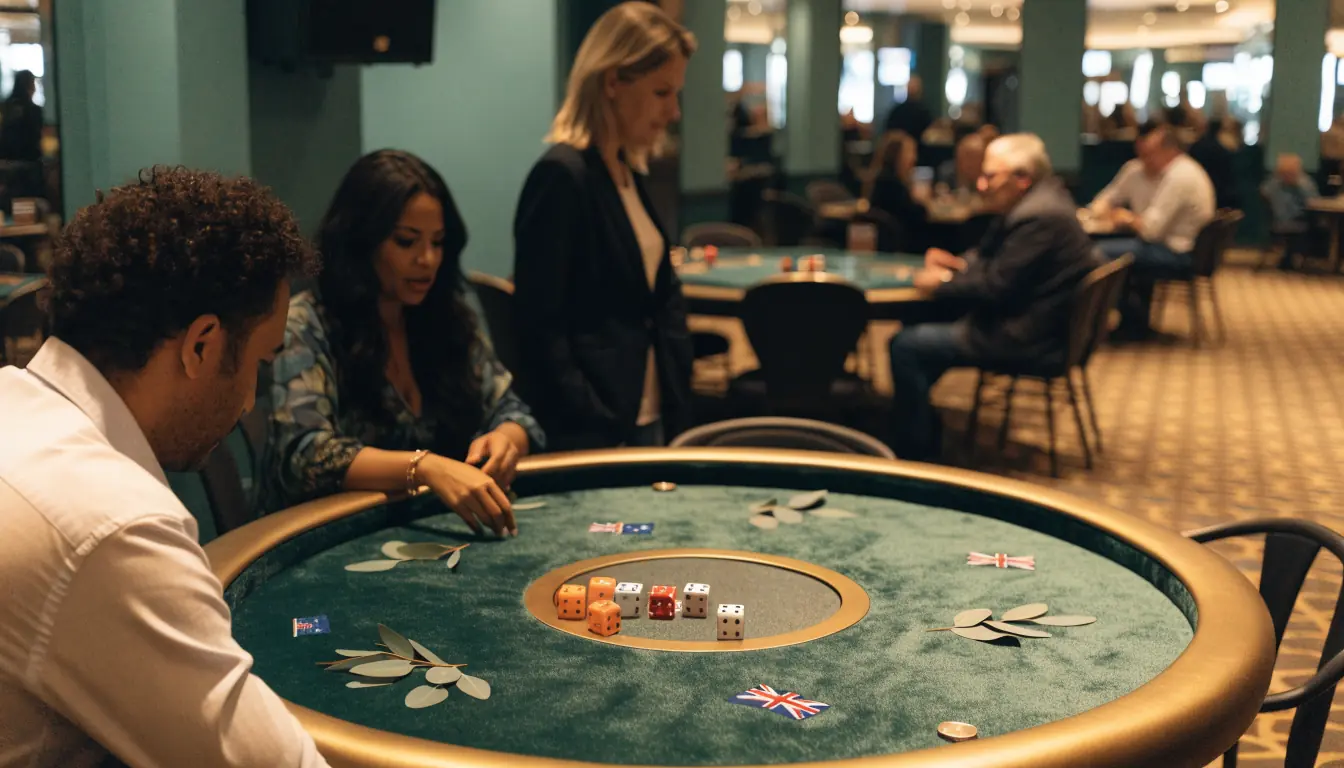
I’ve watched pit staff work with these systems, and one thing stands out: they are built for the house and the regulator, never for the player. No data from them reaches the public.
The same opacity applies to dealer pay. Croupiers are paid a base wage plus tips where policy allows, but no regulator publishes verified salary figures, and casinos don’t disclose them. Any specific number you see online is an estimate dressed up as a fact. The numbers simply aren’t public.
House‑Edge Overview and Charts for Common Table Games
Every casino table game carries a house edge — the mathematical margin the game holds over the player over time. Search for a "house edge chart" and you’ll find tables listing blackjack, roulette, baccarat and craps, each with a tidy percentage. I’ve built enough of those charts to know their limit: the numbers are generic, drawn from international rule sets, not from anything an Australian regulator publishes.
That’s the part the charts don’t say. Australia has no single gambling authority — regulation sits with each state and territory plus federal bodies like the ACMA — and none of them publish house‑edge figures for table games. The ACMA enforces the Interactive Gambling Act 2001 by investigating and blocking prohibited online services; verifying the fairness of an offshore casino’s blackjack table is outside its remit, and it cannot recover funds or settle disputes with those operators.
So a generic chart is a reasonable starting point for comparing games. Treat any exact percentage attributed to an Australian source as invented.
Browser‑based casino tables are convenient, but they offer no consumer protection for Australian players.
Playing Table Games Without Downloads: Browser‑Based Options
Most table games that run in a browser — blackjack, roulette, poker — are built as instant-play pages. No download, no installed client. That part is pure technology, and it works the same everywhere.
The legal part is where Australia differs from most markets. Under the Interactive Gambling Act 2001, online casino-style games, including blackjack, roulette and poker, are prohibited from being offered to Australian residents. No domestic licence for a real-money online casino exists, so any browser-based platform serving Australians is doing so from offshore, outside any local regulator’s reach.
ACMA, the federal authority that enforces the Act, responds by issuing blocking notices to internet service providers. What it cannot do is recover lost funds or resolve disputes with offshore operators. A browser page that loads instantly also disappears instantly.
Convenience is real. Protection is not.
Bitcoin vs. Traditional Table Games: What Australian Players Should Know
Crypto casinos advertise Bitcoin blackjack and Ethereum roulette as if the currency changed the legal position. From the regulator’s side, it doesn’t. What the Interactive Gambling Act 2001 prohibits is the offering of online casino gambling to Australians — the product, not the payment rail. It is illegal to offer online casino gambling in Australia, and no domestic licence for such an operation exists, whatever the operator accepts in deposits. A site taking Bitcoin instead of a card is still an unlicensed offshore casino in ACMA’s eyes, and the same blocking powers apply.
The payment side has its own problems. Under rules tied to licensed Australian wagering, digital currencies aren’t an accepted deposit method — a Bitcoin-only casino is, by construction, operating outside the domestic framework entirely.
Traditional table games at land-based casinos, regulated by state authorities, are the lawful route. Bitcoin changes the wallet, not the rule.

Pai Gow Poker: Rules and Availability for Australian Gamblers
Pai Gow Poker sits at an odd angle to the Australian market. The game itself is straightforward enough: a table game played with cards where a hand is split into two — a high hand and a low hand — and both must beat the croupier’s corresponding hands to win. That splitting mechanic is the whole appeal; it produces frequent pushes, and a slower, more deliberate pace than most card games.
What limits its reach here is not the rules but the law. The Interactive Gambling Act 2001, the primary Commonwealth law governing online gambling in Australia, prohibits online casino-style games — poker among them — being offered to Australian residents, and no domestic licence for such games exists. So Pai Gow Poker turns up in land-based casinos regulated at state level, if at all, while any online version sits with offshore operators the Commonwealth cannot licence. A niche game, twice narrowed.
Table Games in Canadian Casinos: A Quick Comparison for Australian Players
Searches for table games at casinos in Canada often come from Australian players wondering whether the grass is greener there. The comparison is worth making, but mostly for what it reveals about home.

In Australia, online table games — blackjack, roulette, poker — cannot lawfully be offered to residents under the Interactive Gambling Act 2001, and no domestic licence for an online casino exists. It isn’t an oversight; the Commonwealth decided that no such licence would be issued. Land-based tables are a separate matter, regulated state by state, with no single national gambling authority.
Canada runs differently: regulation sits with the provinces, and online casino play is lawfully available through provincial regimes in a way Australia simply does not permit.
The trap is assuming Australian facts travel. They don’t. ACMA’s powers, the IGA’s prohibitions, even the way "croupier" and "pokies" get used — none of it maps onto a Canadian licence or a Canadian regulator. A site lawful in Canada is not lawful here, and vice versa. Different statute, different authority, different rules.
I’ve seen players treat a Canadian licence as a proxy for safety in Australia. It isn’t evidence of anything here. The Australian framework stands on its own.