Gambling Casino Sites in Australia: Slots Guide 2026
 Available in AU
- Understanding the Australian Slot Landscape
- Slot Gambling Mechanics and Revenue
- Slot Machines (Pokies) in Clubs and Casinos
- Casino Game Types Beyond Slots
- Pokies: Turnover, Harm and Money‑Laundering Risks
- Bitcoin and Crypto Gambling in Australia
- Real-Money Online Casino Play
- Ethereum and Internet-Based Gambling Platforms
- Online Casino Regulations and Player Protection
- Top Australian Online Casinos to Play in 2026
Understanding the Australian Slot Landscape
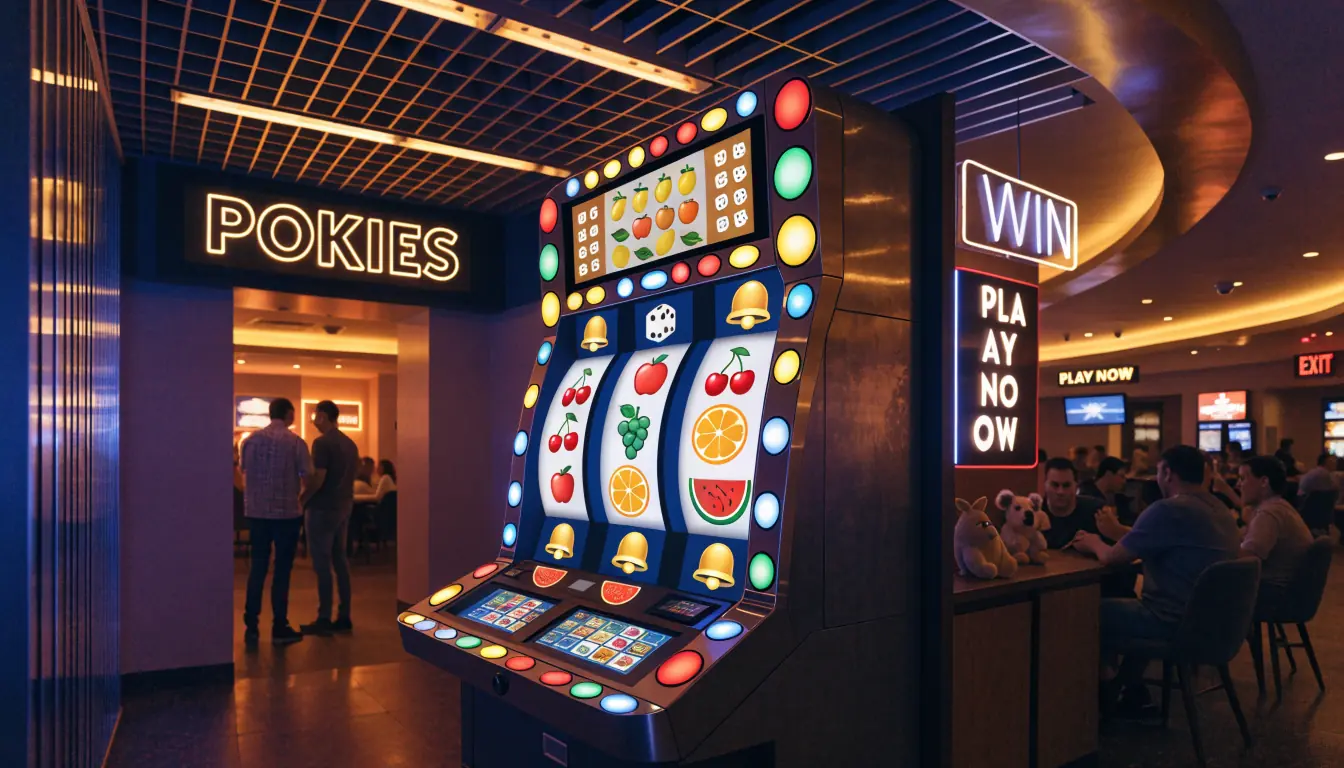
In Australia, nobody who works in the industry says "slot machines." The word here is pokies — electronic gaming machines, or EGMs — and the vocabulary matters, because it signals something about scale. Pokies are not one gambling product among many in this market. They are the market. Everything else — table games, lotteries, sports betting — orbits around them.
I’ve spent enough time on the operator side of this industry to know that the numbers get repeated so often they lose their weight. So let’s put them back in context. In FY 2020–2021, Australians bet almost AUD$150 billion on electronic gaming machines. Player loss — the amount people actually lost after wins were paid out — was AUD$12 billion. That’s not casino revenue from tourists. That’s money that came out of Australian household budgets and stayed with the venues.
The per-capita figure is the one that tends to stop people: AUD$608 lost per person from electronic gaming machines in that same financial year. Per person — not per gambler. Spread across the entire population, including everyone who has never touched a pokie. Among actual regular players, the losses concentrate heavily, which is exactly why regulators treat this product category differently from every other form of gambling in the country.
A Country With a Disproportionate Share of the World’s Machines
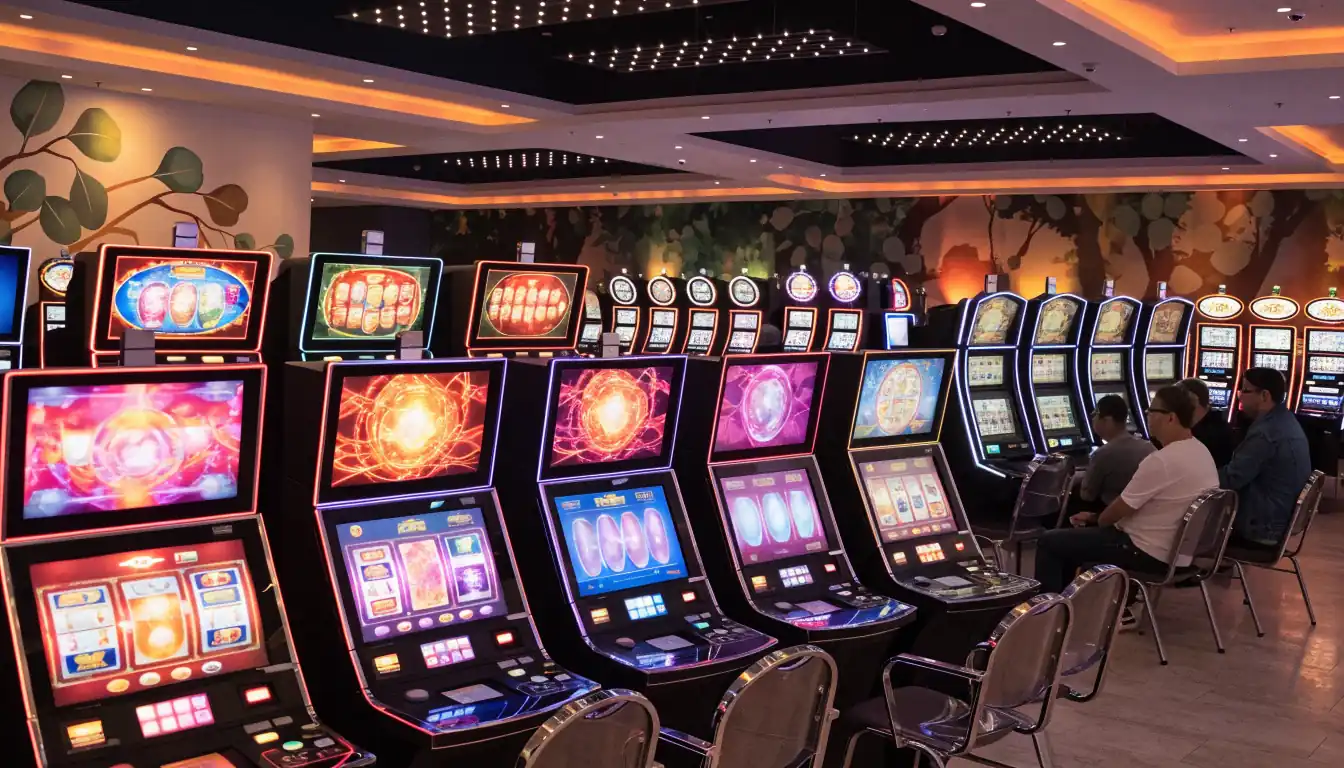
Australia has 0.3% of the global population. It is home to 3% of the world’s pub and club poker machines. Run the arithmetic on that: a hundredfold overrepresentation in machines relative to people. No other country concentrates its gambling economy this heavily in EGMs installed in ordinary neighbourhood venues — pubs and clubs, not destination casinos.
The comparison with other markets is instructive. In most jurisdictions, slot-style games live inside licensed casinos or, increasingly, on regulated online platforms. In Australia, the machines sit in the local leagues club, the RSL, the pub on the corner. That geography shapes everything: accessibility, habit formation, the sheer volume of play, and the way money moves through venues with limited traceability.
There is a broader claim sometimes cited — that Australia holds about 18% of the world’s poker machines — and according to complyadvantage.com that figure has circulated in AML commentary. Note the difference in wording, though: that claim covers poker machines overall, while the 3% figure covers pub and club machines specifically. When a single source offers a number on a shifting definition, treat it as one estimate among the data, not as a settled market norm. The defensible statement is the smaller one: 3% of the world’s pub and club machines, in a country with 0.3% of its people.
Why Slots, and Not Something Else
The dominance of pokies in Australia is not an accident of taste. It’s structural, and anyone who has worked inside a venue can explain the mechanics without a single marketing word.
Electronic gaming machines are the most profitable use of floor space a club or pub can license. They run continuously, they require no dealer, no table staff, no tournament infrastructure. One machine earns for the venue around the clock. A table game needs a trained employee standing at it. From the operator’s side, the decision of what to install isn’t close.

From the player’s side, the product is engineered for repetition. Every mechanical detail of a pokie — spin frequency, near-miss presentation, sound design, the "loss disguised as a win" — exists to compress the interval between bet and outcome. Where a race takes minutes and a lottery draw takes days, a pokie delivers a result in seconds, then invites the next one. That compression is the product. In my years around this industry I have never seen a venue advertise it honestly; the promotional language always leans on "entertainment" and "fun," and the machine’s actual design brief — maximum bet velocity — goes unmentioned.
That’s why "slots" as a category doesn’t split evenly with other gambling formats when you look at harm data either. Poker machines are the most harmful form of gambling in NSW, according to the inquiries and reporting that have examined the sector. Not one of the most harmful. The most harmful.
The Online Question the Headlines Miss
Search for gambling casino sites in Australia for 2026 and you’ll find a crowded, mostly unregulated online space sitting on top of a heavily physical one. Here is the part most explanation pieces skip: the two are legally different universes.
Under the Interactive Gambling Act 2001, offering online casino games – including slots – to Australian residents is prohibited. Operators that ignore this law expose themselves to serious legal risk.
Under the Interactive Gambling Act 2001, it is prohibited to offer online casino games — slots included — to Australian residents. There is no domestic licence an operator can obtain to run an online casino for this market. It is not illegal for individual Australians to play at offshore-licensed online casinos; the law targets operators, not players. So the "online slots" activity of Australian residents flows almost entirely to platforms licensed elsewhere, outside the reach of Australian consumer protections, while the licensed domestic gambling economy remains anchored in physical machines and in legal online wagering on sports and racing.
That split produces a strange landscape. The country with one of the densest concentrations of gaming machines on earth simultaneously has no legal domestic online slots product. Players who want to spin reels on a phone are pushed offshore by design — a policy choice with real consequences for player protection, since offshore operators answer to other regulators or, in the worst cases, to no one. This is not an argument for or against the policy; it is a description of how the market actually behaves. And anyone writing about Australian online gambling in 2026 without explaining this framework is describing the shop window while ignoring the building.
What "Economic Impact" Actually Means Here
The scale figures quoted above get framed, in industry materials, as "contribution" — to state revenue, to community sport, to club jobs. There’s truth in it and sleight of hand in it at the same time.
Gambling winnings are not taxed in Australia; the government’s take comes from the operator side. In 2015–16, gambling revenue accounted for 7.7% of state and territory taxation revenue. That is a material line item in every state budget, which is precisely why reform moves slowly. When a government depends on gambling taxes to fund hospitals and schools, the regulator and the revenue collector are the same institution, and the tension never fully resolves. NSW alone has approximately 95,800 pokies — a machine count that no treasury wants to see fall sharply overnight.
So when a club association says pokies "fund the community," the accurate reading is: pokies extract losses from the community, the state taxes a share, and a portion is returned through grants and sponsorship. The net direction of the money is not a mystery — AUD$12 billion in losses in a single financial year tells you the direction. What the framing does is make the extraction feel like a civic arrangement.
Where This Landscape Sits in 2026
Two currents are reshaping the Australian slot landscape as of 2026, and both matter for anyone trying to understand the market rather than just gamble in it.
The first is the harm-minimisation push. The BetStop national self-exclusion registry, launched in August 2023, registered 18,000 users in its first six months — a figure that tells you two things: that demand for self-exclusion tools is real, and that the underlying harm driving that demand is equally real. Public inquiries, particularly in NSW, have put the sector’s failings on the record, and the language coming out of those inquiries is blunt in a way industry materials never are.
The second is the shift toward what the sector now calls "transparent pokies" — account-based, cashless machine systems that replace anonymous cash play with traceable, identifiable play. The industry’s marketing presents this as player convenience. It is also, and perhaps primarily, an AML response: high volumes of cash with limited traceability have made pokies a recognised money-laundering channel, and account-based play is the structural fix. Both things are true at once. Convenience and surveillance are the same machine.
The sections that follow unpack each layer in turn: how slot gambling operates as a revenue machine, what sits inside clubs and casinos, where non-slot games fit, and what the risks and controls around all of it actually look like from the inside. The headline figure to carry forward is simple: this is a market where one product — the poker machine — does most of the earning, most of the harm, and most of the worrying.
Annual player losses
AUD$12 billion in player losses per financial year illustrates the scale of the problem.
AUD$12 billion a year in losses. That’s the landscape. Everything else is detail.
Slot Gambling Mechanics and Revenue
Slot gambling is the one product line that survives every attempt to describe the market in tidy categories. The game itself is simple: a player stakes an amount, the machine’s software produces an outcome, and the payout follows a built-in return schedule. What makes slots different from table games is that the outcome is generated entirely by the software. There is no dealer, no opponent, no decision that changes the odds after the bet is placed. That is why slots scale so easily online — the entire product is code, and code does not need a venue.
I have sat through enough product meetings to know that this simplicity is the commercial point. A digital slot needs no human labour per round, runs continuously, and collects a fixed margin on turnover. Every other casino product — blackjack, roulette, poker — carries either a skill element or a human cost. Slots carry neither. That mechanical fact, more than any marketing decision, explains why slots dominate gambling revenue wherever they are legally permitted to operate.
How online play actually works
Online, a slot session is an account relationship, not a machine visit. A player registers, deposits funds, and plays against software hosted by the operator. The stake is deducted from a balance, wins are credited back, and the operator holds the deposited funds the entire time. This is a structurally different arrangement from the offline model, where each transaction is a cash event at a physical machine — a distinction that matters both for regulation and for how money moves through the system.
The legal position in Australia is blunt. The Interactive Gambling Act, passed on 28 June 2001, prohibits the provision of online casino games to Australian residents, and slots sit squarely inside that prohibition. No domestic licence exists for real-money online slots. The law targets operators, not players: an individual Australian who plays at an offshore-licensed site commits no offence, but no operator can lawfully offer the product from within Australia or hold themselves out as domestically licensed here. Anyone claiming otherwise is selling something.
The consequence is a split market. Online sports betting operates domestically under state and territory licences. Online slots do not operate domestically at all. What Australians encounter as "online slots" is offshore product, hosted outside the reach of Australian regulators, which is precisely why the regulatory discussion around it looks so different from the discussion around the machines in the local club.
Where the revenue actually comes from
The 7.7% figure tells the story plainly. In 2015–16, gambling revenue accounted for 7.7% of state and territory taxation revenue. Governments here are not passive observers of the industry — they are structural beneficiaries of it. Point-of-consumption taxes, licence fees and, for the offline segment, gaming machine taxes flow directly into state budgets.
The online slot segment contributes almost nothing to that figure, and for an obvious reason: it is prohibited. Domestic online gambling revenue comes overwhelmingly from the licensed wagering sector — sports and race betting. The pokies turnover that props up state treasuries is generated on physical machines in clubs, pubs and casinos. So when the industry speaks of "gambling revenue," it is describing a revenue base built almost entirely on products that are not online slots.
Gambling winnings are not taxed in Australia; the tax burden falls on operators and, through them, on the states.
One tax position is worth stating plainly, because it shapes player behaviour more than most commentary acknowledges: gambling winnings are not taxed in Australia. A windfall from a slot session is not income in the hands of an individual player. The taxation burden falls on operators and, through them, on the states. Players notice. A market where winnings are untaxed behaves differently from markets where every payout triggers a tax question — and it removes one administrative reason players might avoid documenting their play.
Slots are not "casino games" in general
It is worth separating slots from the broader casino category, because the mechanics and the risk profiles diverge.
- Pace. A slot round lasts as long as a button press. Table games have natural pauses — shuffles, betting rounds, dealer actions. The per-hour stakes on a slot can exceed those of any table product at the same denomination, purely through repetition.
- Decision-making. A slot player makes no meaningful decision after choosing a stake. Blackjack and poker players act, and their actions change outcomes. That difference is why slots, not table games, dominate problem-gambling research — though the harm discussion belongs elsewhere in this article.
- Presentation. Online slots are sold as entertainment products — themes, animations, bonus rounds — in a way table games never are. The packaging is the product.
When the industry or the media says "online casino gambling," it is bundling several products with different legal statuses, different mechanics and different risk profiles into one phrase. That bundling is convenient for operators marketing offshore, and inconvenient for anyone trying to understand what a given site actually offers. A platform can present a full casino menu — slots, table games, live dealer tables — while having no Australian licence for any of it, because no such licence exists to have.
The honest description of online slot gambling in Australia, then, is narrow: a prohibited product, played anyway through offshore channels, untaxed in the player’s hands, and contributing nothing to the state revenue that offline machines generate. The revenue story belongs to the machines in the clubs — and to the wagering operators holding domestic licences.
That is the machine under the cabinet.
Slot Machines (Pokies) in Clubs and Casinos
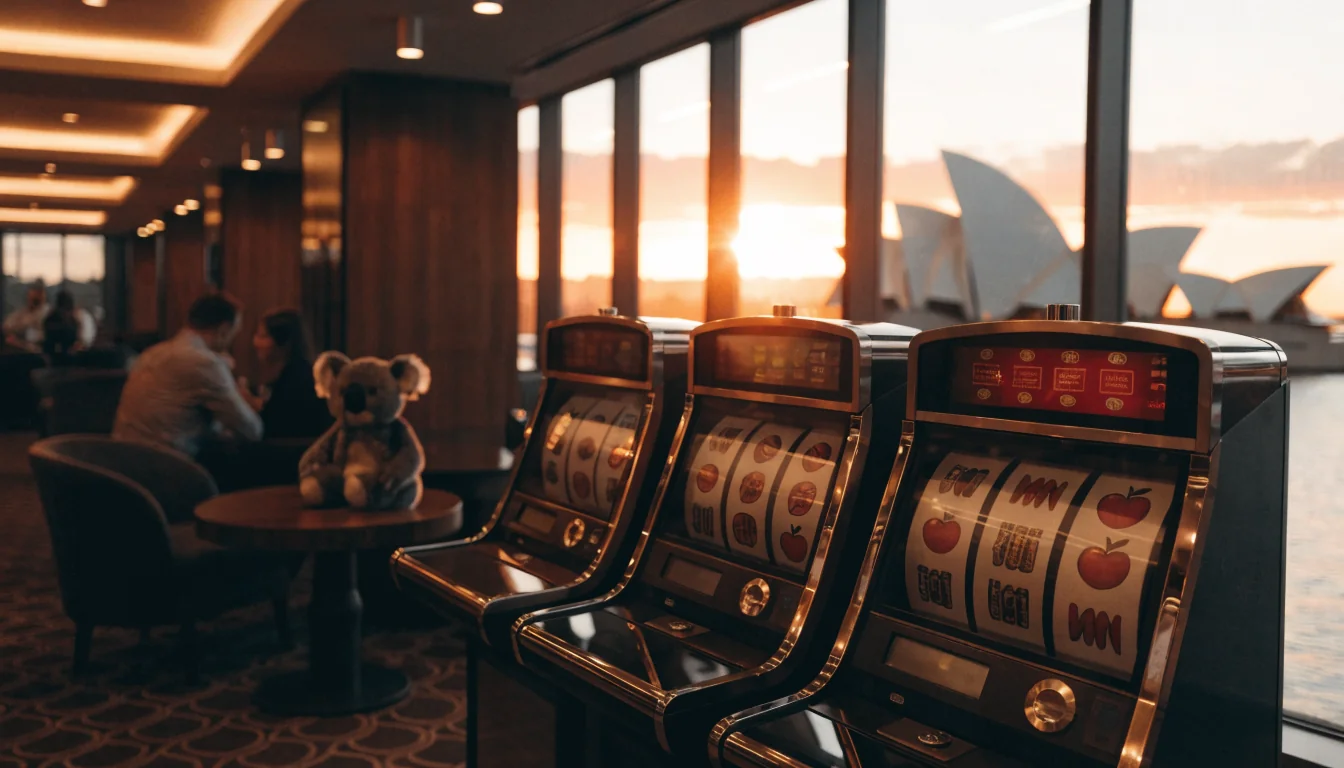
Walk into almost any licensed club in New South Wales and the first thing you’ll hear is the sound. Not conversation — the low, collective hum of electronic gaming machines. That sound is the centre of gravity of Australian gambling, and it lives almost entirely offline, in pubs, clubs and casinos, not on websites.
The NSW machine floor
New South Wales is the densest pokie market in the country: approximately 95,800 machines operate across the state, in everything from large leagues clubs to suburban pubs. To put that density in perspective — Australia holds 3% of the world’s pub and club poker machines with 0.3% of its population, and NSW carries the largest share of that load.
The machines aren’t decoration. They’re the business model. NSW clubs earned $1.945 billion in net profit from pokies in the window between December 2017 and May 2018 — roughly eighteen months. That figure isn’t turnover; it’s what was left after payouts. It’s why clubs can afford cheap meals, big screens and membership perks: the pokie room subsidises the rest of the building. Anyone who has worked in a club knows the arrangement is explicit. The bistro is a loss leader. The machine floor is the revenue.
Pokies — formally electronic gaming machines, or EGMs — are the same device whether they sit in a pub, a club or a casino. What changes is the wrapper: casino floors tend to house higher-denomination machines and table games alongside them, while clubs and pubs run the high-volume, low-stakes end of the market. The mechanic is identical in all three settings.
Offshore online slot sites operate outside Australian regulatory oversight, meaning players have little recourse if something goes wrong.
How this differs from online slots
Here’s the distinction most international coverage gets wrong. What Australians call pokies and what offshore sites call "slots" share software ancestry — reel spins, paylines, symbols — but they operate in completely different legal and physical worlds.
The club and casino machine is a physical, venue-based product. Cash goes in at the machine or via a venue-issued card. Winnings come out at a cashier or ticket redemption unit. Every transaction has a venue attached to it, staff observing it, and (in principle) an AML/CFT program sitting behind it — venues operating more than 15 machines are required to appoint a compliance officer and report cash transactions above $10,000.
Online slots, by contrast, exist in a legal void domestically. The Interactive Gambling Act 2001 prohibits offering online casino-style games — slots included — to Australian residents, and there is no licence an operator can obtain to run them here legally. What Australians play online comes from offshore-licensed operators, outside any Australian venue oversight. Same game family, entirely different accountability structure.
That difference matters practically. A club machine sits inside a venue that can be inspected, fined and regulated on Australian soil. An offshore slot site sits inside whatever jurisdiction issued its licence — Malta, the UK, elsewhere — and AUSTRAC and ACMA have no direct lever over its game floor. When people search for online slot machines for real money in Australia, they’re looking at that offshore market, whether they realise it or not. There is no domestic, licensed version of it to find.
Turnover and scale
The scale of the physical machine market is hard to overstate. According to complyadvantage.com, pokies generated $191.2 billion in Australian gambling turnover in 2023. At the national level, Australians bet almost AUD$150 billion on electronic gaming machines in FY 2020–2021, with player losses of AUD$12 billion — a per-capita loss of AUD$608.
Turnover is the number that should be read carefully. It counts every dollar cycled through machines, not money lost — a player recycling the same $50 note repeatedly inflates turnover dramatically. Player loss is the honest number. Both, however, describe the same physical footprint: rows of machines in venues that most patrons entered for other reasons.
The machine floor earned its place honestly, in the commercial sense. It simply did so in a regulatory environment where the online equivalent cannot legally exist — which is why "pokies" and "online slots" describe two different industries that happen to share a screen layout.

Casino Game Types Beyond Slots
When most people picture a casino, they picture reels spinning. But the floor — and its online equivalents — covers a much wider spread of table games, and each carries a different risk profile. In Australia, the legal situation splits that spread in an unusual way, and it’s worth being precise about it before anyone decides where to put their money.
What "casino games" actually covers
The Interactive Gambling Act 2001 draws a hard line: online casino-style games — blackjack, roulette, poker and slots included — cannot be offered to Australian residents by any operator, and there is no domestic licence an operator could hold to do it legally. What the Act permits online is different: sports betting and lotteries, under state and territory licences. It is not an offence for an individual to play at an offshore-licensed casino; the law targets the operator, not the player.
Interactive Gambling Act 2001
The Australian law that prohibits the provision of online casino games, including slots, to Australian residents. It targets operators, not individual players.
The practical consequence is that the "casino gambling games" an Australian player encounters online are almost always delivered from offshore platforms, while the land-based side — table games at licensed casinos in Sydney, Melbourne, Perth, Brisbane, Adelaide and Darwin — operates under domestic state regulation. Same games, entirely different supervisory structures.
The table-game staples break down roughly like this:
- Blackjack and baccarat — card games played against the house. Fast rounds, high decision density, and the classic vehicles for the “high roller” narrative that marketing departments love. In cash-heavy land-based settings, baccarat in particular has a long documented association with movement of large sums that have nothing to do with gambling outcomes.
- Roulette — pure house-edge game, no skill component. Its appeal for risk purposes is anonymity: chips in, chips out, minimal interaction.
- Poker — player-versus-player with a house rake. Onshore online poker is prohibited alongside other casino games; private and casino-based play continues legally.
I’ve sat through enough AML training sessions to know the pattern the trainers return to: it’s rarely the game itself that creates the risk. It’s the cash mechanics wrapped around it.
Why regulators look past the game to the transaction
Public inquiries and sector guidance in Australia repeatedly land on the same conclusion: electronic gaming machines are identified as a major AML risk area, largely because of the sheer volume of cash transactions and the limited traceability that comes with them. Table games inherit some of the same exposure. The indicators regulators train staff to watch for translate across game types:
- Large cash insertions or buy-ins followed by minimal play and an immediate cash-out. The game is a formality; the point is converting dirty cash into clean winnings or a cheque.
- Frequent small redemptions spread across multiple venues. Fragmenting the money keeps any single transaction below the threshold that triggers reporting obligations.
- Multiple patrons visibly working together to move cash, feeding one another’s play or coordinating redemptions.
These red flags don’t depend on whether the money goes through a roulette table or a poker machine. That is precisely why the compliance conversation has shifted from game-specific rules to transaction behaviour: the venue can’t see intent, but it can see the shape of the activity. Cash in, no play, cash out. Nothing about that resembles gambling.
For anyone comparing online options against land-based ones, the distinction matters in one direction: account-based online play leaves a record — deposits, stakes, outcomes, withdrawals — while a cash game onshore can leave almost none. Traceability is not a feature operators advertise. It is, however, the single thing that separates gambling from laundering.
Same floor, different risks. Know which one you’re standing on.
Pokies: Turnover, Harm and Money‑Laundering Risks
The numbers attached to poker machines in Australia are the kind that make compliance officers sit up. Complyadvantage.com reports that pokies generated $191.2 billion in Australian gambling turnover in 2023 — a figure that, even allowing for the churn inherent in turnover accounting, points to machines as the engine room of the national gambling economy. Where that much cash moves through a single product category, two consequences follow with mechanical reliability: harm at the player end, and laundering risk at the operator end. They are not separate problems. The same features that make a machine profitable make it useful to someone with dirty money.
Why poker machines are singled out for harm
Regulators and public health bodies in New South Wales have been blunt about it: poker machines are the most harmful form of gambling in NSW. Not the most popular, not the most visible — the most harmful. The reasons are structural rather than moral. A pokie compresses the cycle of stake, loss and re-stake into seconds. There is no natural pause in the product, no dealer to slow the pace, no closing time at the machine itself. The venue closes; the habit doesn’t.
Most harmful product
Pokies are identified by regulators as the most harmful form of gambling in NSW, driven by their rapid‑play design and continuous availability.
Harm here is not an abstraction. It shows up in household budgets, in the volume of calls to Gambling Help Online, and in the composition of self-exclusion registrations. From the inside of the industry, the uncomfortable observation is that the machines generating the strongest revenue are typically the ones generating the strongest harm — the product design and the harm profile move together. I’ve yet to see a venue where they didn’t.
The laundering mechanics
The appeal of an EGM to a launderer is not sophistication. It is the opposite. A high volume of cash transactions with limited traceability makes pokies attractive precisely because nobody is asking questions at the point of insertion. The typologies are well documented and, in practice, easy to spot once someone is looking.
The core method is cash placement with minimal play: large sums go into a machine, the buttons are touched just enough to register activity, and the balance is withdrawn — now documented as gambling winnings. Gambling winnings are not taxed in Australia, which completes the picture. The money exits the venue looking legitimate, clean and unremarkable.
Variations follow a predictable logic:
- Purchasing winning tickets — buying a winning ticket or voucher from a genuine player for cash, then redeeming it through the venue. The ticket does the laundering; the buyer merely collects it.
- Structuring across venues — splitting cash across multiple locations to keep each transaction beneath the attention threshold.
- Collusion and weak oversight — an employee or a syndicate of patrons working together to move cash through the floor while compliance looks the other way.
The red flags mirror these typologies directly. Large cash insertions followed by minimal play and immediate cash-out. Frequent small redemptions spread across venues. Multiple patrons visibly coordinating. Customers refusing identification or cycling through several player cards. Redemption patterns that sit far outside the venue’s averages. And a profile mismatch: someone playing well beyond what their stated means would allow.
What actually helps
None of this is invisible to regulators. Public inquiries and sector guidance have identified pokies as a major AML risk area, and the control response is known: customer verification, patron profiling, and the shift toward cashless, account-based play — "transparent pokies" in the language of NSW regulators — which makes the cash trail auditable in a way that coin-and-note machines never were. The traceability problem is not mysterious. It is a design choice, and it can be redesigned.
The machines will not be the ones to fix it. That part falls to the venues, the regulators, and the AML/CFT programs that sit between them.
Bitcoin and Crypto Gambling in Australia
Crypto gambling sits in an awkward corner of the Australian market. On one hand, Bitcoin and other digital currencies are accepted as payment methods by offshore operators that serve local players. On the other, the regulatory picture is blunt: the Interactive Gambling Act 2001 prohibits online casino gambling outright, and there is no licence an operator could obtain domestically to offer slots or table games for either fiat or crypto. The prohibition targets operators, not individual players — which is why crypto casinos remain visible to Australian users despite having no lawful domestic footing.
Why crypto appeals to gamblers — and why it worries regulators
The pitch from crypto casinos is familiar: faster deposits, no bank intermediaries, pseudo-anonymity. In my experience reviewing payment flows, the first two claims are largely true and the third is overstated. Bitcoin and Ethereum transactions are recorded on public ledgers. That record does not carry a name, but every coin has a history, and blockchain analytics can follow it.
Transparent, account‑based pokies improve traceability and help reduce money‑laundering risks while offering players a more convenient experience.
This is the part marketing copy leaves out. Compared with cash dropped into a pokie at a club — where, as the previous section covered, high cash volume and limited traceability create genuine money-laundering risk — crypto transactions are comparatively easy to reconstruct after the fact. AUSTRAC’s own position on AML/CFT controls points the same direction: customer verification and patron profiling are the controls that matter, and they work better when the payment rail itself produces a record. Cashless and account-based play improves traceability whether the balance is denominated in dollars or satoshi.
What "crypto-friendly" actually means
A few things worth knowing before trusting a site’s claims:
- “No verification” is a warning, not a feature. Legitimate payment processing requires identity checks before withdrawal, regardless of currency. An operator that skips this for crypto is skipping the one control that makes the ledger useful.
- Deposit speed is real; withdrawal speed is earned. Crypto deposits confirm quickly. Withdrawals depend on the operator’s internal review, not the blockchain.
- Bonus terms travel poorly. A wagering requirement attached to a crypto bonus is the same obligation as any other. What varies — and what operators rarely volunteer — is how that requirement is calculated and disclosed.
- Digital currencies are not accepted for licensed Australian wagering. Locally licensed betting does not take crypto. Any site offering crypto gambling to Australians is doing so from offshore, outside the local licence framework entirely.
The responsible-gambling layer
Crypto play does not sit outside Australian player-protection tools. BetStop, the national self-exclusion registry launched in August 2023, registered 18,000 users in its first six months — and its coverage extends to any operator subject to Australian licensing. The catch, and it is a real one, is that a purely offshore crypto casino holding no Australian licence is harder to reach with a domestic exclusion scheme. The registry binds those within the system; the gap is everyone else.
For anyone weighing a bitcoin gambling site, the practical test is simple: does the operator know who its customers are? Verification, source-of-funds questions and profiling are not friction invented to annoy players — they are the AML/CFT backbone that separates an accountable operator from a coin launderer’s front. A site that resists identification while courting large crypto deposits has told you everything.
Public ledger, private operator. That asymmetry is the whole story.
Real-Money Online Casino Play
Real-money play is where online casino gambling stops being entertainment and starts being a transaction record. Once a player moves from demo modes or bonus-only activity into wagering actual funds, a different set of expectations applies — on both sides of the counter.

I’ve seen the difference from the operator side. Demo play and low-stakes activity generate engagement metrics; real-money play generates a customer profile, a deposit history, a withdrawal pattern. That profile is what compliance teams — and, where an operator actually runs one, an AML/CFT program — are built around. An offshore site serving Australians has no domestic licence behind it, so the only protection a player has is whatever checks that operator chooses to run. Some run them seriously. Some run none.
Two red flags matter here, and they apply to any real-money account regardless of jurisdiction:
- Access to more cash than the customer profile suggests. A player whose stated occupation and deposit history imply modest means suddenly moving substantial funds is the classic indicator AUSTRAC guidance points to. It is not proof of anything on its own — but it is the point where a serious operator asks questions.
- Depositing higher values and larger amounts of cash. In an online context this shows up as repeated large deposits inconsistent with gameplay, or funding behaviour that looks designed to move money rather than spend it on play.
The distinction from bonus-only play is not academic. Bonus-only activity has no cash-out attached, so there is nothing to launder and nothing to verify. Real-money play has both — which is why identity verification before any withdrawal matters, and why an operator that skips it, or waves through a player refusing identification, is telling you exactly what kind of business it runs.
Low stakes are not the dividing line. Behaviour is.
Ethereum and Internet-Based Gambling Platforms
Ethereum-based gambling works differently from a conventional online casino, and the difference matters for anyone watching where the money goes. A platform built on Ethereum settles on the blockchain itself. Deposits, bets and payouts are recorded as transactions, which means the ledger is public even where the operator is anonymous.
From the compliance side, that ledger cuts both ways. I have seen audits where on-chain history made tracing trivial — every wager tied to a wallet address. But the wallet is not a person. Verification still has to happen somewhere, and when a customer refuses identification or turns up holding multiple player cards, that is the same red flag it would be at a club in NSW. The technology changes the trail, not the behaviour.
Further AML context
The shift to cashless, account‑based machines provides a clear audit trail that regulators can monitor, addressing the long‑standing AML concerns associated with high‑volume cash transactions.
Redemption patterns tell a similar story. Unusual redemption patterns compared to venue averages are red flags in terrestrial venues, and on internet platforms the same logic applies — a wallet redeeming at a frequency or scale nothing like the platform’s ordinary flow warrants a second look.
One more thing the advertising rarely mentions: for Australian residents, offering online casino games over the internet is prohibited under the Interactive Gambling Act 2001, and no domestic licence exists to legitimise it. The player is not the target of the law; the operator is. Ethereum does not change that either.
The blockchain is transparent. The business model, often, is not.
Online Casino Regulations and Player Protection
The Interactive Gambling Act was passed on 28 June 2001, and it remains the anchor of everything that follows. Its logic is simple and often misunderstood: the law prohibits providing online casino games to Australians, not playing them. Operators are the target; players are not. There is no domestic licence an online casino could hold, which is why any site offering pokies or table games to Australians is doing so from offshore, outside the reach of Commonwealth regulation.
On the protection side, the flagship instrument is BetStop, the national self-exclusion registry launched in August 2023. It registered 18,000 users in its first six months — a figure worth reading both ways. Demand for self-exclusion is real, but so is the gap: a registry only binds licensed wagering operators. An offshore casino that ignores Australian law is hardly going to honour an exclusion request.
For anyone assessing an online gambling site from Australia, the practical takeaway is blunt. Verify ID requirements, deposit limits, and responsible-gambling messaging before depositing — not because a regulator guarantees them, but because their absence tells you who you’re dealing with. Support services such as Gambling Help Online operate independently of the industry and remain available regardless of where a site is licensed.
No licence exists. Only behaviour.
Top Australian Online Casinos to Play in 2026
Choosing a casino site for slots comes down to more than flashy games — licensing, bonus structure, and payout practicalities all shape the real experience. Here’s a quick, no-nonsense look at what stands out about each operator on this list.
License: Curacao Gaming Control Board OGL/2023/174/0082 (Dama N.V.) · Bonus: up to A$5,000 + 300 free spins across 4 deposits Licensed under the Curacao Gaming Control Board, this site pairs its offering with a multi-deposit welcome package worth up to A$5,000 plus 300 free spins.
License: Curacao – Antillephone N.V. (Versus Odds B.V.) · Bonus: up to EUR 2,000 across 5 deposits + 200 free spins · Min. deposit: EUR 20 Operating under a Curacao license via Antillephone N.V., it offers a five-deposit bonus scheme reaching EUR 2,000 with 200 free spins, backed by a modest minimum deposit requirement.
License: Curacao eGaming (Dama N.V.) · Bonus: up to A$10,000 + 180 free spins, 40x wagering Holding a Curacao eGaming license, this casino stands out for a bonus package worth up to A$10,000 with 180 free spins, subject to 40x wagering.
Bonus: up to A$7,500 + 550 free spins across 10 deposits, 50x wagering · Payout speed: crypto under 1 hour, PayID 1-3 business days · Min. deposit: A$20 (A$30 to qualify for the bonus) A ten-deposit bonus structure totalling up to A$7,500 and 550 free spins is paired with fast crypto payouts and PayID processing within a few business days.
License: Curacao Gaming Authority (Jumpman Gaming Ltd) · Bonus: up to A$6,600 + up to 250 free spins across 4 deposits Licensed via the Curacao Gaming Authority under Jumpman Gaming, it offers a four-deposit bonus scheme worth up to A$6,600 plus up to 250 free spins.
License: Curacao eGaming (Roby Games Ltd) · Bonus: 100% up to A$750 + 200 free spins Licensed through Curacao eGaming, this casino keeps its welcome offer straightforward with a 100% match up to A$750 and 200 free spins.
Bonus: 240% up to A$4,100 + 300 free spins Notable for a high-percentage welcome bonus, offering 240% up to A$4,100 along with 300 free spins.
License: international iGaming licence – jurisdiction not named in the source · Bonus: 100% up to A$1,000 + 100 free spins, 35x wagering · Payout speed: PayID 1-24 hours · Min. deposit: A$30 (PayID from A$10) Operating under an international iGaming licence, it combines a 100% bonus up to A$1,000 with 100 free spins and notably fast PayID withdrawal times.
License: Curacao eGaming (Hollycorn N.V., since 2017) · Bonus: 225% up to A$1,540 + 600 free spins across 4 deposits, 20x wagering · Min. deposit: A$20-30 (depends on the offer) Licensed by Curacao eGaming since 2017 under Hollycorn N.V., this long-standing operator offers a substantial four-deposit bonus of 225% up to A$1,540 with 600 free spins and comparatively low 20x wagering.
License: Curacao Gaming Control Board · Bonus: up to A$5,000 + 400 free spins Licensed under the Curacao Gaming Control Board, it rounds out the list with a welcome package of up to A$5,000 plus 400 free spins.
Here is the uncomfortable part: a list of "reputable Australian online casinos" cannot exist in the way such headlines usually promise. There are no domestically licensed real-money online casino operators available to Australian players — offshore sites fill that space, and no public register of licensees covers them. Anyone publishing a neat top-ten ranking is ranking operators nobody regulates onshore. That is the mechanic, stated plainly.
What can be ranked is behaviour. When I assessed platforms in a compliance role, the operators worth distinguishing were the ones that acted regulated even where no local licence bound them:
- Customer verification before withdrawal, not after deposit. Government-issued ID checks up front are an AML control, not an inconvenience to be deferred.
- Patron profiling. A platform that monitors whether a player’s deposits fit their profile is doing the same due diligence AUSTRAC expects from licensed venues.
- Clear wagering requirements shown before a bonus, never buried in FAQ pages.
- Refusal of credit-card and digital-currency deposits, matching the standards Australian law imposes on licensed wagering operators.
- Visible withdrawal timelines and no commission-based referrals.
Sites failing on verification and profiling are the ones worth avoiding — those are the same gaps that make gambling platforms attractive for moving illicit cash. A casino that cannot say who its players are has no reason to find out.
No shortcut exists. Behaviour is the register.
Prepared by the Casino Mobile Guide editorial staff.