Casinos That Accept MiFinity in Australia
 Available in AU
- Australian online casinos that accept MiFinity
- Online pokies playable with MiFinity in Australia
- How to deposit funds using MiFinity
- Instant withdrawals and real-money play with MiFinity
- Using MiFinity for casino game payments
- Withdrawal procedure for MiFinity users
- Deposit bonuses and fee considerations with MiFinity
- Leading MiFinity‑compatible casino sites
- Paying with MiFinity: methods and security
- Australian‑specific limits and regulations for MiFinity
Australian online casinos that accept MiFinity
MiFinity arrived in the Australian online casino market as a workaround, and everyone in the industry knows it. PayPal pulled out of gambling transactions in this part of the world years ago, and the gap it left was real: players wanted a digital wallet with a recognisable name, regulated accounts, and the ability to keep casino spending separated from their everyday banking. MiFinity now fills that role — it functions, in practice, as the substitute for PayPal at Australian-facing casino sites.
Who is behind the wallet
One detail matters more than any marketing copy: MiFinity is not some unregistered fintech operating out of a postal box. It is licensed and supervised by two financial regulators — the UK Financial Conduct Authority and the Malta Financial Services Authority. That puts it in a different category from most payment options you’ll see listed in a casino cashier. Card payments sit with your bank, crypto sits with nobody in particular, and a prepaid voucher is a receipt. A dual-regulated digital wallet is a financial product with an actual supervisor.
Since MiFinity isn’t a universal payment option everywhere, it helps to check each casino’s licensing, bonus terms, and payout details before deciding where to play in Australia.
License: Curacao Gaming Control Board OGL/2023/174/0082 (Dama N.V.) · Bonus: up to A$5,000 + 300 free spins across 4 deposits Holds a Curacao Gaming Control Board licence under Dama N.V., and offers a welcome package worth up to A$5,000 plus 300 free spins spread across four deposits.
License: Curacao – Antillephone N.V. (Versus Odds B.V.) · Bonus: up to EUR 2,000 across 5 deposits + 200 free spins · Min. deposit: EUR 20 Licensed via Antillephone N.V. (Versus Odds B.V.) in Curacao, with a multi-deposit bonus of up to EUR 2,000 and 200 free spins, requiring a EUR 20 minimum deposit.
License: Curacao eGaming (Dama N.V.) · Bonus: up to A$10,000 + 180 free spins, 40x wagering Operates under a Curacao eGaming licence held by Dama N.V., and provides a bonus of up to A$10,000 with 180 free spins subject to 40x wagering.
Bonus: up to A$7,500 + 550 free spins across 10 deposits, 50x wagering · Payout speed: crypto under 1 hour, PayID 1-3 business days · Min. deposit: A$20 (A$30 to qualify for the bonus) Offers an extensive bonus of up to A$7,500 plus 550 free spins across ten deposits with 50x wagering, and stands out for fast crypto payouts under an hour, with PayID withdrawals taking one to three business days; minimum deposit is A$20, though A$30 is needed to qualify for the bonus.
License: Curacao Gaming Authority (Jumpman Gaming Ltd) · Bonus: up to A$6,600 + up to 250 free spins across 4 deposits Licensed by the Curacao Gaming Authority under Jumpman Gaming Ltd, with a bonus package reaching A$6,600 and up to 250 free spins across four deposits.
License: Curacao eGaming (Roby Games Ltd) · Bonus: 100% up to A$750 + 200 free spins Holds a Curacao eGaming licence via Roby Games Ltd, and offers a 100% match bonus up to A$750 along with 200 free spins.
Bonus: 240% up to A$4,100 + 300 free spins Stands out with a 240% match bonus up to A$4,100 plus 300 free spins.
License: international iGaming licence – jurisdiction not named in the source · Bonus: 100% up to A$1,000 + 100 free spins, 35x wagering · Payout speed: PayID 1-24 hours · Min. deposit: A$30 (PayID from A$10) Operates under an international iGaming licence, offering a 100% bonus up to A$1,000 with 100 free spins and 35x wagering; PayID withdrawals process within a day, with a A$30 minimum deposit generally, or as low as A$10 for PayID.
License: Curacao eGaming (Hollycorn N.V., since 2017) · Bonus: 225% up to A$1,540 + 600 free spins across 4 deposits, 20x wagering · Min. deposit: A$20-30 (depends on the offer) Licensed by Curacao eGaming through Hollycorn N.V., operating since 2017, with a 225% bonus up to A$1,540 plus 600 free spins across four deposits at 20x wagering, and a minimum deposit ranging from A$20 to A$30 depending on the offer.
License: Curacao Gaming Control Board · Bonus: up to A$5,000 + 400 free spins Licensed by the Curacao Gaming Control Board, offering a bonus of up to A$5,000 combined with 400 free spins.
The security layer matches that status. MiFinity holds PCI DSS Service Level 1 compliance — the highest tier of the payment card industry standard — and runs on SSL encryption. I’ve seen enough casino payment pages to know how rarely that combination is stated plainly. With MiFinity it is documented, not implied.
Why operators in Australia picked it up
The casino side of this equation is less romantic than players assume. Operators don’t add a payment method because it’s "convenient." They add it because it solves a commercial problem, and in the Australian market the problem was this: online casino games cannot be legally offered to residents under the Interactive Gambling Act 2001, so there is no domestic licensing regime, no local payment rails, and no Australian bank that will touch a casino cashier. Everything runs offshore, and offshore operators need wallets that work in Australian dollars without friction.
MiFinity supports AUD directly. That single fact does more for its adoption here than any partnership announcement. No conversion step on the way in, no conversion fee buried in the small print of the deposit — the currency the player holds is the currency the casino credits. Wallets that don’t support AUD either quietly exclude Australian players or charge them for the privilege of playing in someone else’s money.
How it differs from other payment options at the cashier
Having processed my share of deposits across different methods, I’d frame the difference this way:
- Cards. The same banks that issue Australian cards block or flag transactions to offshore casino sites. A digital wallet inserts a regulated intermediary between the bank and the casino, so the transaction the bank sees is a wallet top-up, not a casino deposit. Whether that arrangement suits a given player is their call; the mechanics are what they are.
- Crypto. Anonymous on the casino side, but volatile on the player side, and it converts value through an exchange every time it moves. A digital wallet denominated in AUD doesn’t reprice your balance when the market moves.
- Prepaid vouchers. Fine for deposits, useless for withdrawals. Whatever goes in through a voucher has to come back out through a bank transfer or a card anyway.
- MiFinity. A regulated digital wallet that handles both directions, holds the balance in AUD, and — at the better MiFinity casinos — takes no fee on the deposit itself. Deposits are usually free where competition between operators is doing its work; where it isn’t, the fee appears in the cashier before you confirm.
That last point deserves emphasis, because "free" is the most abused word in casino payment marketing. The honest version: the deposit side is free at the best MiFinity casinos, and the cases where it isn’t are visible in the cashier before you commit. The cost of the method lives in loading and withdrawing the wallet, not in the casino transaction — and those are separate questions, covered further down this page.
Can you actually use it at Australian casinos?
Yes — that’s the short answer to the question people type into a search bar with varying degrees of optimism. The longer answer is that acceptance is site-specific, not universal. Each operator decides which methods to display in its cashier, and the ones that have integrated MiFinity generally do it properly: the payment window opens inside the site, the wallet authorises, the account credits. Operators that haven’t integrated it will offer cards or crypto instead, and no amount of wishing changes a cashier that doesn’t list the method.
The pattern I’ve observed across the market is straightforward. Operators that serve Australian players seriously — the ones that bothered to build AUD support, local-style pokie libraries and payment flows that don’t stall — have added MiFinity alongside cards and crypto. Operators running a single generic cashier for every country on earth tend to skip it. The payment list is, in that sense, a rough signal of how much attention a site pays to this market at all.
Warning! The acceptance of MiFinity varies by casino; a site may list the wallet but still refuse deposits from it. Always check the cashier for the actual availability before attempting a transaction.
It’s not a quality guarantee. A casino can accept MiFinity and still be careless with everything else. But a wallet regulated by the FCA and MFSA, holding PCI DSS Level 1 certification, denominated in Australian dollars, with free deposits at the better operators — that combination narrows the field to sites that have made a deliberate investment in Australian players. That’s the overview. The specifics of what you can play and how the money moves follow in the sections below.
Online pokies playable with MiFinity in Australia
There is a question I used to get constantly from the payments side of the industry, and it sounds simpler than it is: which pokies can you actually play with MiFinity? The honest answer is that the question is framed backwards. MiFinity doesn’t sit between a player and a game — it sits between a player and a casino account. Once the money is in the account, the casino’s entire pokie library is on the table. There is no such thing as a pokie that "accepts MiFinity" and no such thing as one that doesn’t. What actually differs between a MiFinity casino and a non-MiFinity casino is everything that happens before the reels spin and after they stop: how the money arrives, what it costs to get there, how fast winnings come back, and whether the whole thing works on a phone the way it works on a desktop.
That distinction matters because a lot of marketing copy deliberately blurs it. You’ll see pages promising "MiFinity pokies" as if the wallet unlocked a special shelf of games. It doesn’t. What the wallet unlocks is a funding path — and that funding path has its own technical and financial profile that’s worth understanding before committing to it.

What "playable with MiFinity" actually means in technical terms
From the operator’s side, the integration is unglamorous. Top MiFinity-compatible casino sites connect the wallet through iFrame integration — the payment provider’s interface is essentially embedded inside the casino’s cashier, so the player never leaves the site to complete a transfer. When I’ve watched these flows tested internally, the difference between a good and a bad implementation is almost entirely about that embedding. A clunky setup kicks the player out to a separate window, asks them to log in again, and loses them somewhere in the middle. A clean iFrame implementation keeps the whole deposit inside the cashier, and the pokie library on the other side of it behaves identically to any other funded account.
This is worth stating plainly: the pokies themselves — the game software, the random number generation, the return-to-player mechanics — have no awareness of the payment method that loaded the balance. A reel game doesn’t know whether the credits came from MiFinity, a card, or anything else. The differences a player actually experiences are in the transaction layer, and that’s where MiFinity’s profile is genuinely distinctive compared to wallets that don’t operate in Australia or that have pulled out of the gambling vertical.
One structural point that matters to Australians specifically: MiFinity supports Australian dollars as one of its 17 supported currencies. That sounds like a technicality until you’ve watched a balance get eaten alive by double conversion — depositing in one currency, playing in another, withdrawing into a third. With AUD supported natively, the money that leaves your wallet is the money that lands in the casino account, and the money that comes back out is the same denomination. The one conversion charge that can still bite is MiFinity’s currency conversion fee of 2.99%, which applies when a transaction crosses currency boundaries — a scenario a player sticking to AUD-denominated play at AUD-facing sites largely avoids.
MiFinity supports Australian dollars natively, which means deposits and withdrawals can be processed without the 2.99 % currency‑conversion fee, provided the casino account is also AUD‑denominated.
The financial mechanics around a MiFinity-funded pokie session
Here’s where the real differences live, and where I’d encourage anyone comparing options to slow down and read the fine print rather than the banner.
Getting money into the wallet. MiFinity can be loaded several ways: credit card, crypto wallets, the MiFinity voucher, and cash-to-code. Each path has its own cost, and the wallet itself is not free to feed. By the terms disclosed by one industry review, the average deposit fee for MiFinity sits at 4.5% — I flag the source type deliberately, because this figure moves around depending on the loading method and isn’t a fixed constant of the product. A specific and better-documented example: topping up MiFinity with Paysafecard carries a 10.5% fee. Transfers between the MiFinity digital wallet and a crypto wallet cost 1.8% each way, per the same category of industry data. The pattern to understand is that MiFinity’s cost lives mostly upstream — in loading the wallet — rather than at the casino door.
Getting money into the casino. This is the mirror image. MiFinity deposits are usually free at the best MiFinity casinos — the operator absorbs the transaction cost because instant wallet deposits are exactly what casinos want more of. The deposit ceiling is generous for this market: per one industry review of Australian-facing operators, maximum deposits can exceed A$5,000 per transaction. Again, that figure comes from a single source category and individual sites set their own caps, so treat it as an upper bound of what’s on offer rather than a universal floor.
Getting money back out. After a session on the pokies, withdrawal mechanics are where wallets either earn their keep or don’t. Withdrawal approval times at MiFinity casinos range from 1 to 3 business days, and once approved, funds typically land in the MiFinity wallet within 24–48 hours. Those are two separate clocks, and casinos are not always eager to make that clear: the "within 48 hours" promise in promotional copy often refers only to the second stage. Australian-facing withdrawal limits at these operators reportedly range from A$2,000 to A$5,000, with minimums between A$20 and A$30 — all per a single industry review, so the honest framing is that these are the ranges observed in the market, not contractual constants. Moving money from MiFinity out to a Visa or Mastercard carries a fee of 1–2%, again according to one industry review rather than any universal tariff.

The net picture: the expensive edges of the MiFinity pipeline are the ones closest to the player’s bank, and the cheap edges are the ones closest to the casino. For someone whose pattern is deposit-play-withdraw in AUD with moderate stakes, that structure can work well. For someone feeding the wallet through high-fee channels and cashing out through cards, the percentages compound.
The eVoucher route, and why it changes the game experience
MiFinity’s product line is broader than the wallet, and the second product has a real effect on how a pokies session feels.
The digital wallet is the standard instrument: load it, spend from it, receive winnings into it, repeat. It’s persistent, it’s tied to an account, and it supports the full range of limits and verification tiers that come with a regulated financial product — MiFinity is licensed and supervised by the UK Financial Conduct Authority and the Malta Financial Services Authority, holds PCI DSS Service Level 1 compliance, and uses SSL encryption on its transactions. That regulatory posture is part of why offshore casinos serving Australians like it: it’s a payment rail with institutional oversight behind it, in a market where the casinos themselves cannot hold an Australian licence at all.
The single-use eVoucher is a different animal, and it’s the one I find more interesting from a player-experience standpoint. A single-use voucher can be purchased and then spent once, with nothing left over for a second transaction. The security logic is straightforward: there’s no stored balance to compromise, no account credentials exposed at the point of spend, and if the voucher’s value is consumed in one deposit, there is simply nothing left to steal. The trade-off is structural — a voucher is a one-way instrument. It can fund a pokies session, but winnings can’t flow back onto it. Any real-money return has to route to the digital wallet or another payout channel, which means the eVoucher suits the front end of the pipeline, not the back end.

This split — voucher in, wallet out — is genuinely unusual among payment options available to Australians, and it’s the closest thing to a real technical distinction between "MiFinity pokies" play and play funded by other methods. It doesn’t change a single game. It changes the shape of the money flow around the games.
Mobile play: where the wallet quietly earns its place
A significant share of Australian pokies play happens on phones, and this is where a wallet’s technical quality stops being invisible. MiFinity is available in over 225 countries and supports 20 languages, which reflects an infrastructure built for scale — but the part that matters to a player on a bus is whether a deposit can be completed on a small screen without the session falling apart.
The iFrame integration model is what makes this workable. Because the payment interface loads inside the casino’s own page, it behaves like part of the site rather than a hand-off to a third party. In practice, that means a mobile pokies session funded through MiFinity can go from cashier to spinning reels without an app install, a new browser tab, or a re-authentication loop. Most Australian-facing casinos deliver their games as progressive web experiences rather than native apps, so a payment method that plays nicely inside a browser context isn’t a nice-to-have — it’s the difference between a deposit flow that completes and one that gets abandoned halfway through.
I’d add one observation from experience: payment abandonment on mobile is where casinos lose the most money, and it’s why they prioritise wallet integrations that embed cleanly. A casino that has bothered to implement MiFinity properly through iFrame has usually invested in the rest of its mobile experience too. The payment integration is, oddly, a decent proxy for overall technical competence.
What the money flow looks like end to end
Pulling the mechanics into a single picture for an Australian player funding a pokies session in AUD:
- Load the wallet — credit card, crypto wallet, MiFinity voucher, or cash-to-code; costs sit here, including the Paysafecard loading fee of 10.5% and the 1.8% each-way crypto transfer cost.
- Deposit to the casino — typically free at well-regarded MiFinity casinos, in AUD, with per-transaction maximums that can exceed A$5,000 per one industry review.
- Play — the full pokie library of the site, identical in every respect to any other funded account; the games neither know nor care about the funding source.
- Withdraw — approval in 1 to 3 business days, arrival in the MiFinity wallet typically within 24–48 hours after approval, with observed Australian market limits of roughly A$2,000–A$5,000 and minimums in the A$20–A$30 band, all per a single industry review’s figures.
- Exit the wallet — 1–2% for Visa/Mastercard payouts, again by one industry review’s account, or the 2.99% conversion fee if a currency boundary gets crossed.
None of these numbers change a game’s outcome. Every one of them changes what a winning session is actually worth by the time it reaches a bank account, which is the only number that ultimately matters.
One legal note, stated plainly
Because it affects the whole landscape this page describes: online casino games, including pokies, cannot legally be offered to Australian residents under the Interactive Gambling Act 2001, and there is no domestic licensing regime an operator could join. Australians who play at offshore-licensed casinos are not the target of the law — it addresses operators, not players — but it does mean the casinos in this market sit outside Australian regulation, while the payment provider, MiFinity, sits inside British and Maltese financial oversight. The regulatory burden in this arrangement rests almost entirely on the wallet, not the casino. Worth knowing which leg of the transaction carries the supervision.
What MiFinity play is, and isn’t
To close the loop on the original question: the range of online pokies fundable through MiFinity is, functionally, the full library of whatever casino the wallet is accepted at — no games are added by the payment method, and none are excluded by it. What separates MiFinity-funded play from the alternatives is the plumbing: native AUD support that avoids conversion on the main path, an upstream fee structure that rewards careful wallet loading, an eVoucher option that secures the deposit side at the cost of payout convenience, withdrawal timelines measured in days rather than the weeks some methods impose, and an iFrame integration model that keeps the whole flow — including on mobile — inside the casino’s own interface.
The pokies are the same everywhere. The pipeline isn’t.
How to deposit funds using MiFinity
A MiFinity deposit into a casino account is a two-stage transaction, and that structure explains most of what confuses players about fees. Money goes from a card, crypto wallet or voucher into the MiFinity digital wallet first; only then does it move to the casino. Each leg has its own cost, and only one of them is under the casino’s control.
Step 1: Get the wallet funded
MiFinity supports four funding channels: credit card, crypto wallets, the MiFinity voucher, and cash-to-code. The wallet itself handles Australian dollars natively, so there’s no forced conversion into USD or EUR before the deposit — for AUD players that alone makes it more practical than several competing wallets.
The channels are not priced equally. The average deposit fee for MiFinity sits at 4.5% by one industry review’s figures, but that’s a blended number across funding methods, not a flat rate written into the product. The single most expensive channel is documented clearly: topping up the wallet with Paysafecard costs 10.5%, per the terms reported in that same review. Anyone who has worked with payment processing knows cash-voucher load-ins carry the highest acquiring cost — this is the cost being passed through, not a margin invented by the wallet.
Credit card and crypto load-ins are the cheaper routes, and transfers between the MiFinity eWallet and a crypto wallet are charged at 1.8% each way, again per one industry review’s pricing. For a player planning regular deposits, picking the funding channel matters more than picking the casino.
Step 2: Move the money to the casino
Once the wallet is funded, the casino-side deposit is straightforward:
- Open the casino’s cashier or deposit page and select MiFinity from the payment options.
- Enter the deposit amount in AUD.
- Log in to the MiFinity account in the payment window that opens and confirm the transfer.
- The balance lands in the casino account — deposits through the wallet are processed immediately on the casino’s side.
Here’s the part the "zero fees" marketing rarely spells out: MiFinity deposits are usually free at the best MiFinity casinos — the casino absorbs the receiving cost — but the fee you paid to load the wallet is already gone. A deposit advertised as free can still have cost money before it ever reached the cashier. The two stages are priced separately, and only one of them shows up in the casino’s own terms.
The eVoucher route
MiFinity also offers a single-use eVoucher alongside the digital wallet, and it changes the deposit mechanics in one useful way: the voucher code carries a fixed value and isn’t linked to a wallet account at the point of purchase. For players who prefer not to attach a funding card to any gambling-related transaction, buying a voucher with cash-equivalent money and redeeming it at the cashier is the cleaner path. The trade-off is the same one every prepaid method has — fixed denominations, no leftovers to spend, and loading costs that don’t disappear.
Where the $10 question actually lands
Small-stakes players searching for a low-entry MiFinity casino deposit ask the right practical question, but the answer has two halves. Whether a A$10-scale deposit is possible depends on the casino’s own minimum deposit setting, which varies by operator and isn’t set by MiFinity at all — the wallet doesn’t impose a gambling-specific floor. What the wallet does impose is proportional loading cost: on a small deposit, a percentage-based load-in fee eats a visibly larger share of the amount than the casino’s "free deposit" absorbs on the other side. The smaller the deposit, the more the funding channel — not the casino — determines the real cost.
What to check before the first deposit
Three things decide whether a MiFinity deposit is cheap or quietly expensive:
- The funding channel. Paysafecard at 10.5% versus cheaper card or crypto routes is the difference between a costly deposit and a reasonable one, per the pricing one industry review has documented.
- The casino’s side of the fee. Some operators pass receiving costs to the player; the ones marketed as the best MiFinity deposit casinos are typically the ones that don’t.
- Currency handling. AUD is supported natively, so a 2.99% currency conversion fee should never apply to an Australian deposit unless the casino account itself is denominated in another currency. If the cashier quotes the deposit in USD or EUR, that conversion fee is the reason — and it’s avoidable by choosing an AUD-denominated account.
The mechanics take two minutes. The pricing takes a bit of attention. Pay it to the loading stage, not the cashier.
Instant withdrawals and real-money play with MiFinity
The word "instant" is doing a lot of work in casino marketing, and it deserves a closer look before anyone plans a withdrawal around it. I’ve been on the operator side of this process, and what the cashier page calls instant and what the calendar shows are two different things.
Where the time actually goes
A withdrawal at a MiFinity casino splits into two phases, and only one of them is visible to the player. The first phase is approval — the casino’s finance team reviewing the request, checking account status, releasing the funds. Across MiFinity casinos, this takes one to three business days. The second phase is the transfer itself, once the casino has released the money to the wallet: MiFinity withdrawals typically land in the wallet within 24–48 hours.
Add those together and "instant" starts to look like a specific claim about a specific phase. The wallet side is genuinely fast. The operator side is not, and no payment method can speed it up — that queue belongs to the casino, not to MiFinity. When a site advertises instant withdrawals, the honest reading is that the payment leg is quick; the approval leg still runs on the casino’s own timetable. A weekend withdrawal requested on Friday evening sits in the queue until Monday at the earliest, regardless of what the cashier page promised.
What it costs to get money out
The cost picture is narrower than on deposits. According to one industry review, the average withdrawal fee for MiFinity sits at 1–2% for Visa and Mastercard transactions — that applies when funds move from the wallet to a card, not to the wallet itself. Casinos themselves generally don’t charge for paying out to MiFinity; the fee structure lives in what happens after the money leaves the casino.
This is where MiFinity earns its place versus card payouts and bank transfers. Card withdrawals from casinos carry their own processing times measured in days, and a bank transfer adds bank-side delays on top. The MiFinity route compresses the last mile: once released, the money is in the wallet within a day or two, and from there the player decides when and how to cash out.
Minimums and the small-balance reality
For Australian players, the minimum withdrawal at MiFinity casinos ranges from A$20 to A$30 — per the same single industry review, so treat it as a common range rather than a fixed rule. The practical consequence matters after a pokies session that ends slightly up. A balance below the minimum stays in the casino account until it grows or until the player accepts a top-up deposit to clear the threshold. That’s not a hidden trap; it’s a standard floor. But it’s the kind of detail that only becomes relevant at the exact moment someone wants their winnings, which is the worst time to learn it.
The honest summary
Speed: approval in one to three business days, then 24–48 hours to the wallet. Cost: 1–2% on the card leg out of the wallet. "Instant" describes half the journey.
Using MiFinity for casino game payments
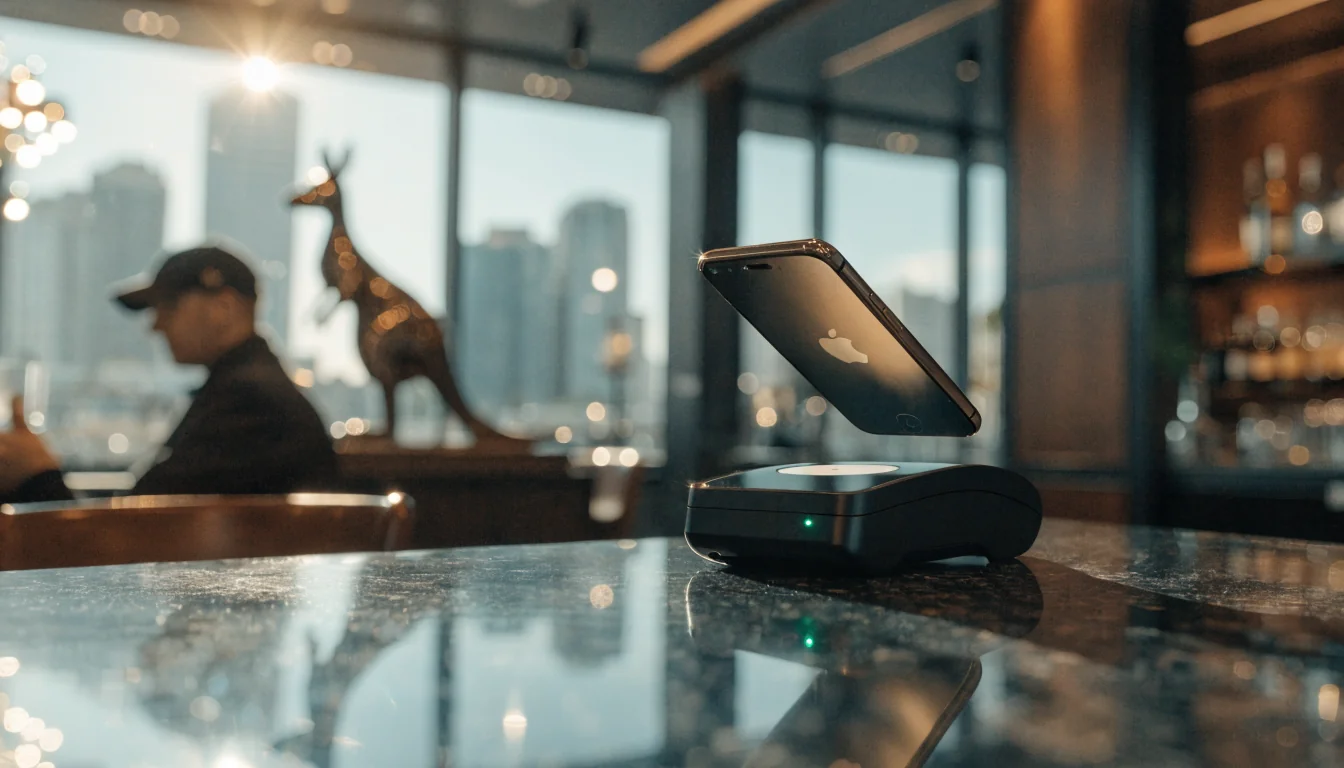
MiFinity handles casino payments through two distinct products, and the difference between them matters more than most "seamless payment" marketing suggests. The first is its digital wallet — an account-based product where funds sit with MiFinity itself. The second is the eVoucher, a single-use prepaid instrument. Both work at online casinos, but they behave differently, and a player who treats them as the same thing tends to discover the difference at the least convenient moment: mid-session, when the voucher is spent and the wallet is empty.
The digital wallet route
The digital wallet is the product most Australian players end up using for anything beyond a first deposit. Its position in the local market is fairly specific: it serves as a substitute for PayPal in Australian casinos. PayPal itself doesn’t process casino transactions for this market, so the wallet occupies exactly the gap that’s left — an account-based intermediary between a player’s bank or card and the casino cashier. From the operator’s side, this arrangement is attractive for a reason that’s rarely stated plainly: the casino never touches the player’s card details. That’s the whole appeal of a wallet in gambling payments, and it’s why operators push wallets harder than cards.
The eVoucher: single-use by design
The eVoucher is a different animal. It’s single-use, which is presented as an added security feature — and honestly, it is one. A prepaid voucher with a fixed value can’t be drained repeatedly, can’t be attached to a subscription-style recurring charge, and exposes no underlying account if the casino’s systems are compromised. The trade-off is structural: once the value is spent, the voucher is dead. A session funded by an eVoucher ends when the voucher does, unless the player switches to another method. For disciplined play that’s arguably a feature. For anyone planning a long session, it’s a limitation worth knowing before purchase, not after.

What "seamless" actually means
Integration is where the marketing language needs translating. Top MiFinity online casino sites use iFrame integration — in practice, the casino’s cashier page opens a window into MiFinity’s own payment environment rather than building the payment flow into the site itself. I’ve seen this pattern across enough operators to say it’s the standard approach for this method, not a premium feature. What it means for the player: the login, the confirmation, and the transaction authorisation all happen inside a MiFinity-controlled frame, while the casino page simply waits for the result.
This architecture explains two things players notice but rarely connect. First, the payment screen looks different from the rest of the casino site — because it is different, a different system rendering inside the page. Second, it’s why the method works almost identically across different casinos: the casino isn’t reimplementing anything, it’s hosting MiFinity’s own interface. Consistency across operators isn’t a design achievement; it’s a side effect of the integration model.
The mechanics, in short
For casino game payments specifically — funding pokies, table games, live dealer games — both products funnel into the same cashier flow. The wallet transfers a chosen amount from the MiFinity balance; the eVoucher redeems its fixed value. The casino credits the playable balance either way. What sits behind that credit — a reusable account or a disposable voucher — is the player’s choice at the cashier, and it’s the only part of the transaction where the choice genuinely matters.
Two products, one cashier. That’s the whole system.
Withdrawal procedure for MiFinity users
Withdrawing from an online casino to MiFinity runs through two gates, and both have to open before the money moves. The first gate is the wallet itself. The second is the casino’s own cashier. The order matters: I’ve seen players wait days because they started at the wrong one.
The wallet gate: verification tiers
MiFinity distinguishes sharply between unverified and identity-verified accounts. Per the terms stated by the operator itself, an unverified account is capped at 150 EUR (≈A$257) across a 365-day period. Not per transaction — across the whole year. That figure is worth repeating, because a single decent pokies session can blow past it, and the withdrawal then stalls at the wallet level regardless of what the casino has already approved.
Identity verification — a government-issued ID, matched to the account holder — lifts the ceiling dramatically: one industry review puts the verified-account capacity at 20,000 EUR (≈A$34,300). There’s also a VIP tier, though raising limits beyond that is at the company’s discretion rather than a published entitlement.
From the operator’s side, this is risk management, not courtesy. The wallet sits between the casino and the player’s bank, so it carries the compliance weight of both. ID checks at withdrawal are where that weight lands.
The casino gate: limits before the wallet sees anything
Casino-side withdrawal limits are a separate constraint. According to one industry review, MiFinity-friendly casinos serving Australian players set withdrawal caps in the A$2,000 to A$5,000 range. Two caps can interact awkwardly: a casino may approve a large withdrawal in instalments while the wallet’s own tier determines how much actually clears in practice.
The practical sequence
The working order I’d follow:
- Verify the MiFinity account before playing, not before cashing out.
- Confirm the casino’s cashier lists MiFinity as a withdrawal method — accepting it for deposits alone is common and one-sided.
- Match the withdrawal request to the lower of the two limits.
The verification step is the one everyone skips. Everyone.
Deposit bonuses and fee considerations with MiFinity
Every welcome bonus is quoted gross. What arrives in the account is what’s left after the payment chain takes its cut — and with MiFinity, that cut depends entirely on which side of the transfer charges it.
The structure of the deal itself is familiar: matched first deposits, reload offers, free spins bundled into a package. One industry review puts the average deposit fee for MiFinity at 4.5% — but that figure sits in the conditions of individual operators, not in MiFinity itself. At the best MiFinity casinos, deposits are usually free: the operator absorbs the processing cost because it wants deposits to be frictionless. Operators that don’t absorb it pass the percentage straight to the player.
That difference is where the net value of a promotion is decided. Two casinos can advertise the same matched amount; at one, the full deposit lands in the playable balance, at the other, a fee is skimmed before the bonus is even calculated. The larger the deposit, the more visible the gap. I’ve seen players compare headline offers, deposit at the "generous" one, and only notice the deduction when the credited amount didn’t match what left their digital wallet.
"No deposit" bonuses deserve their quotation marks too. Offers marketed as no-deposit or free-spin packages come with their own conditions, and none of those conditions are standardised — the terms live in each operator’s promotion page, not in any published schedule.
The practical rule is short: read the cashier terms before the bonus terms. A wagering schedule is worth comparing only after it’s known whether the deposit itself survives the trip.
Check the fee first. Then the bonus.
Leading MiFinity‑compatible casino sites
The upper tier of MiFinity‑friendly platforms serving Australian players is dominated by operators running on established Curacao‑registered structures: Dama N.V., Hollycorn N.V., Rabidi N.V., GBL Solutions N.V. and Just Entertainment B.V. Brand‑front names such as Neospin, Let’s Lucky, Ritzo and Spinando sit on top of those structures. These are the platforms that have made MiFinity a default cashier option rather than an afterthought buried in a drop‑down menu.
What marks them as "top" is not marketing language but plumbing. Top MiFinity online casino sites use iFrame integration — the MiFinity payment widget is embedded directly in the cashier, so the deposit or withdrawal happens on the casino’s own page instead of redirecting to a third‑party screen. From the operator’s side, that is a deliberate engineering choice: fewer redirects, fewer abandoned transactions. From the player’s side, it means the wallet behaves as if it were native to the site.
MiFinity also serves as a substitute for PayPal in Australian casinos. PayPal pulled back from this space years ago, and the wallet that moved into the gap is the one holding FCA and MFSA licences — a regulatory pedigree PayPal users instinctively look for.
New MiFinity casino sites appear continuously, because adding the wallet is technically cheap once the iFrame integration exists. Age of the domain tells you little; the licence structure behind it tells you more.
Paying with MiFinity: methods and security
MiFinity runs two financial products, and both matter for casino payments. The digital wallet is the main instrument: funds sit in the wallet, the casino never touches the card or bank account behind it, and every deposit or withdrawal passes through one intermediary. The single-use eVoucher is the second option — a prepaid code bought with cash, spent once, then discarded. Nothing to hack afterwards, because there is nothing left to hack.
Currency handling is where the practical side shows. The wallet supports 17 currencies, and Australian dollars are among them, so an AUD account pays an AUD casino without a conversion step. Play at a casino that settles in another currency and a conversion fee applies — that cost lands on the player, not on the operator who chose the currency.
On the security side, the framework is verifiable rather than advertised. MiFinity is PCI DSS Service Level 1-compliant — the highest tier of the payment-card data standard — and uses SSL encryption on its transactions. It is licensed and supervised by the UK Financial Conduct Authority and the Malta Financial Services Authority, which means two regulators, not a badge on a website footer.
What’s behind the marketing: a wallet, a voucher, and two regulators watching the books. That’s the whole apparatus.
Australian‑specific limits and regulations for MiFinity
The regulatory picture in Australia is unusual, and it shapes how a MiFinity casino operates here. Under the Interactive Gambling Act 2001, offering online casino games to Australian residents is prohibited, and no domestic licence for that activity exists. The law targets operators, not players, so Australians who use offshore casinos that accept MiFinity are not breaking it themselves. MiFinity, for its part, is a payment provider licensed by the FCA and the MFSA — financial regulators, not gambling ones — and it operates in over 225 countries with support for 20 languages.
What matters practically for an Australian MiFinity casino user is currency. MiFinity supports Australian dollars directly, so deposits and withdrawals in AUD avoid the 2.99% currency-conversion fee that applies when a wallet balance is held in another currency. On the casino side, transaction caps are set by each operator, not by MiFinity or by Australian law. Operators do not publish a uniform ceiling, and no public register of licensed casino operators exists to check one against — a domestic licence of that kind simply is not issued.
The one hard legal boundary that does apply: the minimum gambling age is 18, and that applies to payment use as much as to play.
What payment methods are available for Australian players at online casinos?
Australian-facing casino cashiers typically offer bank cards, cryptocurrencies, prepaid vouchers, and digital wallets — with MiFinity acting as the main regulated wallet option since PayPal stopped processing gambling transactions. Because Australian banks won’t touch casino payments, wallets that support AUD directly, like MiFinity, have become the standard choice.
Are crypto casinos legal in Australia in 2026?
No — under the Interactive Gambling Act 2001 online casino games cannot be legally offered to residents at all, so there is no domestic licensing regime and crypto casinos serving Australians operate offshore. Crypto itself doesn’t change that legal position; it just means the transaction runs outside the banking system.
What is the minimum deposit at an Australian crypto casino?
There is no fixed figure across the market — each operator sets its own deposit minimum in the cashier. At MiFinity casinos, which accept AUD directly, the practical minimum withdrawal for Australian players is around A$20 to A$30.
Prepared by the Casino Mobile Guide editorial staff.