
$1 Minimum Deposit Pokies Australia 2026
 Available in AU
Understanding $1 Minimum Deposit Pokies in Australia
A low deposit casino in Australia typically allows a minimum deposit between $1 and $20. That single sentence carries more weight than it looks like it does, because the difference between a dollar and twenty of them is the difference between two entirely different products wearing the same label. I have spent enough time on the operator side of this market to know that the $1 tier is not simply a smaller version of the standard offer — it is a distinct machine with its own economics, its own bonus structures and its own reasons for existing. This section is about that machine: how it works, what it actually gives a player, and why it has become one of the most searched-for formats in Australian online gambling heading into 2026.
Let me start with the honest framing, because everything else in this article depends on it.
What a dollar actually buys
The first thing to understand about $1 deposit pokies is that the dollar is mostly a key, not a stake. It opens the door. It registers you as a real-money player, attaches your account to a payment method, and unlocks whatever the operator has attached to that first deposit — bonuses, free spins, loyalty tiers, promotional eligibility. The deposit itself will rarely sustain more than a short session. Anyone selling the idea that a single dollar is a bankroll is selling something else entirely.
What makes the format real rather than a marketing trick is the second layer: low-deposit pokies in Australia allow real-money play at stakes far below the deposit level. Minimum bets on the games themselves can run as low as AUD 0.01 per line. So while the deposit threshold is a dollar, the actual play inside the pokie can be parceled out in increments that make even a tiny balance last. The operator is not being generous by allowing this — small-stakes play is how pokies are built. The deposit minimum is the artificial barrier, set by the casino’s payment and bonus infrastructure, not by the game.

I have watched this distinction confuse players repeatedly. They see "$1 minimum deposit" and mentally convert it into "an hour of play for a dollar." The realistic picture: the dollar gets you in, and what happens after depends entirely on how the game’s minimum bet, the number of lines and the pace of play interact. A pokie with a per-line minimum measured in cents is playable for a long time at careful stakes. A game with a higher floor burns the same dollar in minutes. The format rewards players who read the bet configuration screen before they spin.
Why the format exists: the operator’s side
It helps to understand why any casino would bother accepting deposits this small, because the answer explains most of the conditions attached to them.
Processing a payment costs an operator money — a fixed fee per transaction, regardless of size. On a $1 deposit, that fixed cost can eat a meaningful share of the transaction before the player has placed a single bet. No casino runs $1 deposits out of charity. They run them as customer acquisition. The dollar is a filter: it separates people who are willing to attach real money and real identity to an account from people who are not, at the lowest possible point of friction. Once that separation is made, the operator’s model takes over — bonuses, retention offers, the steady drift of a small-stakes player toward larger deposits over time.
This is why the “generous” welcome offers attached to low-deposit sites deserve a specific kind of reading. The headline numbers in this market are real, but they are engineered for the operator’s economics, not the player’s. One industry review currently promotes a welcome bonus of a 100% match up to A$1,100 plus 200 free spins on a $10 minimum deposit; another describes a 250% match up to $4,500 with 350 free spins at the same threshold. I am citing these as examples of how offers are structured in the wild, not as recommendations — and notice the detail that matters most: both of those headline offers sit at a $10 minimum, not a $1 minimum. The pattern repeats across the market. The bigger the advertised package, the higher the deposit floor required to claim it.
Bonus terms dominate the experience at the $1 tier – the bonus is often the main event and its wagering requirements, game restrictions and expiry terms shape the session more than any property of the pokie itself.
There are operators working the lower tiers. Another review documents a welcome package up to AU$200 with 50 free spins at a $5 minimum, and a competitor described as offering a A$5,000 welcome bonus plus 150 free spins while accepting deposits from $5 to $20. The lesson I would draw from having seen these structures from the inside is not “shop for the biggest number” but “read what tier of deposit unlocks what.” The $1 door and the bonus door are often different doors.
How the bonus structures actually behave
This is where low-deposit play either makes sense or falls apart, and it is the part of the product that advertising copy works hardest to blur.
A bonus is not money. It is a wagering obligation dressed as money. In Australia’s low-deposit segment, typical wagering requirements on bonuses range between 20x and 50x. What that means mechanically: bonus funds must be turned over that many times before anything derived from them becomes withdrawable. At the lower end of that range, the mathematics are demanding. At the upper end, they are, in plain terms, a very long road from a bonus triggered by a small deposit.
Here is the honest arithmetic of the format. A bonus attached to a $1 deposit, carried at a 20x wagering requirement, requires a substantial multiple of that deposit in total wagers before withdrawal. Whether that road is worth walking is a player’s decision to make — but it cannot be made well if the wagering requirement is not understood up front. Legitimate operators display wagering requirements clearly before a bonus is offered. That display is not a courtesy; in a well-run market it is a baseline expectation, and an operator who buries the multiplier in fine print is telling you something about how they expect to make their money.
The structural detail that catches low-deposit players most often is this: the bonus scales with the deposit, but the wagering requirement scales with the bonus. A player who deposits the minimum gets the smallest bonus tier, and then must still clear the full multiplier on it. The result is a product where the headline promise ("get a bonus for a dollar!") and the underlying economics (turn that bonus over dozens of times at stakes measured in cents) point in very different directions. That gap is where the operator’s margin lives. It is not a scam in the legal sense — the terms are published — but it is a product designed around the assumption that most players will not complete the requirements, and the design is effective.

Free spins operate on the same logic with different packaging. Spins attached to a small deposit are typically credited on specified games, at specified stake levels, with winnings routed into bonus funds that carry the same wagering requirements. The spin itself feels free. The winnings are not.
Real money, real stakes, real consequences
Search interest in this market splits along a line worth naming explicitly: players looking for $1 deposit pokies in Australia for real money, as opposed to demo play or social casino formats. The distinction matters because the entire structure described above only exists in the real-money version.
In real-money play, every element described so far — the deposit threshold, the wagering multipliers, the per-line minimums — resolves into an actual balance that can go up or down. Low-deposit pokies in Australia allow exactly this: genuine real-money play attached to minimal deposit amounts. The games are the same titles, the same mechanics, the same return-to-player configurations that higher-stakes players access. The dollar does not buy a discount version of the pokie. It buys entry to the same machine at the lowest available seat.
That point deserves emphasis because a persistent myth in this segment holds that low-deposit players get "tighter" games. The game software does not know or care how much was deposited. The deposit is a wallet event; the pokie’s behaviour is governed by its published configuration. What differs at low stakes is variance experienced by the player: small balances are more vulnerable to a cold streak simply because there is less buffer. A $1 balance surviving a run of losing spins is a matter of luck in a way a $200 balance is not. That is not the game being unfair. That is what having a small buffer means.
Why Australian players gravitate toward the format
The appeal of the low-deposit format in Australia is not complicated, but it has layers that are worth separating.

The first layer is pure accessibility. A deposit threshold between $1 and $20, with first deposits commonly running from $1 to $10, means the entry price to real-money pokies is lower than the price of a coffee. For a player who is curious about online pokies but not ready to commit meaningful funds, the format removes the main barrier. This is, from the operator’s perspective, entirely the point — accessibility is the acquisition strategy — but it is also genuinely useful to the player. Testing a site’s deposit flow, its game performance, its withdrawal processing and its customer service with a single dollar at risk is a rational way to evaluate an operator before trusting it with more.
The second layer is entertainment budgeting. Low-deposit pokies have shown resilience during economic downturns, offering entertainment with minimal financial commitment. I find this an under-discussed aspect of the format. When household budgets tighten, the choice is not between a $500 deposit and a $1 deposit — it is between a $1 deposit and no gambling at all. The format lets play continue at a scale matched to the budget. Whether that is a healthy adaptation or a concerning persistence is a fair question, and I will not pretend the answer is simple. The entertainment-per-dollar proposition is real, and so is the risk that low-stakes play normalises gambling during periods when money is tight. Both things are true.
The third layer is control. Some players — and I count myself in this group when I play at all — prefer formats where the maximum downside of a session is known and trivially small before the session begins. A one-dollar deposit caps the worst case at one dollar. No bonus structure, no wagering requirement, no promotional pressure changes that floor. The format offers something unusual in gambling products: a hard, pre-committed limit on loss. Used deliberately, that is a genuine harm-minimisation feature. Used as a revolving door — deposit a dollar, lose it, deposit another — it is not. The tool is the same; the pattern of use determines what it is.
The PayID angle, briefly
A significant share of current search behaviour around this format references PayID specifically — players looking for pokies with a $1 minimum deposit by PayID. The mechanics of payment methods, transaction limits and processing belong to a later section of this article, so I will not duplicate that material here. What belongs in this overview is the reason the association exists at all.
PayID has become the natural companion of low‑deposit play in Australia because it handles small transactions cleanly: fast transfers from an ordinary bank account without the card‑not‑present friction of other methods.
PayID has become the natural companion of low-deposit play in Australia because it handles small transactions cleanly: fast transfers from an ordinary bank account, without the card-not-present friction that other methods carry. For a player whose entire interaction with a casino is built around moving small amounts, the payment method and the deposit tier grow up together. The format’s popularity and the payment method’s popularity reinforce each other. The detailed picture — which methods work at which thresholds, and what security considerations attach to each — is covered where it belongs, in the section on deposit options.
What "best" means in a market with no local licence
Searches for the "best" $1 deposit pokies sites in Australia imply a comparison framework that this market does not straightforwardly provide, and I would rather state that plainly than paper over it.
There are no domestically licensed real-money online casino operators available to Australian players. Under the Interactive Gambling Act 2001 — the primary Commonwealth law governing online gambling in Australia — it is illegal to offer online casino gambling to Australian residents, and it is not possible to obtain a licence to operate an online casino domestically. Online casino-style games, including pokies, poker, blackjack and roulette, fall inside that prohibition. What this means in practice is that every real-money online pokies site accessible to an Australian player is operating under an offshore licence. It is not illegal for individual Australians to play at offshore-licensed online casinos; the law targets operators, not players. But there is no Australian government seal to look for, no public registry of approved operators, and no domestic regulator standing behind the transaction.

I flag this here, in the foundational section, because it changes what "best" can honestly mean. It cannot mean "the one with the Australian licence," because no such thing exists for casino games. (Sports betting is a different matter — online sports betting is legal in Australia under state and territory licences — but that is a separate product line.) What "best" can mean, in this market, is a set of practical evaluations: how transparently an offshore operator publishes its wagering requirements, how reliably it processes small withdrawals, how clearly it states its own licence and jurisdiction, how it handles identity verification, and whether its conduct matches its terms. Those are checkable things. They are not guarantees. The full regulatory picture — who enforces what, and what protection actually exists — is the subject of the next section, and it deserves the space.
One caution belongs here regardless: the phrase "fully licensed and regulated" appears constantly in marketing for low-deposit sites targeting Australians, and it always deserves the follow-up question — licensed by whom, and for what? An offshore licence is a real document issued by a real authority, but it is not an Australian one, and it does not carry Australian enforcement behind it. Advertising language in this market leans on the comfort of the word "licensed" while the substance is more complicated. That is not a reason to panic. It is a reason to read.
The economics of the minimum: why $1 and not zero
A question worth asking, since it explains the shape of the whole segment: why do operators stop at a dollar? If small deposits are an acquisition tool, why not go to zero?
Deposit verification
The deposit, however small, verifies the payment channel, triggers identity and anti‑fraud checks, and converts intent – a $1 deposit is the smallest amount that still counts as money.
The answer is that the deposit, however small, does three things a zero-cost registration cannot.
First, it verifies the payment channel. A real deposit, even of one dollar, proves the player’s PayID account, card or wallet functions end-to-end with the casino’s processing. That verification is worth more to the operator than the dollar itself — it de-risks every future transaction with that player.
Second, it triggers the identity and anti-fraud chain. A real-money deposit pulls the account into the verification workflows that regulators and payment providers require: identity checks, source-of-funds logic at higher tiers, duplicate-account detection. The dollar is the switch that turns all of it on.
Third, and most simply, it converts intent. A player who has moved actual money — any amount — is measurably further along the path to becoming a revenue-generating customer than one who has registered for free. Conversion analysts treat the first deposit, not the registration, as the event that matters.
This is also why “no deposit bonus” offers — the true zero-cost tier — sit adjacent to but apart from the $1 format. A no deposit bonus gives something without taking anything, which makes it a pure marketing instrument with its own fraud problems. The $1 deposit is the compromise position: low enough to be nearly free in the player’s mind, high enough to switch on the machinery. From the inside, the elegance of the dollar figure is that it is the smallest number that still counts as money.
Honest limitations of the format
I want to close this overview with the caveats that the promotional end of this market never volunteers, because a foundation section that only explained the upside would be a brochure.
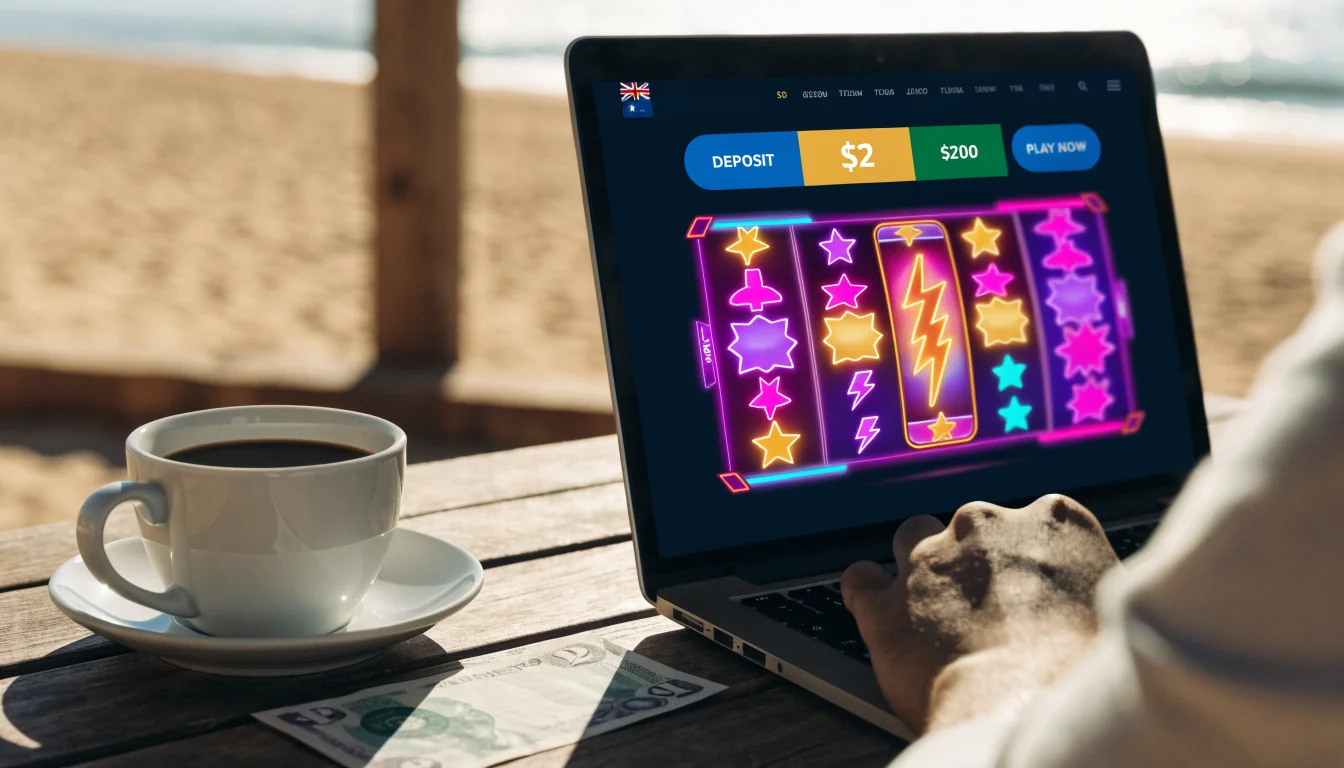
Small deposits do not produce meaningful withdrawal events. The realistic best case from a $1 deposit, played at cent-level stakes, is a modest win. That is the format working exactly as designed. Players hoping for jackpot-scale outcomes from dollar-level exposure are engaging with the wrong product, and the sites advertising life-changing wins off tiny deposits are exploiting precisely that hope.
Bonus terms dominate the experience at this tier. At higher deposit levels, a player can largely ignore bonuses and play with cash. At the $1 tier, the bonus is often the main event — it is the reason the deposit is interesting at all. That means the wagering requirement, the game restrictions and the expiry terms attached to the bonus will shape the session more than any property of the pokie itself. A player who does not read those terms is not playing the game they think they are playing.
Small stakes change the psychology, not just the math. There is a documented pattern in gambling behaviour where low-stakes play extends sessions and increases total engagement while keeping each individual loss trivial. Whether that is good or bad depends on the player, but it should be a conscious choice, not an accident of the format. The resilience of low-deposit pokies during economic downturns cuts both ways: entertainment on a tight budget, or a habit that survived the budget.
The regulatory asymmetry is real. The player is not breaking the law. The operator, if serving Australians with casino games, is operating outside Australia’s legal framework for that product. Every protection the player enjoys on such a site comes from the operator’s offshore licence and its commercial incentives — not from Australian law. That arrangement can work out fine in individual cases, and it fails in individual cases, and the difference between the two is rarely visible until something goes wrong.
Regulatory asymmetry
The regulatory asymmetry is real: players are not breaking the law, but operators serving Australians with offshore licences operate outside Australia’s legal framework for casino games.
What the rest of this article covers
This section has laid out the mechanics: what the dollar buys, how the bonus structures behave, why the format exists, and what its honest limitations are. The sections that follow get specific. The next covers licensing and player protection in detail — what the Interactive Gambling Act 2001 actually prohibits, what ACMA does and does not do, and what an offshore licence realistically provides. After that, the payment side: how $1 deposits move through PayID and alternative methods, and what transaction limits and security considerations apply. Finally, the games themselves — which pokies work at this tier, and which titles are worth the seat.
The format is what it is: a low-friction entry to real-money pokies, engineered for acquisition, useful for cautious players, and honest only as far as its terms are read. A dollar is a small amount of money. The decisions attached to it deserve the same clarity as any other.
Online Australian Pokies: Licensing and Player Protection
The first thing anyone needs to understand about online pokies in Australia is the thing most affiliate pages leave out: there is no such thing as an Australian online casino licence. Not a rare one, not a hard-to-get one — none. The Interactive Gambling Act 2001 (IGA) prohibits offering online casino games, pokies included, to Australian residents, and no regulator in any state or territory can issue a licence for it. Sports betting, yes. Lotteries, yes. Online casino games, no.
So when a site promoting $1 minimum deposit pokies tells you to "check the operator’s licence," the advice collapses on contact with reality. Check it against what? There is no domestic register of licensed online casino operators, because the licence itself doesn’t exist. I’ve seen that line repeated on dozens of review pages, and it’s not caution — it’s copy-paste from markets like the UK or Malta, where a licence is a real thing a player can verify.
Who actually regulates what
Australia doesn’t have a single gambling statute or a single national gambling authority. Regulation is split between the federal level and each state and territory, which each run their own regulator. That structure matters, because it produces a patchwork where different products answer to different bodies.
At the federal level, the Australian Communications and Media Authority (ACMA) enforces the IGA. ACMA is the body that goes after unlicensed online gambling services targeting Australians — it requests blocking of sites, takes enforcement action against operators, and polices the boundary between what’s legal to offer here and what isn’t. Its remit covers the prohibited end: online casino games, online poker, in-play betting.
The licensing side of legal online gambling looks different. The Northern Territory Racing Commission (NTRC) licenses most of the national online bookmakers, which has made it something like the de-facto online gambling regulator for the wagering side of the industry — largely because of lower tax rates attracting operators to Darwin rather than to state regulators. But that licence covers sports and race betting. It does not cover pokies. No NTRC licence, no state licence, no Commonwealth licence turns an online casino into a legal offering for Australian players.
All operators in this market are offshore‑licensed, which means any consumer protection comes from the foreign jurisdiction that issued the licence, not from an Australian regulator.
And the states? Each has its own regulator with its own legislation — pokies in pubs and clubs, casinos on the ground, lotteries. Land-based gambling is a state matter. Online casino play falls into the federal prohibition, and the two systems meet only at the point of enforcement.
What this means for a $1 deposit player
Here is the part that’s genuinely useful and rarely stated plainly. It is not illegal for an individual Australian to play at an offshore-licensed online casino. The IGA targets operators, not players. No Australian has been prosecuted for spinning reels on a site licensed in Curaçao or Malta. The legal risk sits with the people running and promoting the service, not the person depositing a dollar.
That asymmetry shapes everything about how "player protection" works for Australians playing low-deposit pokies online. The protections a domestic licence would force — a local regulator to complain to, mandatory dispute resolution, enforceable responsible-gambling obligations — don’t attach to offshore sites serving Australians, because no Australian authority licensed them. Whatever protection exists comes from whatever foreign jurisdiction issued the licence, plus whatever the operator does voluntarily.
When I worked on the operator side, this was the quiet structural truth behind every "safe and secure" banner. The banner isn’t a lie exactly — banking at a reputable offshore site is generally handled by proper payment processors — but the enforcement backstop most players imagine simply isn’t there. If a dispute goes badly, the player’s recourse runs through a regulator thousands of kilometres away with its own rules, its own timelines, and no particular reason to prioritise a complaint from Australia.
Where ACMA’s oversight is real
That’s not to say regulation is decorative. ACMA’s enforcement of the IGA has real consequences: it identifies prohibited services, pursues affiliates and advertisers, and coordinates with internet providers on blocking. It’s the reason the offshore market serving Australia operates in a constant low-grade state of cat-and-mouse — domains change, payment channels shift, and operators structure themselves to stay one step ahead of enforcement rather than one step ahead of a licensing audit.
This creates an odd situation for someone looking to play $1 deposit pokies online. On one hand, the prohibition keeps every operator serving Australians outside the Australian system entirely — no ACMA-supervised fairness testing, no local dispute resolution, no domestic deposit protections. On the other, the same prohibition applies to every offshore operator equally, so the differences between them are differences in foreign licence quality and internal policy, not in anything an Australian regulator has inspected.
Practical protection, given the actual landscape
Since licence-checking against an Australian register is meaningless here, protection takes a different shape. It means understanding that deposits and withdrawals run through the payment methods these sites support — for Australian players that’s typically PayID, Neosurf, POLi, Visa, Mastercard, or cryptocurrency — and that each carries different characteristics the next section covers in detail. It means knowing that identity verification before withdrawal is standard practice, so a $1 deposit today still involves handing over government ID when it’s time to cash out. And it means recognising the honest limit of the available information: how different operators vary on withdrawals, dispute handling, and bonus terms for low-deposit players isn’t something official sources publish, because from the Australian regulator’s perspective these operators are all on the wrong side of the IGA regardless.
Player protection
The player is not breaking the law, but the lack of an Australian licence means there is no local authority to appeal to if a dispute with an offshore operator goes badly.
The framing I’d offer from experience: don’t ask whether a site offering australian online pokies with a $1 minimum deposit is "licensed in Australia," because the answer is no by definition. Ask who licensed it offshore, what that jurisdiction actually enforces, and whether you’d accept that jurisdiction’s consumer protection as your only recourse. That’s the real question. The comfortable one — "is this regulated?" — has a comfortable-looking answer that means nothing here.
Deposit Options for Australian Players: Paying with $1
A one-dollar deposit sounds trivial until you look at how payments actually work. Banking rails were built for transactions of a different scale, and the methods that tolerate a $1 transfer are a narrow subset of what a casino cashier page might display. Knowing which rails take small amounts — and why — matters more than any bonus pitch.
The methods that carry a $1 deposit
The payment layer at low-deposit venues open to Australian players typically runs on a handful of options: PayID, Neosurf, POLi, Visa, Mastercard and cryptocurrency. They are not interchangeable, and the differences show up fastest at the bottom of the deposit range.
PayID routes transfers through the NPP, the real-time payments network behind Osko. It is bank-native, which is its whole appeal: no card number to type, no third-party wallet sitting between the player and their bank. Small amounts move the same way large ones do.
Neosurf works differently — it is a prepaid voucher bought with cash at a retail outlet. The deposit is funded without any bank account entering the picture at all. For a one-dollar transfer, vouchers are the most private option, though the leftover balance stays on the voucher until it is used.
POLi acts as an intermediary that logs into internet banking on the player’s behalf to push a payment through. It has lost ground to PayID in recent years, but it still appears on cashier pages, and it handles small deposits on the same terms as larger ones.
Visa and Mastercard are the familiar path, with one caveat worth stating plainly: debit and credit are different instruments. Australian regulation prohibits gambling transactions on credit cards, so any card deposit at a compliant venue draws on the player’s own funds, not borrowed ones.
Cryptocurrency sits outside the banking system entirely. Whether that suits a player depends on what they want from the transaction — speed and finality on one side, volatility and no chargeback mechanism on the other. There is no bank to reverse a transfer sent in error.
Where the friction actually lives
I have run enough deposits through enough cashiers to know that the advertised minimum and the effective minimum are not always the same number. Two things create the gap.
First, the casino’s stated minimum is a floor, not a promise. A venue may accept $1 on one method and set a higher floor on another, because each payment provider charges the operator a fixed cost per transaction — a cost that eats a one-dollar deposit alive. Prepaid and crypto rails tend to be the cheapest for the operator, which is why they are usually where the lowest floors sit. Card processing, by contrast, is expensive at small amounts, so card minimums are often set higher.
The advertised minimum and the effective minimum are not always the same; payment providers charge fixed fees that can eat a $1 deposit, so different methods have different practical floors.
Second, deposit minimums and bonus eligibility are separate thresholds. A site can take a $1 deposit while attaching its welcome offer to a larger qualifying amount — that structure appears repeatedly in the conditions operators publish for Australian-facing bonuses. The deposit goes through; the bonus does not. Whether that trade is worth it is the player’s call, but the call should be made knowing the mechanics, not after discovering them at the cashier.
The security question, answered honestly
Here the honest answer is structural rather than reassuring. Online casino play — pokies included — cannot be licensed in Australia. The Interactive Gambling Act 2001 prohibits offering online casino games to Australian residents, no domestic licence exists to issue, and the Australian Communications and Media Authority (ACMA) enforces that prohibition. Players themselves are not the target of the law; the operators are. What this means in practice is that the venues accepting $1 deposits from Australians are licensed elsewhere, under someone else’s regulator, and the player has no Australian authority to appeal to if a payment goes wrong.
That absence shapes everything about payment safety. With PayID and POLi, the exposure is limited because the transaction happens inside the player’s own bank, and the bank’s fraud protections apply to that leg regardless of where the casino is licensed. With a prepaid voucher, the maximum at risk is the voucher’s face value. Cards carry the issuer’s dispute process. Crypto carries nothing — once the transfer confirms, it is final.
Practical hygiene, then, is not about "checking a licence" in some registry — for this market there is none to check. It is about never sharing banking details over email or social media, treating any unsolicited payment request as fraudulent, and depositing through methods whose protections exist independently of the venue.
The economics are simple. A one-dollar deposit buys a seat at the table, not much more. Whether that dollar travels on a bank rail, a voucher or a blockchain decides how protected it is on the way.
Pokies That Accept a $1 Dollar Minimum Deposit
The pokie itself rarely decides the minimum — the casino’s cashier does. What changes at this level is the stake per line: low-deposit pokies in Australia allow real-money play with minimal amounts, and per-line minimums can go as low as AUD 0.01. On a modest line count, one deposited dollar funds a genuine session, not a single token spin.
Whether any specific title is playable at a $1 floor depends on the operator hosting it, and operators do not publish per-game deposit thresholds — so no reliable list of qualifying titles exists. What is verifiable is the mechanic: a $1 balance plays the same game engine, the same RTP table, the same RNG as a $100 balance. The reels do not know the size of the wallet behind them.
The practical difference is exit speed. A dollar buys the demo experience with real outcomes attached: testing a game’s volatility, timing and bonus frequency at full authenticity. Losing it costs nothing worth mentioning. That, not the headline, is what the low floor actually sells.
Top Australian Pokies You Can Play with a $1 Deposit
If you’re looking to try pokies without committing much upfront, it helps to see how these casinos structure their entry-level deposits and welcome offers before you sign up.
License: Curacao Gaming Control Board OGL/2023/174/0082 (Dama N.V.) · Bonus: up to A$5,000 + 300 free spins across 4 deposits Licensed under the Curacao Gaming Control Board, this casino offers a sizeable welcome package spread across four deposits, paired with a generous batch of free spins.
License: Curacao – Antillephone N.V. (Versus Odds B.V.) · Bonus: up to EUR 2,000 across 5 deposits + 200 free spins · Min. deposit: EUR 20 Operating under a Curacao (Antillephone) licence, it spreads its welcome bonus over five deposits with free spins included, and keeps its minimum deposit clearly set at EUR 20.
License: Curacao eGaming (Dama N.V.) · Bonus: up to A$10,000 + 180 free spins, 40x wagering Licensed through Curacao eGaming, this casino stands out with a large welcome bonus and free spins package, though wagering requirements are on the higher side at 40x.
Bonus: up to A$7,500 + 550 free spins across 10 deposits, 50x wagering · Payout speed: crypto under 1 hour, PayID 1-3 business days · Min. deposit: A$20 (A$30 to qualify for the bonus) A standout for fast payouts, with crypto withdrawals processed in under an hour and PayID within a few business days; its welcome bonus spans ten deposits with a sizeable free spins allowance.
License: Curacao Gaming Authority (Jumpman Gaming Ltd) · Bonus: up to A$6,600 + up to 250 free spins across 4 deposits Licensed via the Curacao Gaming Authority under Jumpman Gaming, it offers a solid welcome bonus with free spins spread over four deposits.
License: Curacao eGaming (Roby Games Ltd) · Bonus: 100% up to A$750 + 200 free spins Holding a Curacao eGaming licence, this casino offers a straightforward welcome bonus matched with a decent free spins allocation.
Bonus: 240% up to A$4,100 + 300 free spins Known for a high-percentage welcome bonus paired with a generous free spins offer, making it notable among entry-level bonus seekers.
License: international iGaming licence – jurisdiction not named in the source · Bonus: 100% up to A$1,000 + 100 free spins, 35x wagering · Payout speed: PayID 1-24 hours · Min. deposit: A$30 (PayID from A$10) Fast PayID withdrawals, often processed within a day, and a low minimum deposit make this one accessible for smaller budgets, backed by a welcome bonus with moderate wagering terms.
License: Curacao eGaming (Hollycorn N.V., since 2017) · Bonus: 225% up to A$1,540 + 600 free spins across 4 deposits, 20x wagering · Min. deposit: A$20-30 (depends on the offer) Licensed by Curacao eGaming since 2017 through an established operator, it offers one of the more generous bonus percentages with free spins across multiple deposits and comparatively low wagering requirements.
License: Curacao Gaming Control Board · Bonus: up to A$5,000 + 400 free spins Licensed under the Curacao Gaming Control Board, this casino combines a solid deposit bonus with a large batch of free spins.
Not every title survives a one-dollar budget. These do — popular with Australian players, and playable with real money at minimal deposit amounts:
- Big Bass Bonanza — a fishing-themed release that has become one of the most recognisable pokies among local players.
- Buffalo King — a wildlife-themed title that runs comfortably on small balances.
- Lightning Link — the hold-and-spin format that made the jump from pub floors to online play.
- Starburst — a low-frills classic that has stayed in rotation for years.
- Wolf Gold — a steady performer for players stretching a small deposit.
- Wolf Winner — an Australian-facing title built for the local audience.
- Mummys Gold — rounds out the list as another accessible option.
What unites them: none demands a large buy-in to spin. The game, not the bankroll, does the work.
One caveat I’ll repeat from experience: RTP figures and volatility ratings vary by source, and operators don’t publish consistent numbers for every title. Verify any figure against the paytable inside the game itself before trusting a review site — including this one.
What are the top welcome bonuses for Australian players in 2026?
Notable offers include Asino Casino’s 100% match up to A$1,100 plus 200 free spins ($10 minimum deposit), CrownPlay’s 250% match up to $4,500 with 350 free spins ($10 minimum), 7bit Casino’s up to AU$200 plus 50 free spins ($5 minimum), and SpinSamurai’s AU$5,000 package with 150 free spins ($5–$20 deposits). Note that the biggest headline bonuses usually sit at a $10 deposit floor, not $1.
Which games can I play with a small deposit?
Licensed Australian casinos offer online pokies, table games, live dealer games, sports betting and lotteries. Low-deposit pokies are especially suited to small balances, with minimum bets as low as AUD 0.01 per line, so even a tiny deposit can sustain careful small-stakes play.
Is online gambling legal in Australia?
Online sports betting is legal under state/territory licences, but online casino games like pokies, poker, blackjack and roulette are prohibited federally under the Interactive Gambling Act 2001. However, the law targets operators, not players — it is not illegal for individual Australians to play at offshore-licensed online casinos.
What law governs online gambling in Australia?
The Interactive Gambling Act 2001 (IGA) is the primary Commonwealth law, introduced to protect the public with a focus on harm minimisation and enforced by the Australian Communications and Media Authority (ACMA). There is no single overarching statute or authority — regulation is split between federal and state/territory levels, with the Northern Territory Racing Commission acting as the de-facto regulator for most national online bookmakers.
Created by the ”Casino Mobile Guide” editorial team.